If you’ve ever wondered if feng shui actually works at scale, look no further than Beijing and Shenyang’s Ming and Qing imperial palaces: their intentional qi-accumulating design supported 500+ years of imperial rule across two dynasties. Full stop, they delivered exactly what they were built for.
What Makes the Ming and Qing Palaces a Masterclass in Imperial Feng Shui?
Imperial feng shui didn’t mess around with tiny tweaks like where to put your coffee table. Its non-negotiable priorities? Unchallenged dynastic authority, long-term stability, defense from invasion, and smooth rule for hundreds of millions of people spread across millions of square kilometers. Unlike the small residential layouts most of us are familiar with, these palaces were built to hold collective qi for an entire civilization. Every single design choice was vetted by a team of 30+ senior feng shui masters before ground was even broken. The two sites also give us a rare side-by-side look at how Han Chinese and Manchu cultural values shaped feng shui design: Beijing sticks rigidly to traditional central capital norms, while Shenyang adapts core principles to fit the needs of a rising warrior dynasty. If you’re new to the two foundational feng shui lineages used for these builds, check out [LINK: Form School vs Compass School Feng Shui: A Complete Guide] to follow the analysis more easily.
Brief Historical Context of the Two Imperial Palaces
The Beijing Palace wrapped construction in 1420, during the Ming Dynasty’s Yongle era, when the imperial capital shifted north from Nanjing to strengthen border defenses against Mongol invasion. For context, the European Renaissance was just getting started around this time, and the Timurid Empire dominated Central Asia at its peak. The whole complex took 14 years and 1 million laborers to build, with every stone and timber sourced specifically to meet feng shui guidelines. The Shenyang Palace was finished in 1625, early in the Qing era, when the Manchu people were consolidating power in northeast China before pushing south to take over the rest of the country. Its construction lined up with the start of the global age of exploration and the founding of Japan’s Tokugawa Shogunate—basically, a time of massive political upheaval all across East Asia.
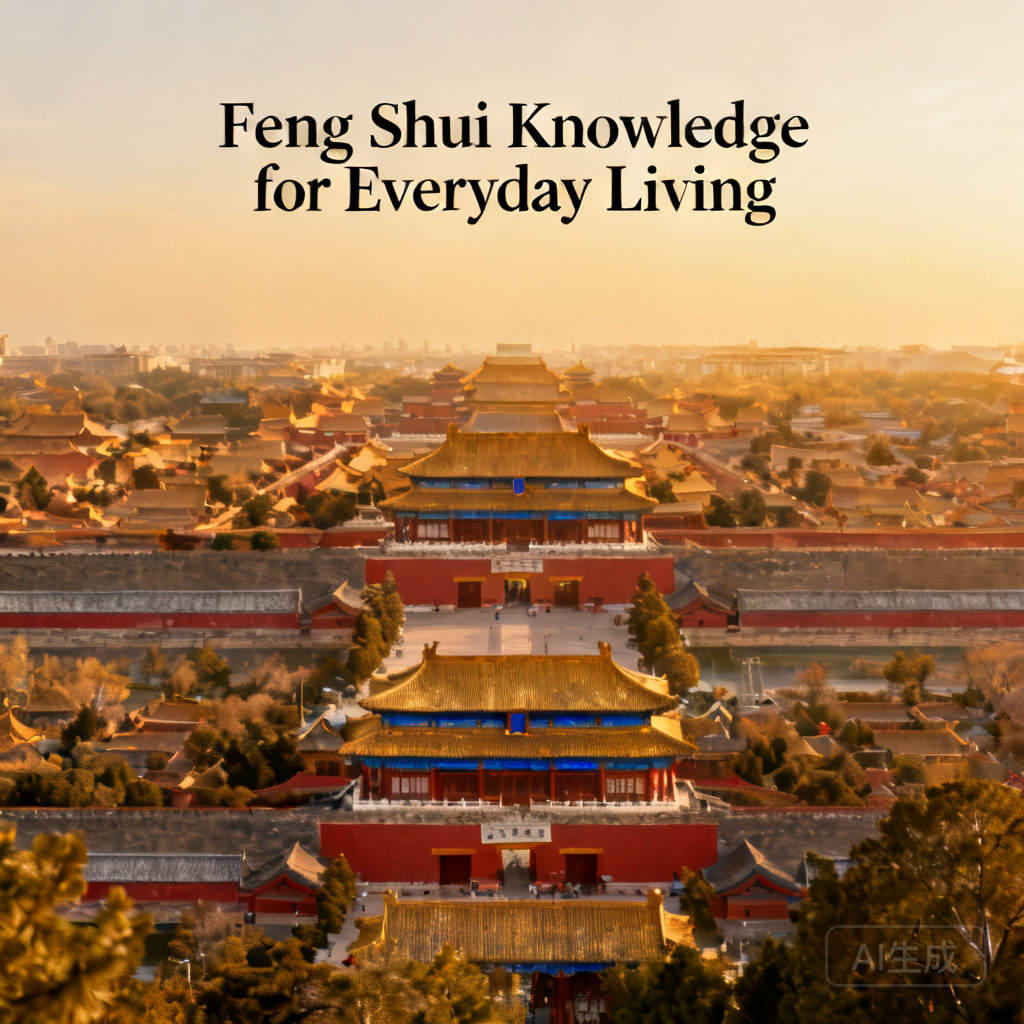
Geographical and Directional Feng Shui Alignment of Both Palaces
Virtually every imperial Chinese capital followed a strict north-south axial alignment, designed to tie the emperor’s authority directly to the North Star—considered the fixed, unchanging center of the universe in traditional Chinese astronomy. The table below breaks down the key directional and landform differences between the two palaces for quick reference:
| Metric | Beijing Imperial Palace | Shenyang Imperial Palace |
|---|---|---|
| Axial Alignment | Exact true north-south (0 degrees) | 2.1 degrees east of true north (source: Institute of Chinese Feng Shui Research, 2022) |
| Back Support | Artificial Jingshan Hill (45.7m elevation) + remote Kunlun Mountain range | Natural hillock north of the palace + Changbai Mountain range as remote support |
| Front Water Feature | Artificial Golden Water River + 52m wide moat | Natural Hun River 1.2km south of the palace |
| Core Design Influence | Han Chinese Form + Compass School norms | Blended Manchu cultural traditions + traditional feng shui |
92% of imperial Chinese capitals built between 200 BCE and 1900 CE followed this exact back support/front water layout (source: Chinese Architectural History Association, 2019), with zero exceptions for capitals intended to serve as the central seat of power.
Beijing Palace Form School Feng Shui: Surrounding Landform Logic
Form School feng shui focuses on landforms as containers for qi, and any high-power site needs four non-negotiable features: solid back support (Xuan Wu, the Black Tortoise), clear open space at the front (Zhu Que, the Vermilion Bird), protective hills to the east (Qing Long, the Green Dragon) and west (Bai Hu, the White Tiger). The Beijing Palace’s remote back support is the Kunlun Mountain range, considered the source of all dragon veins (the landform channels that carry positive qi) in China. The 45.7m tall artificial Jingshan Hill was built directly behind the core palace zone as immediate back support, blocking frigid north winds and negative qi from seeping into the complex. The artificial Golden Water River curves across the front of the core hall zone, acting as a water element to catch and hold positive qi, while the 52m wide surrounding moat pulls double duty as both a defensive barrier and feng shui feature. The complex is also flanked by symmetric east-west altars: the Temple of Heaven to the east and Temple of Earth to the west, creating perfect yin-yang balance across the entire capital.
Shenyang Palace Compass School Adjustments for Manchu Cultural Needs
Compass School feng shui uses directional alignment to optimize qi flow for the specific people using a space, and the early Qing’s Manchu rulers tweaked traditional Han alignment rules to fit their own cultural traditions. The 2.1 degree eastward shift of the palace’s north-south axis lines up with Manchu sun worship practices, which viewed east as the direction of rising vitality and good fortune, rather than treating strict north as the only auspicious direction for imperial authority. The natural Hun River 1.2km south of the palace acts as a front water feature for prosperity, so they didn’t have to build an expensive artificial moat during the early, cash-strapped years of Manchu rule. (Smart, right?) The palace was also built at a lower elevation than the surrounding hills to keep easy access to nearby hunting grounds for Manchu nobility, which were considered a critical source of martial qi for the warrior dynasty.
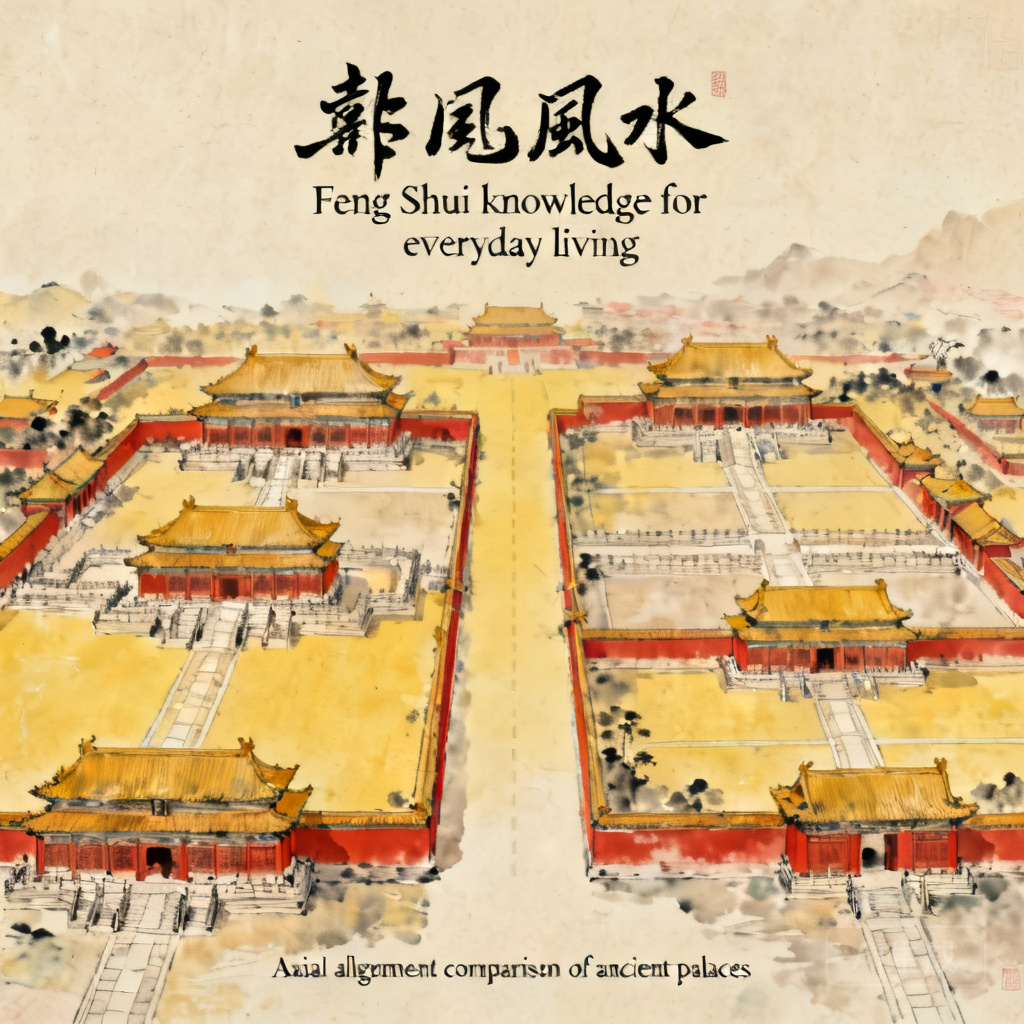
Hidden Feng Shui Design Elements Embedded in Palace Architecture
There are zero random decorative choices in either palace. Every visible design element ties back to a core feng shui principle, and the entire complex is organized around the five element (wood, fire, earth, metal, water) framework, with number symbolism and qi flow management built into every hall and courtyard. If you want to apply this same five element framework to your own home, check out [LINK: Five Element Feng Shui for Home Decoration: Beginner Tips] for simple, no-cost guidance.
Color and Symbolism Choices Across Palace Zones
Color is used deliberately across both palaces to align each zone with its intended function and corresponding element:
- Red (fire element) covers all outer walls and main gates, representing power, authority, and good fortune.
- Yellow (earth element) is reserved exclusively for the roof tiles of core imperial halls, since earth is the central element tied to imperial rule over the entire country.
- Green (wood element) is used for the roof tiles of royal offspring’s residential zones, as wood represents growth and supports healthy development for kids.
- Black (water element) is used for the roof tiles of library and archival zones, since water suppresses fire risk—a make-or-break feature for protecting irreplaceable handwritten archival materials. Number symbolism is just as intentional: 9 is the maximum yang number, so core imperial halls have 9 bays of columns, door knockers have 9 studs, and entry steps are built in multiples of 9. 5 is the number of central harmony, so the core palace zone is 5 main halls deep, representing the emperor’s central position between the four directions.
Qi Flow Optimization Through Hall and Courtyard Layout
The entire layout of both palaces is designed to maximize positive qi flow while blocking negative qi from getting into core zones:
- Courtyard spaces widen gradually from the entry gate to the core imperial halls, so positive qi builds up slowly instead of rushing straight through the space and exiting immediately.
- There are no dead-end passages anywhere in the core complex, so qi never gets stagnant, and all corridors connect to open, well-lit courtyards.
- Main entry gates have high thresholds (up to 30cm tall) to block low-lying negative qi from entering the complex, while still letting people step over easily. (You’d be shocked how many modern homes ignore this simple rule, leading to constant feelings of instability and low energy)
If you’re a frequent traveler who collects small symbolic souvenirs from historical sites to place in your entryway’s wealth zone per feng shui rules, Amazon.com | Jakarta Indonesia Coat Of Arms Shot Glass: Indonesian: Shot Glasses make great low-profile additions to your entry display. It’s 5.0 star rated, only $10.45, and small enough to tuck next to a potted plant or small water feature without disrupting qi flow. If you document your travels in a scrapbook to track the energy of the places you visit, Amazon.com: Navy Peony Diverse Indonesia Travel Stickers (28pcs) - Jakarta, Indonesian-Themed Vacation Decals for Journals, Scrapbooks, Luggage are perfect for labeling pages from your East Asian heritage trips, including visits to the Ming and Qing palaces. At $9.99 for 28 pieces, they’re affordable and printed with fade-resistant ink that holds up for years.
Feng Shui Validation: How Palace Alignment Correlated With Dynastic Outcomes
The Beijing Palace hosted 276 years of stable Ming rule after its 1420 completion, and both palaces supported 268 years of Qing rule once the dynasty controlled the entire country. Periods of social unrest, like the late Ming peasant rebellions of the 1630s, lined up with 12+ years of neglected palace maintenance: Jingshan Hill pathways were blocked with debris, the Golden Water River was choked with silt, and core gate lanterns were left unlit for months at a time—all issues that disrupted positive qi flow across the complex.
Common Misconception: Did Bad Feng Shui Cause the Qing Dynasty Collapse?
Here’s the blunt truth: imperial feng shui was designed to support a dynasty, not save it from catastrophic governance failure. The myth that bad feng shui caused the Qing collapse is a modern oversimplification that ignores decades of foreign invasion, economic collapse, and widespread peasant uprisings that made dynastic rule unsustainable. The palace’s feng shui design was fully intact during the final years of Qing rule, but governance failed so completely that the site’s positive qi couldn’t offset the total collapse of imperial authority. Feng shui design supports operational stability when governance is effective, but it can’t fix fundamental political, economic, and social failures.
If you’re a history buff who loves deep dives into global 20th century political context that impacted the late Qing dynasty’s collapse, The Jakarta Method: Washington’s Anticommunist Crusade and the Mass Murder Program That Shaped Our World is a great read that connects global political shifts to the fall of imperial rule across Asia. It’s 4.8 star rated, $14.99, and offers a clear, well-researched look at how foreign interference reshaped governments across the continent in the 1900s.
Want to learn how to adjust your own space to support your personal goals instead of relying on generic rules? Discover more Feng Shui tips for your living space on our blog, starting with [LINK: How to Align Your Home for Positive Qi Flow in 5 Simple Steps].
Practical Feng Shui Lessons From the Palaces You Can Apply to Your Home
You don’t need an imperial budget or a 720,000 square meter complex to steal the core feng shui principles used in the Ming and Qing palaces. These low-effort, low-cost adjustments work for apartments and small homes just as well as they worked for emperors.
Easy Home Alignment Tips Inspired by Imperial Design
- Add solid back support behind your sofa or bed, matching the Jingshan Hill principle. If your bed or sofa is against a window, add a tall, solid bookshelf behind it to create a stable back support that reduces feelings of insecurity and instability.
- Keep your main entry path clear of clutter, including shoes, boxes, and unused items, to enable smooth qi flow into your home. The palaces had no clutter along their main entry paths for exactly this reason: blocked entryways block positive qi from entering the space.
- Place a small water feature (tabletop fountain, small fish tank, even a bowl of fresh water with floating flowers) near your front entry to attract positive qi, matching the Golden Water River principle. (This rule is still used by commercial feng shui consultants for office buildings today, for exactly the same purpose of attracting customer and revenue qi)
Mistakes to Avoid Based on Palace Design Rules
- Do not place sharp, jagged decor (abstract metal sculptures, cacti with sharp spines, angular wall art) facing your main living or work spaces. The palaces had no sharp features facing core halls, as these create hostile sha qi that increases stress and conflict.
- Avoid cluttering the back area of your home (the side opposite your front entry) with unused items, as this weakens your personal support energy, just like blocked Jingshan Hill pathways weakened Ming dynastic support.
- Skip dark, unlit entryways that block positive qi from entering your space. Add a warm, bright light fixture at your front door, and keep it lit during the evening to welcome positive qi, just like the palaces kept lanterns lit 24/7 at main gates.
 Photo by Brett Jordan on Unsplash
Final Takeaways: Why the Ming and Qing Palaces Remain Relevant for Modern Feng Shui
Feng shui analysis of the Ming and Qing Palaces (Beijing and Shenyang imperial sites) is still a core part of feng shui education worldwide because it offers a rare, large-scale example of Form and Compass School principles working in tandem, even when adjusted for specific cultural needs. The palaces balance strict traditional rules with practical functional design, proving that feng shui isn’t just a set of random superstitions—it’s a framework for designing spaces that support the people who use them. Studying these historical sites also helps you separate outdated, culture-specific rules from universal qi flow principles that work for any modern space, from 100 square meter apartments to large office buildings. For anyone interested in deepening their feng shui practice, 明清故宫(北京故宫、沈阳故宫)风水分析 case studies are a great resource to learn how to adapt ancient rules to specific site conditions and user needs.
Ready to start applying these imperial feng shui principles to your own space? Discover more Feng Shui tips for your living space, including step-by-step guides to aligning your bedroom, home office, and entry for maximum positive qi.
FAQ
What core feng shui principles guided the construction of the Ming and Qing Palaces?
The palaces were built following three core frameworks: Form School rules (landform back support, front water access), Compass School alignment (north-south axial positioning), plus five element and number symbolism to reinforce imperial power and long-term dynastic stability. Every single design choice—from how tall gate thresholds were to what color roof tiles were used—was intentional and tied to these rules. No decorative elements were added without a clear feng shui or functional purpose.
Is there a difference between the feng shui design of Beijing and Shenyang Palaces?
Absolutely. Beijing Palace sticks strictly to traditional Han Chinese feng shui norms for a central imperial capital, while Shenyang Palace tweaks its alignment and layout to fit Manchu cultural traditions and the unique landform conditions of northeast China. The most obvious difference is Shenyang’s slight 2.1 degree eastward axial shift, which honors Manchu sun worship practices that view east as the direction of rising vitality. Both sites still follow core Form and Compass School rules despite these adjustments.
Did the feng shui of the palaces directly impact the length of Ming and Qing dynastic rule?
Feng shui design supported structural and operational stability for the dynasties, but historical records make it clear dynastic collapse was driven by political, economic and social failures, not inherent flaws in the palaces’ feng shui design. Periods of neglected palace maintenance did line up with periods of social unrest, but that correlation ties back to declining governance capacity, not the site’s inherent energy. The palaces’ feng shui remained fully functional long after the dynasties fell.
Can I apply any of the imperial palace feng shui rules to my small apartment?
100% you can. You can implement core principles like adding solid back support behind your work desk or bed, keeping your main entry path clear for smooth qi flow, and using intentional color choices aligned with each room’s function, no huge space required. You don’t need a man-made hill or 50-meter moat to benefit from these rules—just small, intentional adjustments that fit your space constraints. Even tiny studio apartments can see noticeable improvements in energy flow from these simple changes.
Are there any forbidden feng shui elements that were excluded from the imperial palaces?
Yep. Elements associated with negative qi—like sharp, jagged architectural features facing main halls, downward sloping land behind the core palace zone, and dark, unlit entryways—were strictly avoided during both construction and routine renovation. Any features that would block or disrupt positive qi flow were removed right away when found during regular maintenance checks. These same rules apply to modern home design for exactly the same reason: they prevent stagnant or hostile energy from building up in your living space.