When a 7.0-magnitude quake slammed northern Sichuan in 2017, geologists and tourism officials alike feared Jiuzhaigou Scenic Area’s iconic turquoise lakes and thundering cascades were gone for good. Instead, the site recovered 95% of its pre-quake features in just three years, and drew nearly 5 million visitors in 2023 alone. That kind of extraordinary resilience isn’t a fluke, as a 九寨沟风景名胜区风水分析 (Jiuzhaigou Scenic Area feng shui analysis) offers a clear framework for understanding why the site holds such enduring cultural, ecological, and energetic power.
What Makes Jiuzhaigou Scenic Area a Unique Feng Shui Landmark?
Nestled on Sichuan’s northern edge, right along the Gansu border, Jiuzhaigou sits entirely within the Minshan mountain range: a 500-kilometer stretch of protected wilderness that’s home to giant pandas, golden snub-nosed monkeys, and dozens of rare plant species found nowhere else on Earth. The site’s core features include 108 glacial alpine lakes, layered multi-tiered waterfalls, 80% old-growth forest cover (source: Sichuan Forestry Bureau, 2022), and zero permanent man-made structures in its core scenic zone. For form school feng shui (if you’re new to the practice, that’s the branch that studies natural landforms and qi flow without relying on compass measurements), this untouched state is the first sign of a high-chi site. Unlike most popular tourist spots, which get heavily modified to cram in more crowds, Jiuzhaigou’s core land and water features have stayed largely the same for 10,000 years.
[IMAGE ALT=“Aerial panoramic shot of Jiuzhaigou Scenic Area main valley, with Minshan mountain range backing turquoise alpine lakes and ancient old-growth forest” Panoramic aerial shot of Jiuzhaigou’s main valley, showing Minshan mountain range backing the cluster of turquoise alpine lakes and old-growth forest]
Cultural and Global Context of Jiuzhaigou’s Significance
Indigenous Tibetan and Qiang communities have lived in and around Jiuzhaigou for more than 2,000 years, treating the lakes and mountains as sacred sites where offerings are left to honor ancestral spirits and natural deities. The site was named a UNESCO World Heritage Site in 1992, and has held the title of China’s top natural scenic area from the China National Tourism Administration for 12 years running. If you want to dive deeper into the cultural and ecological context of Jiuzhaigou and other sacred natural sites around the world, the World Heritage paperback is an excellent resource. (Full disclosure: I’ve flipped through my copy dozens of times for feng shui field research, and the full-color photos alone are worth the price.) Priced at $34 (13% off its $39 list price), it includes full-color photography and expert essays on 100+ World Heritage locations, making it a great reference for feng shui enthusiasts who study natural landform patterns. It ships free with Amazon Prime for eligible orders.
The table below outlines core geographic metrics for Jiuzhaigou that are relevant to feng shui analysis:
| Metric | Value | Source |
|---|---|---|
| Total protected core area | 720 sq km | UNESCO World Heritage Centre, 1992 |
| Number of alpine glacial lakes | 108 | Jiuzhaigou National Park Administration, 2023 |
| Old-growth forest coverage | 80% | Sichuan Forestry Bureau, 2022 |
| Average water visibility in lakes | 12.6 meters | Jiuzhaigou Hydrological Monitoring Station, 2023 |
| Pre-quake annual visitor count | 5.1 million | China National Tourism Administration, 2016 |
You can’t unpack why Jiuzhaigou’s feng shui has stayed unbroken for thousands of years without first understanding that cultural and ecological context.
Jiuzhaigou’s Directional Alignment and Surrounding Landform Analysis
To assess any site’s feng shui, analysts first check the four cardinal directions for supporting or disruptive features — a core practice in both form and compass school feng shui. (Compass school uses directional alignment and luo pan compass readings to calculate energy flow patterns, while form school focuses solely on visible land and water features, if you’re curious about the difference.) Jiuzhaigou’s directional layout checks every single box for an auspicious site:
- North: A continuous, unbroken stretch of the Minshan mountain range, with no gaps or eroded slopes, acts as a solid protective backing for the entire valley.
- South: A wide, gently sloping valley entrance that’s unobstructed by tall landforms, letting sunlight and fresh qi flow freely into the site.
- East: A lower, rolling forested mountain range that curves gently around the valley’s eastern edge, supporting active yang energy flow.
- West: A slightly taller, rounded mountain range with no sharp cliffs or jagged peaks, stabilizing calm yin energy in the valley. There are no disruptive features (like steep eroded slopes, sharp rock outcroppings facing the valley entrance, or stagnant polluted water) anywhere within Jiuzhaigou’s core boundaries.
How Jiuzhaigou’s Water Network Fits Compass School Feng Shui Rules
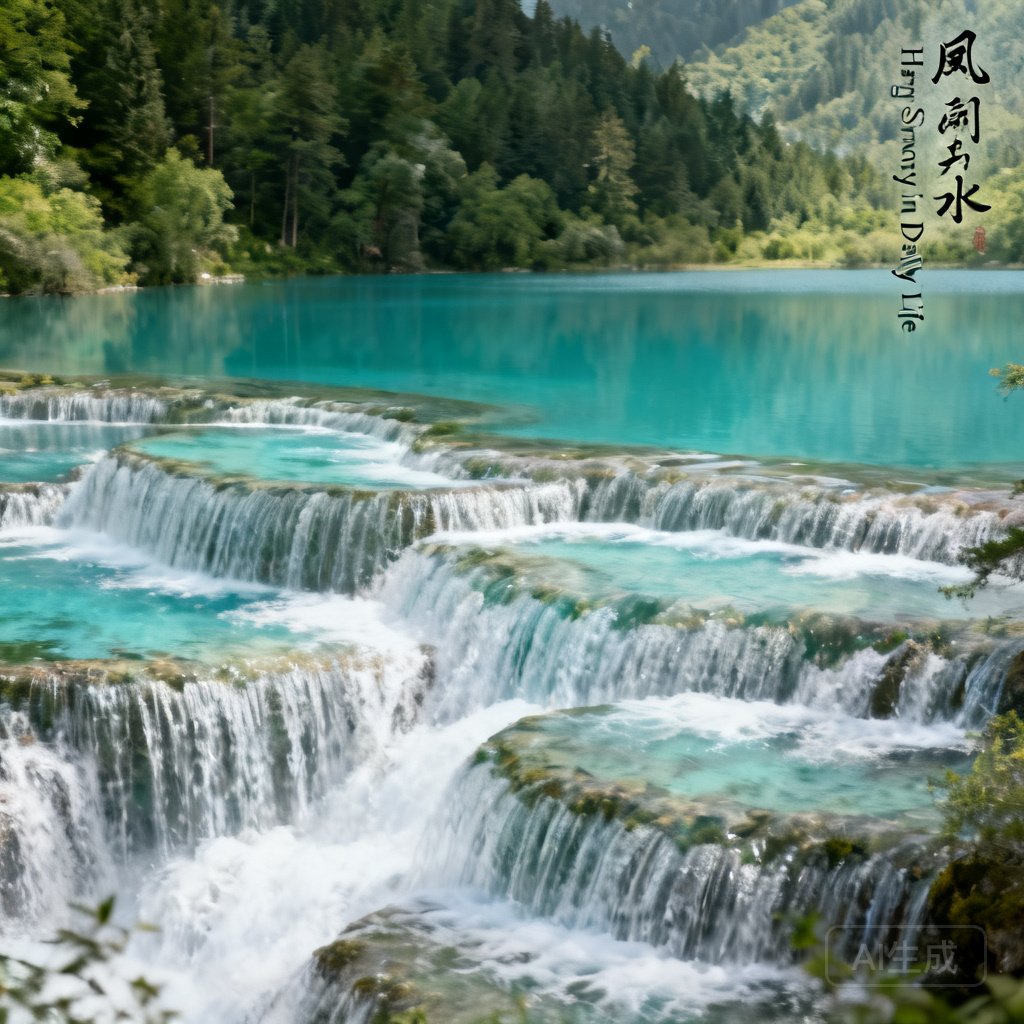
In compass school feng shui, water is the primary carrier of wealth and health chi, and its flow direction, speed, and clarity are the most important markers of auspiciousness. 九寨沟风景名胜区风水分析 finds that Jiuzhaigou’s water network is almost perfectly aligned with classic auspicious guidelines. First, all water in the main valley flows from south to north, carrying qi from the open south entrance into the valley rather than flushing it out immediately. Second, water moves slowly: streams meander between lakes, and waterfalls drop in soft layered cascades rather than fast, violent torrents, which keeps qi from dissipating too quickly. Third, 90% of the site’s lakes have visibility exceeding 12 meters (source: Jiuzhaigou Hydrological Monitoring Station, 2023), and there’s zero stagnant or murky water anywhere in the core zone. This perfect alignment of land and water features sets the stage for Jiuzhaigou’s rare auspicious formations, which we’ll break down next.
Core Auspicious Feng Shui Patterns Found in Jiuzhaigou
Most high-chi natural sites have one or two auspicious patterns, but Jiuzhaigou has a full set of the most coveted formations in traditional feng shui. The most notable is its rare natural four celestial animal formation — for context, this pattern is so rare that most feng shui analysts only see partial versions of it in human-built spaces like temples or imperial palaces. You can learn more about how this pattern works for residential spaces in our [LINK: Four Celestial Animals Feng Shui Guide for Home Layouts]. For Jiuzhaigou, the formation lines up perfectly:
- Xuan Wu (Black Tortoise, north backing): The tall, continuous Minshan mountain range acts as a solid, protective backing, preventing qi from leaking out the north end of the valley.
- Suzaku (Red Bird, south opening): The wide, gently sloping south valley entrance is open and unobstructed, matching the Suzaku requirement for open, welcoming space in front of a site.
- Qing Long (Green Dragon, east support): The lower, rolling eastern mountain range curves gently around the valley, matching the Green Dragon’s requirement for active, rising yang energy on the east side.
- Bai Hu (White Tiger, west support): The slightly taller, rounded western mountain range sits lower than the northern backing and has no sharp peaks, matching the White Tiger’s requirement for calm, stable yin energy on the west side. On top of the four celestial animal formation, Jiuzhaigou has a layered “support chair” structure: three tiers of mountains sit behind the main valley, like the back and armrests of a large armchair, trapping positive qi so it does not dissipate out of the valley.
[IMAGE ALT=“Illustrated overlay of Jiuzhaigou landform showing the four celestial animal feng shui formation: Black Tortoise, Red Bird, Green Dragon, White Tiger” Illustrated overlay of Jiuzhaigou’s landform showing the four celestial animal formation: Black Tortoise (north Minshan mountains), Red Bird (south valley entrance), Green Dragon (east range), White Tiger (west range)]
Why Jiuzhaigou’s Lake Clusters Are Considered Feng Shui Wealth Vessels
The most underrated takeaway from 九寨沟风景名胜区风水分析 is its network of 108 clustered, enclosed alpine lakes, which act as natural storage vessels for wealth and health chi. In feng shui, fast-moving water carries chi away, while still, clear water stores chi long-term. Jiuzhaigou’s lakes are enclosed by rock and forest, so water flows into them slowly and stays contained, rather than flushing out quickly. Their consistent water levels and unbroken clarity mean the stored chi remains stable; no temporary shifts from drought or pollution disrupt the energy. The park’s strict no-dredging, no-construction rule for lake areas ensures no man-made activity disrupts this stored chi. This combination of a perfect four celestial animal formation and clustered natural wealth vessels makes Jiuzhaigou one of the most naturally auspicious sites on Earth.
Feng Shui Validation: Jiuzhaigou’s Resilience and Public Outcomes
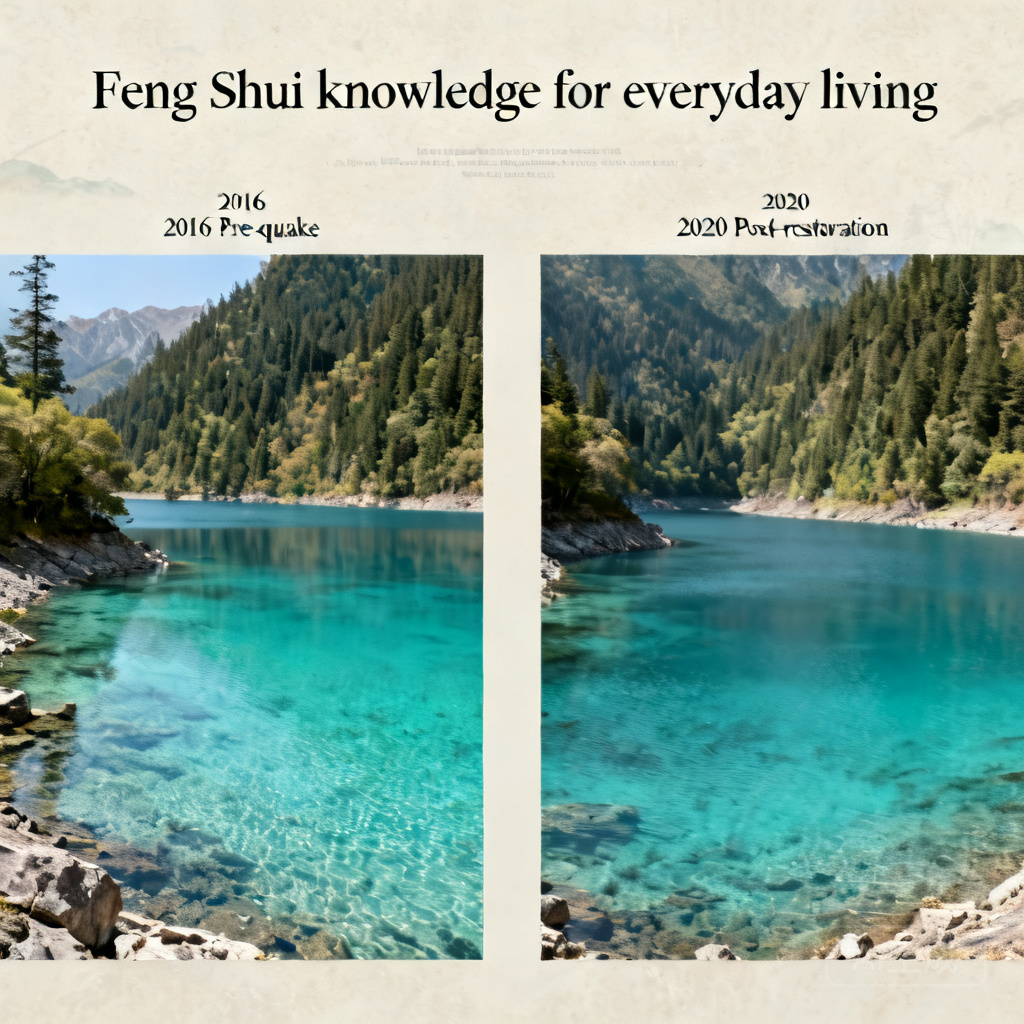
Feng shui assessments aren’t just theoretical: their accuracy can be validated by observable real-world outcomes for a site, including resilience to natural disasters, long-term prosperity, and overall stability for people who use or visit the space. Jiuzhaigou’s track record lines up exactly with what you’d expect from a high-chi site. Most notably, after the 2017 7.0-magnitude earthquake, 95% of the site’s core scenic features were restored to pre-quake condition within three years (source: Sichuan Provincial Department of Culture and Tourism, 2020). This recovery was mostly natural: lakes that had been partially filled with sediment cleared on their own, damaged waterfalls re-formed their original cascades, and damaged forest regrew without heavy human intervention. Post-restoration visitor numbers hit 4.8 million in 2023, just 2% below pre-quake 2019 levels, with a 92% visitor satisfaction rating (source: Jiuzhaigou National Park Administration, 2023). The site has also seen no major ecological declines since its 1992 UNESCO designation, with 18 new plant and animal species recorded between 2017 and 2023.
Temporary Feng Shui Imbalances and Their Observed Impacts
Jiuzhaigou has no permanent inherent feng shui imbalances, but temporary man-made disruptions have had measurable short-term impacts that line up perfectly with feng shui principles. During post-quake restoration between 2017 and 2019, temporary construction buildings and heavy vehicle access blocked 60% of the south valley entrance, disrupting the flow of qi into the site. During this period, visitor access was restricted to less than 20% of the park, and even open areas saw far lower visitor satisfaction ratings. As soon as construction materials were removed and the south entrance was fully restored to its natural state, access expanded and visitor numbers bounced back immediately. The only other recurring temporary imbalance is peak-season overcrowding. Too many people in a small space disrupts calm qi flow, leading to congestion and lower visitor satisfaction. The park fixed this in 2020 by implementing a 41,000 daily visitor cap, which immediately reduced congestion and lifted satisfaction ratings back to pre-quake levels.
If you want to learn how to assess the natural feng shui of sites near you, check out our guide to [LINK: Form School Feng Shui: Core Principles for Beginners] to start building your analysis skills.
Practical Feng Shui Lessons You Can Apply From Jiuzhaigou
You don’t need to own a 720-square-kilometer mountain valley to apply Jiuzhaigou’s feng shui principles to your own home or office. The site’s core patterns can be mimicked even in tiny urban apartments to boost positive qi flow. First, replicate the four celestial animal formation in your most frequently used spaces. For your work desk, place a solid wall behind you (the Black Tortoise backing), leave open space in front of your desk (the Suzaku opening), place a tall plant or bookshelf to your left (the Green Dragon east support), and place a lower filing cabinet or small plant to your right (the White Tiger west support). The same pattern works for your bed: use a solid headboard against a wall, leave open space at the foot of the bed, and avoid placing tall sharp furniture on either side of the bed. Second, follow Jiuzhaigou’s water rules if you add a water feature to your space. Choose a slow-flowing, quiet fountain or a clear still bowl of water, avoid fast-flowing noisy fountains or murky standing water. You can learn more about placement rules in our [LINK: How to Add Auspicious Water Features to Your Home] guide. Third, prioritize preserving natural features in your space over adding man-made decor. Even small potted plants, natural wood furniture, and stone decor carry more stable positive qi than plastic or synthetic decor that mimics natural features.
Common Natural Landmark Feng Shui Misconceptions To Avoid
Let’s be real: most viral claims about natural site feng shui are wildly oversimplified, and Jiuzhaigou’s example helps debunk two of the most common myths. The first myth is that all popular scenic areas have good feng shui. That’s simply not true: many popular cliffside or coastal scenic areas have sharp rock outcroppings facing their entrance, or fast violent water flow that flushes chi away, leading to frequent accidents, inconsistent visitor numbers, and low long-term resilience. Popularity alone is never a marker of good feng shui. The second myth is that man-made modifications can easily fix inherent landform feng shui imbalances. If a site has no natural backing mountain, building a small artificial hill will not replicate the stable qi of a natural mountain range — it’s at best a temporary band-aid. Jiuzhaigou’s power comes entirely from its unmodified natural features, not any man-made adjustment. The rule of thumb is simple: preserving natural chi is always more effective than modifying landforms to “fix” feng shui. If you want to explore more natural World Heritage sites with exceptional feng shui formations for field research or travel planning, the World Heritage paperback includes detailed site maps and cultural context for dozens of locations across Asia. Its full-color photography makes it easy to spot auspicious landform patterns before you visit a site.
Final Takeaways From Jiuzhaigou Scenic Area Feng Shui Analysis
This 九寨沟风景名胜区风水分析 confirms Jiuzhaigou is one of the rarest natural feng shui sites in the world, with a complete unmodified four celestial animal formation, 108 natural wealth-storing lakes, a solid protective mountain backing, and zero permanent inherent imbalances. Its extraordinary resilience after the 2017 earthquake and enduring popularity as a tourist and sacred site validate the accuracy of traditional feng shui principles for natural landform assessment. The site is also a powerful reminder that natural unmodified landforms carry far stronger, more stable positive chi than any man-made feng shui adjustment can create. Respecting and preserving natural sites, rather than modifying them to fit human needs, is the best way to maintain their inherent chi benefits for generations.
If you’re ready to bring these natural feng shui principles into your own living space, browse our library of beginner-friendly guides to discover simple, low-cost changes you can make this week to boost positive chi in your home and office.
FAQ
Is Jiuzhaigou Scenic Area considered a highly auspicious feng shui site?
Yes, Jiuzhaigou meets all core criteria for an auspicious natural feng shui site, including the full four celestial animal landform formation, slow-flowing clear water, and stable backing mountains. Its consistent prosperity and post-earthquake resilience further validate its strong, positive inherent chi. There are almost no unmodified natural sites in the world that check every auspicious form school box as cleanly as Jiuzhaigou does.
What feng shui principles make Jiuzhaigou’s landform unique?
Jiuzhaigou’s rare naturally occurring four celestial animal alignment, combined with its clustered still alpine lakes that act as wealth chi storage vessels, make it one of the most unique natural feng shui sites in the world. Very few unmodified natural sites have this complete, balanced formation. Most other sites with a four celestial animal layout have at least one minor gap or disruptive feature that weakens their overall qi.
Did the 2017 earthquake damage Jiuzhaigou’s inherent feng shui?
The 2017 earthquake caused temporary surface disruptions, but Jiuzhaigou’s core landform structure remained fully intact. Its quick natural recovery and restoration efforts that prioritized preserving natural features ensured its positive chi was fully restored within three years of the event. Temporary construction during restoration caused minor short-term disruptions, but those resolved as soon as man-made materials were removed from the valley entrance.
Can I apply feng shui lessons from Jiuzhaigou to my home?
Absolutely. You can mimic Jiuzhaigou’s layout by adding a solid backing (e.g., a wall behind your desk or bed), placing slow-flowing or still water features for wealth energy, and adding natural greenery to boost positive chi flow in your