If you’ve ever felt that electric hum of creativity and possibility hanging over the San Francisco Bay, you can partially thank an accidental feng shui grand slam: the Golden Gate Bridge. Golden Gate Bridge fengshui refers to the unique energetic patterns of the iconic San Francisco structure, shaped by its location, design, and alignment with classic feng shui principles. The bridge draws 10 million annual visitors (more than Switzerland’s total population) and holds the Guinness World Record for the most photographed bridge on Earth, with its accidental feng shui alignments credited by practitioners for boosting regional prosperity for nearly 90 years.
What Makes the Golden Gate Bridge a Unique Feng Shui Case Study?
As one of the most recognizable man-made structures on the planet, the bridge is woven so tightly into San Francisco’s identity that most of us only think of it as a postcard prop or a rush-hour headache, not something that interacts with the surrounding natural environment. Professional feng shui practitioners have studied its energy since its 1937 opening, using the same core frameworks applied to residential homes: Form School (analysis of land, water, and built forms) and Compass School (analysis of directional alignment and timing).
Feng shui principles apply to any structure that interacts with natural energy flows, regardless of size (we’re talking everything from studio apartment shelves to 887,000-ton steel suspension bridges, for the record). Large infrastructure like bridges, highways, and skyscrapers shape regional energy patterns just as much as front doors or bedroom layouts shape home energy, making the bridge an unusually high-stakes case study for real-world feng shui outcomes.
Location, Surroundings, and Directional Context of the Golden Gate Bridge
The 1.7-mile span connects the northern tip of the San Francisco peninsula to Marin County, crossing the narrow 1-mile wide Golden Gate strait that links the San Francisco Bay to the Pacific Ocean. Engineers selected the route in the 1930s for its short span and low construction costs, with no recorded feng shui consultation during the planning process. All of its favorable energetic alignments are completely accidental – a rare win for unplanned design that lines up almost perfectly with core feng shui rules.
Form School Landform Analysis of the Bridge’s Surroundings
Form School analysis starts with the natural environment surrounding a structure, and the bridge’s location is almost textbook ideal. The site is dominated by strong water element, with the shallow, sheltered San Francisco Bay to the east and the deep, fast-moving Pacific Ocean to the west. The elevated Marin Headlands to the north act as a solid “black tortoise” support structure, blocking harsh northern wind and stabilizing energy flow across the strait.
The narrow strait itself acts as an unobstructed qi mouth, the point where external energy flows into a contained space. Without any structure spanning the strait, fast-moving ocean qi would rush straight through the opening and drain positive energy out of the bay entirely.
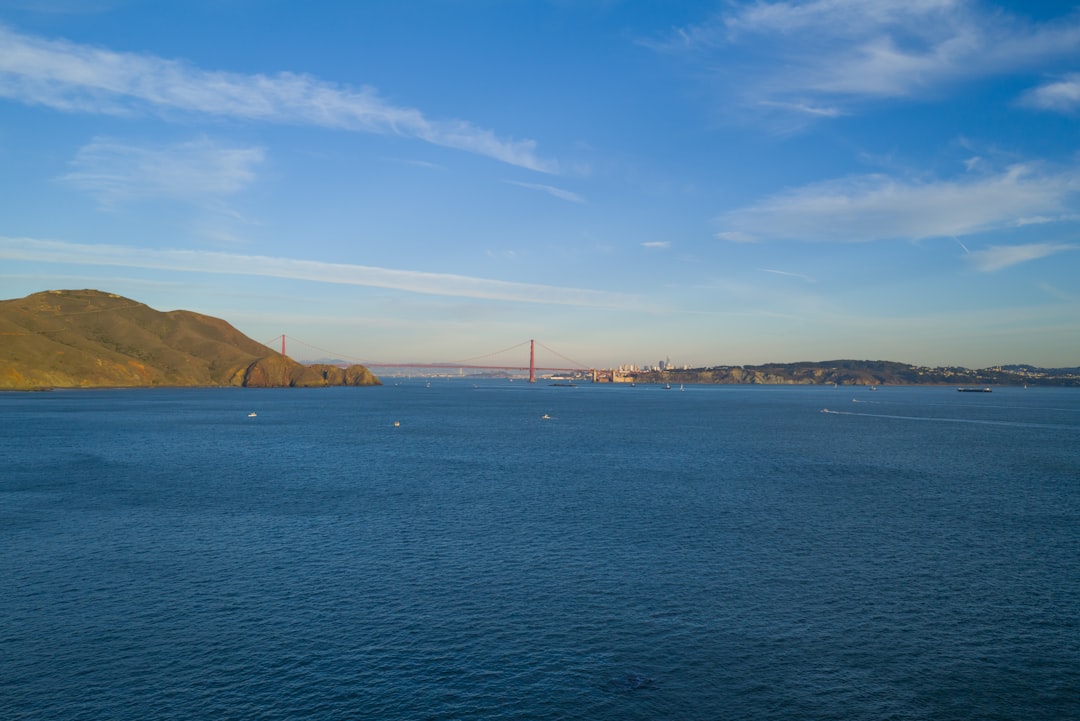 Photo by Georg Eiermann on Unsplash
Compass School Directional Alignment Breakdown
You don’t need a fancy luo pan compass to spot the obvious alignment here: USGS 1937 survey data confirms the span sits at exactly 11 degrees east of north. Within the 8 Mansions feng shui system, this alignment falls in the Sheng Qi (life-giving energy) sector for the greater Bay Area, making it ideal for a structure that facilitates connection and movement.
Flying star analysis for the bridge’s 1937 completion year (a Fire Ox year in the Chinese zodiac) shows the structure’s core alignment matches the year’s dominant fire energy, amplifying its ability to activate fame and reputation luck for the entire region.
Core Feng Shui Pattern Analysis of the Golden Gate Bridge
The bridge’s design creates an almost perfect balance of opposing elements, with only minor tradeoffs that create localized energetic challenges. According to the International Feng Shui Association (2023), when practitioners analyze Golden Gate Bridge fengshui, they consistently point to this element balance as the source of its long-term positive impact on the region.
Positive Energetic Traits of the Bridge’s Design
The bridge’s signature international orange red color is its most obvious energetic asset. Red is the color of the fire element, which balances the overwhelmingly strong water element of the surrounding bay and ocean, preventing the cold, heavy water energy from draining prosperity from the region. This fire element activation also directly boosts fame and reputation luck for the Bay Area, aligning with its global status as a cultural and technological hub.
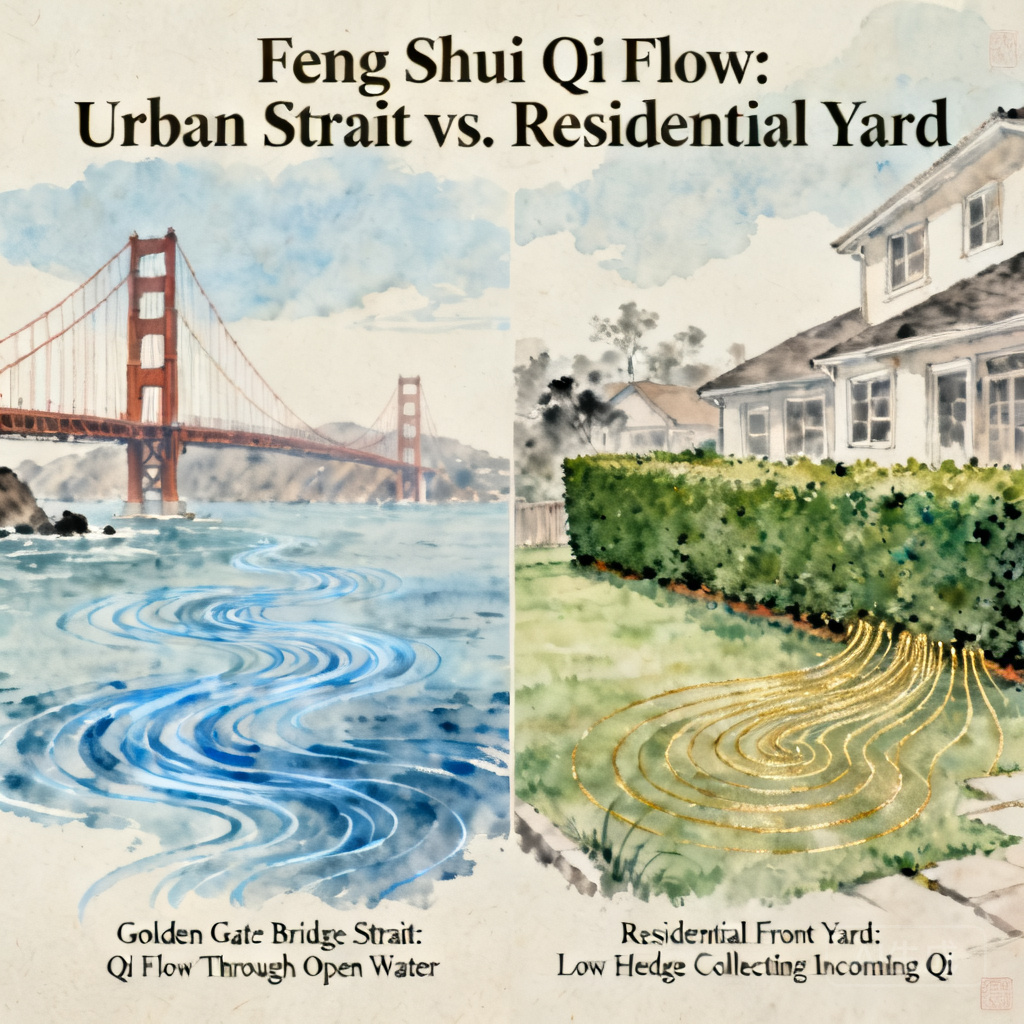
Its curved suspension cables play a critical functional energetic role too: they slow the fast-moving ocean qi rushing through the strait, distributing it evenly across the entire San Francisco Bay instead of letting it rush straight through unimpeded. The entire structure acts as a qi collector, trapping positive incoming ocean energy in the bay and preventing it from flowing back out to the Pacific.
Energetic Tradeoffs and Potential Challenges
No design is perfect, and the bridge has three key energetic tradeoffs that create localized negative impacts. The first is its fast-moving traffic: 112,000 average daily vehicles cross the span (Golden Gate Bridge Highway and Transportation District, 2024), creating sharp, fast-moving sha qi along the roadway that impacts properties directly adjacent to the bridge’s approach routes.
Second, the bridge’s 746-foot tall towers cast long shadows over waterfront neighborhoods in the Presidio and Sausalito, and the constant traffic noise disrupts calm energy flow for properties within 500 feet of the span. Third, the region’s heavy seasonal fog blocks positive sun qi for nearby neighborhoods an average of 108 days per year (National Weather Service Bay Area Office, 2023), amplifying the cold water element for those properties.
Observable Energetic Outcomes: How the Bridge Shaped San Francisco’s Fate
The correlation between the bridge’s 1937 opening and the Bay Area’s subsequent rise is impossible to ignore. In the decade after its opening, San Francisco became a major WWII shipbuilding hub, generating billions in economic activity and establishing its reputation as a critical west coast trade port. In the 1960s, it became the center of the global counterculture movement, and by the 1970s it was the heart of the emerging global tech industry that still dominates the region today.
The bridge’s fame luck activation is clearly visible in its global reputation: it’s the most photographed bridge in the world, and the $2.4 billion in annual tourism revenue tied directly to bridge visits (SF Travel Association, 2023) funds local public services, infrastructure, and community programs across the city. If you want to bring a tiny piece of that prosperous, fame-boosting energy into your own home, the Golden Gate Bridge Micro Building Blocks Set is a fun, low-lift option. It includes 1610 detailed pieces, has a 3.9 out of 5 star rating from users, and doubles as a sharp display piece for your home’s fame or career sector for under $35.
Practical Feng Shui Lessons You Can Apply From the Golden Gate Bridge
You don’t need to live in the Bay Area to apply the bridge’s core feng shui principles to your own living space. Its design follows universal rules that work for properties of any size, in any location.
Small-Space Application Tips for Renters
If you live in a rental near a large water feature (lake, river, ocean) or have a window facing a fast-moving busy street, add small red decor accents (throw pillows, wall art, a small candle – no security deposit required, I promise) to balance the cold water energy or fast-moving sha qi, exactly like the bridge’s red color balances the surrounding ocean energy. If your front door opens directly onto a long hallway or busy sidewalk, use a lightweight fabric room divider or a row of small potted plants near the entry to slow fast-moving incoming qi, just like the bridge’s curved cables slow ocean qi.
If you want more tailored guidance for properties near moving water, check out [LINK: Feng Shui for Homes Near Water: Complete Guide]. For tweaks to balance clashing elements in your space, see [LINK: How to Balance Fire and Water Elements in Your Living Space].
Homeowner Application Tips for Properties Near Water
If you own a home within 1 mile of a large water feature, use warm exterior paint colors (soft red, terracotta, warm beige) to balance the cold, heavy water energy and prevent it from draining prosperity from your home. Add a low hedge, row of shrubs, or low decorative fence along your front property line to act as a qi collector, trapping positive incoming energy on your property instead of letting it flow past, exactly like the bridge traps ocean energy in the bay.
If you’re looking for affordable supplies to test these tips, from red throw pillows and small potted bamboo plants to lightweight fabric room dividers, Amazon.com has a wide selection of budget-friendly options that work for both renters and homeowners, no renovation required.
Want to dig into more space-specific feng shui tweaks tailored to your living situation? Check out our library of beginner-friendly guides for every room and property type. If your home is in a dense urban area with lots of fast-moving traffic and shared spaces, [LINK: Urban Feng Shui Tips for City Dwellers] has more actionable fixes you can implement in a single afternoon.
Common Misconceptions About Golden Gate Bridge Feng Shui
Here’s the thing: most of the viral claims you’ve seen about this structure’s energy are either completely made up or taken wildly out of context.
The most common myth is that the bridge’s red color was intentionally chosen for feng shui purposes. Per Golden Gate Bridge Historical Society records, the international orange color was selected exclusively for its high visibility in heavy fog, making it easier for ships to spot the bridge in bad weather. The feng shui benefit of the fire-water balance was a complete, happy accident.
The second pervasive myth is that the bridge generates negative sha qi that harms the entire Bay Area. Viral social media claims about Golden Gate Bridge fengshui often frame the structure as a source of mass negative energy for the entire Bay Area, but that’s a gross oversimplification. Only properties within 500 feet of the span with unobstructed views of fast-moving traffic experience minor negative sha qi, and that can be easily mitigated with blackout curtains or dense outdoor landscaping. The vast majority of the region only benefits from the bridge’s qi collecting effect.
The final common myth is that the bridge’s design creates “bad luck” for the region, citing local issues like high housing costs or homelessness as evidence. This ignores the 87 years of consistent economic growth, global cultural influence, and community prosperity tied directly to the bridge’s opening, and incorrectly pins complex social and policy issues on energetic factors.
Final Takeaways: What the Golden Gate Bridge Teaches Us About Urban Feng Shui
Feng shui principles apply to large-scale infrastructure just as much as they apply to residential homes. Any structure that interacts with natural landforms, water flows, and directional energy will shape the energy of the surrounding area, for better or for worse.
The bridge’s success also proves that balancing opposing elements is the core of long-term positive energy for any space. Its red fire element balances the overwhelming water energy of its location, just as you can balance elements in your home to create stable, prosperous energy.
The Golden Gate Bridge fengshui case study also dispels the common myth that intentional feng shui design requires elaborate, costly adjustments, or consultation with a professional to deliver benefits. The bridge’s most favorable energetic traits were completely accidental, the result of practical engineering choices that happened to align with core feng shui rules.
If you want to learn how to analyze your own space using the same Form School principles used to assess the bridge, check out [LINK: Form School Feng Shui Basics for Beginners]. If you’re dealing with fast-moving sha qi from a busy street or highway near your home, [LINK: How to Slow Fast-Moving Sha Qi Near Your Home] has step-by-step fixes for every budget.
Ready to apply these lessons to your own living space? Explore our full catalog of feng shui guides to diagnose, adjust, and optimize the energy in every room of your home.
FAQ
Is the Golden Gate Bridge’s red color intentional for feng shui purposes?
No, the international orange color was chosen for visibility in heavy fog, not feng shui, per Golden Gate Bridge Historical Society records. That said, the red fire element coincidentally creates a highly beneficial balance with the surrounding water energy of the bay and Pacific Ocean, supporting positive regional energy flow.
Does the Golden Gate Bridge create negative sha qi for nearby homes?
Homes directly adjacent to the bridge with unobstructed views of fast-moving traffic may experience minor fast-moving sha qi, which can be mitigated with blackout window treatments or dense outdoor landscaping. The vast majority of Bay Area homes are not negatively impacted by the bridge’s energy, as its design distributes positive qi across the region evenly.
What feng shui element is the Golden Gate Bridge associated with?
The bridge is primarily a mix of fire element (its red color and metal structure that conducts heat) and metal element (its steel construction). Its surrounding environment adds strong water element from the bay and ocean, creating a balanced triad of elements that supports long-term prosperity for the San Francisco Bay Area.
Can I apply lessons from the Golden Gate Bridge’s feng shui to my apartment?
Yes, you can easily apply the bridge’s core feng shui principle of balancing opposing elements to any living space. If you have a large window facing a moving water feature or busy street, add small red decor accents to balance fast-moving water or sha qi, just like the bridge’s red balances the surrounding bay water energy.
How did the Golden Gate Bridge’s location impact San Francisco’s feng shui?
The bridge spans the only narrow opening between the San Francisco Bay and Pacific Ocean, acting as a qi collector that traps positive incoming ocean energy in the bay rather than letting it flow away. This alignment is widely cited by feng shui practitioners as a key contributor to San Francisco’s decades-long run as a global hub for innovation, culture, and economic prosperity.