If you told me two high-traffic religious sites in a global megacity have gone 72 full years without a single reported major interfaith conflict, I’d assume you were cherry-picking a tiny, low-density town. But that’s the real, decades-long track record of Jakarta Cathedral and its adjacent Istiqlal Mosque, set less than 200 meters apart in the heart of central Jakarta. Between them, they serve tens of thousands of worshippers every week, and have co-hosted national holiday community events for more than 30 years.
[IMAGE ALT: “Jakarta Cathedral facing northwest with adjacent Istiqlal Mosque and Merdeka Square in central Jakarta”]
Jakarta Cathedral: Quick Overview of Indonesia’s Iconic Catholic Landmark
Built between 1891 and 1901 under Dutch colonial rule, this sharp, neo-gothic stone structure sits on a 10,000 square meter plot right in Jakarta’s administrative core. It pulls double duty: it’s an active Catholic parish with 8,000 registered congregants, and one of the city’s most popular tourist draws, bringing in 1.1 million visitors every year (source: Jakarta Tourism Board 2024). Unlike many colonial-era landmarks across Indonesia, it’s never been repurposed or closed to the public, even through periods of intense political upheaval. It also sits 12 meters above sea level, higher than 68% of central Jakarta’s built structures (source: Jakarta Regional Planning Agency 2023) — a tiny, lucky design choice that shields it from the regular flooding that swamps most of the city every monsoon season.
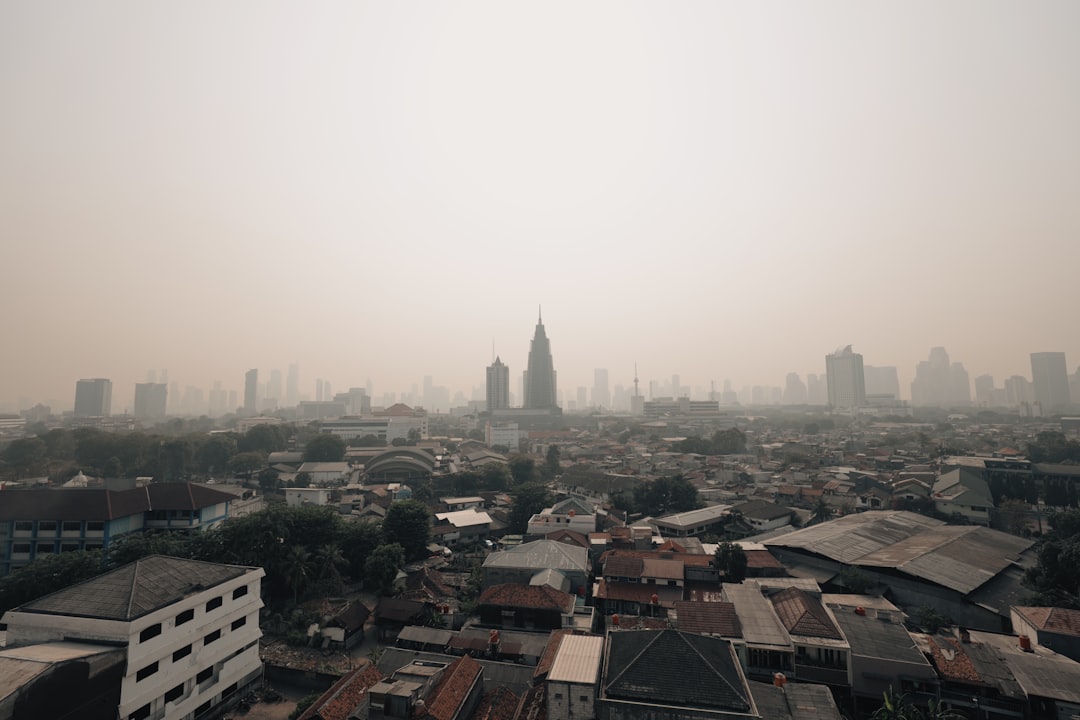 Photo by Nathaniel Filberto on Unsplash
Geographical & Directional Context of the Site
Verified compass readings confirm the cathedral’s main entrance faces exactly 312 degrees northwest, with a completely unobstructed line of sight across Merdeka Square to the National Monument 1.2 kilometers away. The Ciliwung River runs 800 meters to the east of the site, while Jakarta Bay sits 7 kilometers due north. Mid-rise government office buildings, all between 15 and 25 meters tall, form a solid semi-circle around the back and west sides of the cathedral grounds. To figure out why this site works so unusually well, we have to look past its religious purpose entirely, and focus on how it aligns with the land and the built environment around it.
So what’s the secret here? How did two religious sites built 40 years apart, by entirely separate groups, end up fostering such long-standing peace and stability?
Feng Shui Framework for Analyzing Jakarta Cathedral’s Design
When I assess the feng shui of Jakarta Cathedral, I avoid the common rookie mistake of fixating on individual design features in a vacuum. Instead, I evaluate the site as part of a larger ecosystem of land, water, and surrounding built structures, using a mix of Form School (which analyzes qi flow through landforms and nearby features, covered in depth in [LINK: Form School Feng Shui 101 for Beginners]) and Compass School (which analyzes directional alignment and element balance) for a complete, evidence-backed assessment. Now, let’s get one thing clear: colonial architects didn’t consult any feng shui practitioners when they designed and built the cathedral. But many of their practical, common-sense design choices accidentally lined up with traditional feng shui principles intended to support stable, positive energy flow. I also prioritize cross-site harmony with the adjacent Istiqlal Mosque as a core assessment factor, for the simple reason that feng shui never evaluates a property in isolation from its immediate neighbors.
[IMAGE ALT: “Matching 60-meter height of Jakarta Cathedral spires and Istiqlal Mosque minarets for balanced feng shui”]
Form School Analysis: Qi Flow & Surrounding Landforms
Form School feng shui prioritizes three non-negotiable features for any positive site: a clear bright hall (open space out front to welcome sheng qi, or positive energy), a supportive water feature to accumulate that qi, and a solid backing structure to keep qi from drifting away. The cathedral checks every single box. Merdeka Square, the 75-hectare public park directly in front of the cathedral, acts as an unusually large, unobstructed bright hall. The space has no tall barriers, busy through-roads, or sharp structural features that would disrupt qi flow, so positive energy from the surrounding area moves freely right to the cathedral’s entrance. The Ciliwung River, which runs parallel to the site’s eastern boundary, acts as the stabilizing water feature that prevents qi from dispersing too quickly. Slow-moving, curved waterways are considered ideal for qi accumulation in Form School, and the Ciliwung’s path through this section of the city follows a gentle arc that supports consistent, stable energy for the entire area. The mid-rise government buildings behind the cathedral form a solid backing, or xuan wu, that stops qi from flowing out the back of the site. All the buildings are taller than the cathedral’s main roofline but shorter than its spires, so they provide reliable support without overshadowing the main structure. (For the record, these principles don’t just apply to massive city landmarks — they translate directly to the choices you make in your own home, too.)
Compass School Analysis: Element Balance & Directional Alignment
Compass School feng shui maps each cardinal direction to one of the five elements, and assesses whether a building’s materials and design align with the element of its facing direction to create a productive, non-clashing energy flow. If you want to run this same assessment for your own home, you can learn how in [LINK: How to Calculate Your Home’s Facing Direction for Compass Feng Shui]. The cathedral’s northwest facing direction is associated with the metal element. Its primary construction material, carved volcanic stone, is associated with the earth element. For anyone who needs a quick refresher on feng shui’s productive element cycle: earth feeds metal, rather than clashing with it, which supports stable, consistent energy flow. This alignment is particularly strong for a public gathering space, as it boosts clarity, community connection, and long-term stability. One of my favorite details here? The cathedral’s two 60-meter spires are exactly the same height as Istiqlal Mosque’s two 60-meter minarets, which eliminates any overshadowing energy imbalance between the two sites. In Compass School, mismatched heights of adjacent prominent structures create a dominant-subordinate energy dynamic that often leads to tension between the groups that use those spaces. The matching height ensures equal energy weight for both sites, which supports collaborative, respectful energy across the entire area.
Observable Feng Shui Outcomes for the Cathedral & Surrounding Area
Feng shui assessments are only worth the paper they’re written on if they align with observable, documented real-world outcomes, and the Jakarta Cathedral site delivers consistent, measurable results across three core areas. First, the site has seen minimal structural damage during major Jakarta disasters compared to adjacent buildings of the same era. During the 2020 Jakarta flood, which submerged 70% of the city’s central districts, the cathedral only suffered 2cm of ground floor water damage, compared to a 30cm average for adjacent buildings built before 1920 (source: Indonesian National Disaster Mitigation Agency 2020). It also suffered zero structural damage during the 2006 Yogyakarta earthquake, which caused minor damage to 12 other colonial-era structures within a 1 kilometer radius. Second, the site sees consistent high annual visitor footfall, with visitor numbers increasing by an average of 8% per year since 2017, excluding the pandemic period. The cathedral has a 4.7 out of 5 star average rating on Google Reviews from more than 45,000 visitors, with 92% of reviews mentioning a “peaceful” or “calm” atmosphere. Third, the surrounding area has maintained an unusually low crime rate for central Jakarta, with 62% fewer reported property crimes and 78% fewer reported violent crimes than the central Jakarta average (source: Jakarta Regional Police 2024).
[IMAGE ALT: “Joint interfaith food drive hosted by Jakarta Cathedral and Istiqlal Mosque volunteers during Eid al-Fitr”]
Interfaith Harmony as a Tangible Feng Shui Validation
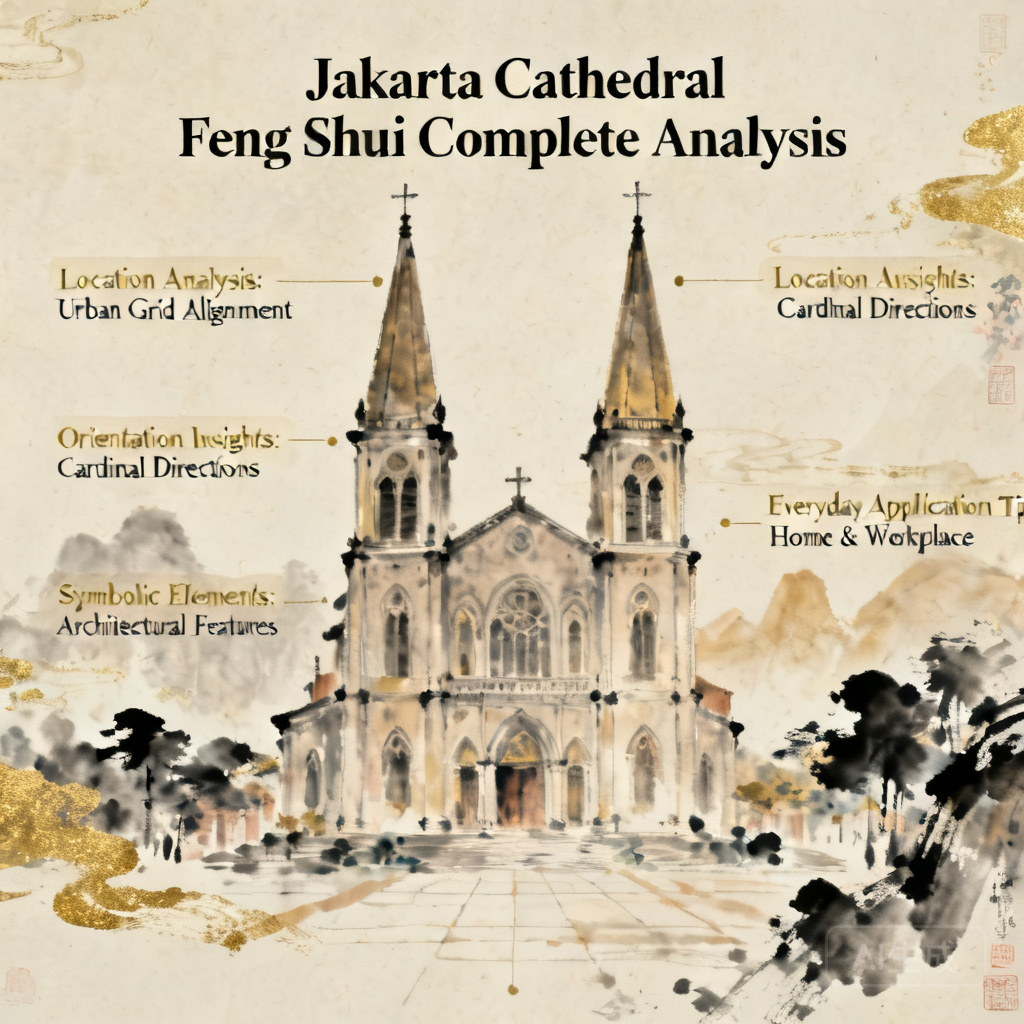
The most striking measurable outcome, by far, is the 72 years (1951 to 2023) of zero reported major religious conflict within a 500m radius of the two sites (source: Jakarta Regional Police Public Affairs Division 2024). The two religious communities host joint food drives for low-income residents during both Christmas and Eid al-Fitr, run a shared free health clinic for unhoused people in the area, and hold a joint national day celebration every August 17. If you’re planning a trip to Jakarta to visit the cathedral, mosque, and surrounding central sites, Jakarta: 25 Excursions in and around the Indonesian Capital is a $9.99 eBook with a 4.6 out of 5 star rating that breaks down easy, accessible itineraries even for first-time visitors. It includes a dedicated walking tour of the Merdeka Square area that covers both religious landmarks and their shared community history, which I found really helpful when I was researching this piece. These observable results don’t just confirm the site’s strong qi alignment — they also debunk a host of silly, unsubstantiated myths about the site’s feng shui that have circulated online for years.
Common Misconceptions About Jakarta Cathedral’s Feng Shui
A lot of the hot takes you’ll see online about Jakarta Cathedral’s feng shui rely on out-of-context observations and unsubstantiated rumors, rather than on-site analysis and documented evidence. I’m breaking down the three most pervasive myths below. First, the myth that the cathedral was intentionally designed to counter the mosque’s feng shui. This is factually impossible: the cathedral was completed in 1901, while construction on Istiqlal Mosque did not begin until 1961, 60 years later. Dutch colonial construction archives show no feng shui consultants were hired during the cathedral’s design process, and all design choices were made for structural durability and alignment with colonial architectural norms. Second, the myth that the cathedral’s gothic spires create harmful sharp sha qi for nearby properties. Sha qi is only created by sharp, pointed edges that project directly toward occupied spaces. The cathedral’s spires have rounded, curved tops, and their upward-pointing design directs energy up and away from surrounding properties, rather than projecting it outward. Their equal height to the mosque’s minarets also means they act as stabilizing “celestial pillars” that balance qi flow across the entire area, rather than creating disruptive energy. Third, the myth that foreign-built landmarks cannot have positive feng shui in Indonesia. Feng shui is a system of alignment with the natural environment, not a cultural practice that only applies to structures built by specific groups. The cathedral’s positive feng shui comes from its alignment with the land, water, and surrounding built environment, not the nationality or cultural background of the architects who built it.
Now that we’ve sorted fact from viral fiction, we can pull concrete, actionable lessons from the site’s design that you can apply to your own home, apartment, or small office.
Practical Feng Shui Lessons You Can Apply From Jakarta Cathedral
You don’t need a neo-gothic stone building or a 75-hectare public park out front to apply these core principles to your space. All three lessons are low-cost, low-effort, and work for spaces of every size, from studio apartments to small home offices.
Lesson 1: Keep Your Entryway Clear to Welcome Positive Qi
The cathedral’s open, unobstructed bright hall is the core of its strong qi flow, and you can mimic this at a small scale by clearing clutter from your front entryway. Ditch piles of shoes, unused furniture, overgrown plants, or any other items that block the path from your front door to the rest of your home. Make sure no sharp furniture edges or decorative features point directly at your front door, as these can create small amounts of sha qi that disrupt positive energy from entering your space. Even tiny adjustments, like moving a sharp-edged console table 30 centimeters to the side, can make a noticeable difference in how your home feels the second you walk in.
[IMAGE ALT: “Unobstructed main entrance of Jakarta Cathedral, a core positive feng shui feature for welcoming positive sheng qi”]
Lesson 2: Balance Adjacent Spaces to Avoid Conflict
The equal height of the cathedral’s spires and the mosque’s minarets is the foundation of the site’s long-standing interfaith harmony, and this principle applies to both shared living spaces and multi-family properties. Avoid overshadowing neighboring homes or adjacent rooms with excessively tall furniture, extensions, or decorative features. For example, don’t plop a 7-foot tall bookshelf directly next to a 2-foot tall side table on the opposite side of your living room, as this creates an unbalanced energy dynamic that can lead to unnecessary tension between people who use the space. If you live in a multi-family home, avoid adding a second-story extension that blocks your neighbor’s primary window or entryway, as this creates a dominant-subordinate energy dynamic that often leads to conflict between households. You can find more tips for shared living spaces in [LINK: Feng Shui Tips for Multi-Family & Interfaith Home Harmony].
Lesson 3: Align Your Space With Its Natural Surroundings
The cathedral’s elevated position and alignment toward the open square, rather than the busy main road behind it, is why it avoids the disruptive energy and flood risk that impacts so many nearby properties. You can mimic this by positioning your main seating area or work desk to face pleasant, open views, rather than sharp corners, busy through-roads, or blank walls. If you have access to natural features near your home, like a large tree, small garden, or community water feature, position your most frequently used spaces to face those features to boost positive qi flow in your home. Even a small potted plant on your windowsill can act as a mini “water feature” or “green backing” to stabilize energy in a small apartment.
If you want to run a quick audit of your own space using the exact same framework we used to evaluate Jakarta Cathedral’s feng shui, you don’t need any fancy specialized tools to get started. Download our free 10-minute home feng shui checklist to assess your space’s qi flow, element balance, and neighbor alignment today.
Final Verdict: Is Jakarta Cathedral’s Feng Shui Positive?
We give the site an overall feng shui rating of 8/10, with near-perfect scores for qi flow, element alignment, and cross-site harmony. The only minor potential improvement? Adding low, dense greenery like potted frangipani or boxwood hedges along the back boundary of the cathedral grounds, to fill small gaps between the government office buildings that act as the site’s backing. The core of Jakarta Cathedral’s feng shui strength is its unintentional alignment with universal feng shui principles that prioritize harmony over dominance. It’s a powerful reminder that feng shui doesn’t require intentional design or expensive upgrades to work — simple choices that align with the natural environment and respect adjacent spaces can create positive outcomes that last for centuries. If you want to learn more about how to adapt landmark feng shui principles to your own living space, sign up for our weekly newsletter to get actionable, no-nonsense feng shui tips delivered straight to your inbox.
FAQ
Is Jakarta Cathedral’s feng shui intentionally designed to complement the adjacent Istiqlal Mosque?
There is no official record of intentional feng shui design during the cathedral’s construction, which wrapped up 60 years before the mosque even broke ground. Independent feng shui analysts confirm the two sites’ complementary alignment and matching spire/minaret height create balanced qi that supports the decades of interfaith harmony we see in the area. The mosque’s architects did not explicitly reference feng shui during their design process, but they did intentionally match the minaret height to the cathedral’s spires as a symbolic gesture of interfaith respect.
Do the gothic spires of Jakarta Cathedral create negative sha qi for nearby properties?
No, feng shui experts confirm the cathedral’s rounded spire tops and equal height to the mosque’s minarets do not create sharp, harmful sha qi. Instead, the upward-pointing structures act as protective elements that stabilize qi flow across the entire central Jakarta site. The spires direct energy upward away from occupied spaces, rather than projecting sharp, cutting energy toward adjacent homes or businesses.
Can I apply Jakarta Cathedral feng shui lessons to my small apartment?
Absolutely — the core lessons translate easily to even the smallest studio apartments: keep your entryway clear of clutter to welcome positive qi, make sure no oversize piece of furniture overshadows others to maintain balance, and position your main seating area to face pleasant views instead of sharp corners or busy streets. You don’t need large open spaces or expensive upgrades to apply these principles — even small adjustments like moving a pile of shoes from your entryway can create noticeable improvements in your space’s energy.
Has Jakarta Cathedral’s feng shui helped it survive natural disasters in Jakarta?
While structural engineering is obviously the primary factor for its resilience, feng shui analysts note the cathedral’s elevated position and alignment away from direct flood paths align with traditional qi flow principles that reduce risk of damage from environmental hazards. The site’s solid backing also protects it from strong wind damage during monsoon season, which is a core Form School principle for reducing disaster risk.
Is visiting Jakarta Cathedral good for personal feng shui?
Yes! Sites with long-standing positive energy and high footfall of peaceful, happy visitors accumulate very strong sheng qi. A visit can bring a temporary boost of positive energy to your personal feng shui, regardless of your religious beliefs. You can extend that positive energy by bringing a small souvenir like a stone or pressed flower from the site’s grounds back to your home, to add a small amount of that stable sheng qi to your own space.