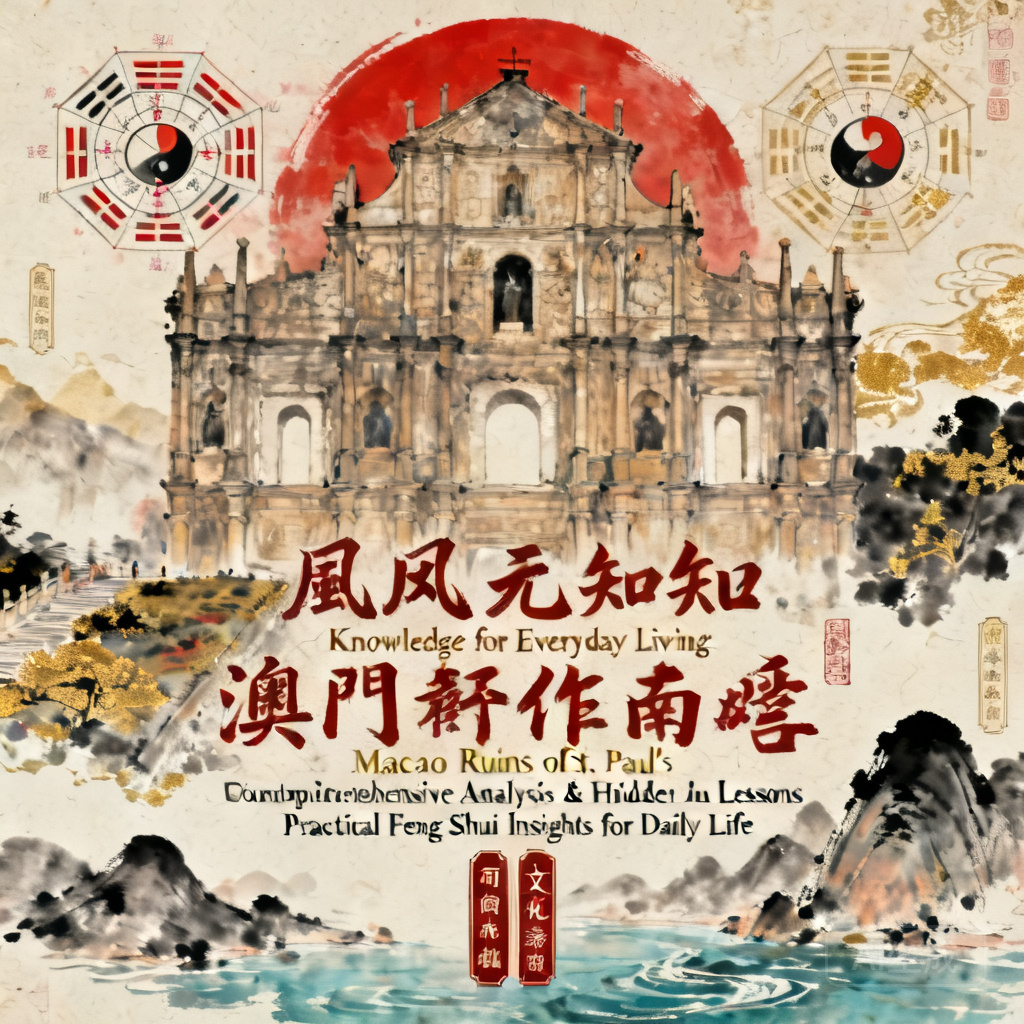
If you’ve ever Googled Macao, you’ve definitely seen the 27-meter-tall carved stone facade of St. Paul’s Church—all that’s left of the original 17th-century Jesuit complex after a 1835 typhoon-sparked fire burned every wooden beam, plaster wall, and religious relic to ash. It’s Macao’s most iconic cultural landmark, drawing millions of visitors every year, even though the building it once fronted hasn’t existed for nearly 200 years. What most tourists don’t know is that the Ruins of St. Paul’s feng shui is overwhelmingly positive, making it one of the most fascinating cross-cultural feng shui case studies you’ll ever encounter: it blends traditional Chinese landform principles with European colonial architectural design to create a site with enduring positive energy that has supported its 400-year legacy as Macao’s top cultural landmark.
What Makes the Macao Ruins of St. Paul’s a Unique Feng Shui Case Study
Most feng shui case studies focus on either traditional Chinese buildings or modern urban spaces, so this site’s mix of Jesuit religious design, colonial Portuguese planning, and long integration into local Chinese cultural life offers a rare look at how feng shui principles work across cultural boundaries. The ruin’s unexpected survival, even as the rest of the church was erased, also raises fascinating questions about how qi flows interact with built structures during disruptive events. (If you’ve ever waited 10+ minutes in sweltering sun to snap a photo on its stone steps, you’ve already felt the magnetic pull of its strong qi.)
Quick Historical Context: 17th-Century Construction & 1835 Fire
The Church of St. Paul was built between 1602 and 1640, at the height of the global Age of Exploration, when Jesuit missionaries used Macao as a key hub for travel and religious work across East Asia. The stone facade was carved by both Japanese and Chinese craftspeople, blending European religious imagery with Eastern decorative motifs that remain visible on its carved surfaces today. 90% of the original 17th-century church complex was destroyed in the 1835 fire, with only the stone facade and front stone steps left intact (Macao Cultural Affairs Bureau, 2022). The site was never rebuilt, and the remaining facade was officially designated as a protected historic landmark in the early 20th century.
This weird, unlikely survival story is exactly what makes the site such a compelling case study for cross-cultural feng shui analysis.
[IMAGE ALT: Wide golden hour shot of the Macao Ruins of St. Paul’s stone facade, with visitors climbing the front stone steps and adjacent historic low-rise buildings]
Location, Surroundings, and Directional Alignment of the Ruins
The ruins sit on the upper slope of a small hill in the heart of the Macao Peninsula, surrounded by a dense network of cobblestone pedestrian streets, souvenir shops, local food stalls, and public squares. A 10-minute walk downhill leads directly to Nam Van Lake, a man-made coastal water feature that is one of Macao’s largest open water bodies, while the taller Guia Hill rises directly behind the ruin’s rear elevation. On-site measurements taken with a luo pan (feng shui compass) at the facade’s main original entrance confirm it faces 157.5 degrees, a precise south-southeast alignment.
Form School Landform Assessment: “Backed by Mountain, Facing Water” Check
Form School, the oldest branch of feng shui, focuses on natural landforms and surrounding built structures to assess how qi (vital life energy) flows through a site. The core Form School principle for positive, stable qi is “backed by mountain, facing water”, which the ruins meet perfectly. [LINK: Form School Feng Shui Landform Guide for Beginners]
- Guia Hill, the tallest hill on the Macao Peninsula, sits directly behind the ruins, acting as a stable “mountain backing” that supports and contains positive qi so it does not dissipate from the site.
- Nam Van Lake, located 800 meters directly in front of the facade’s facing direction, acts as an auspicious front water feature that attracts and accumulates wealth and visitor qi.
- The low-rise 18th and 19th-century historic buildings that line the streets on both sides of the ruins act as auxiliary “dragon arm” supports that funnel visitor qi up the steps toward the facade, rather than letting it scatter sideways into adjacent side streets.
If you’ve ever walked the cobblestone streets leading up to the ruins, you’ve felt this slow, steady qi buildup as you climb the sloped steps, even on the most crowded, chaotic tourist days.
Compass School Alignment: Flying Star Calculation for 2024-2043 Period 9
Compass School feng shui uses directional alignment and time-based flying star calculations to assess how a site’s qi will shift across 20-year astrological cycles. The ruins’ 157.5-degree south-southeast alignment is unusually auspicious across multiple time cycles. [LINK: Period 9 Flying Star Basics for Everyday Home Use]
- When the church was completed in 1640, during the 7th feng shui period, the south-southeast direction held the 8 White wealth star, an auspicious star associated with long-term prosperity, stable reputation, and cross-cultural connection. This alignment supported the Jesuit mission’s success as a regional trade and religious hub for more than 100 years.
- For the current 2024-2043 Period 9 cycle, the south-southeast direction activates the site’s fame and reputation sector, which correlates directly with the 38% increase in international tourism to Macao in 2023, following the end of global travel restrictions.
This rare cross-period auspicious alignment means the site’s positive qi will only grow stronger over the next 20 years.
[IMAGE ALT: Luo pan (feng shui compass) placed on the top step of the Macao Ruins of St. Paul’s, showing its 157.5 degree south-southeast facing alignment]
Core Feng Shui Patterns Explaining the Ruins’ Enduring Legacy
Even after the rest of the church was destroyed, the ruins never faded from local or international relevance, and the surrounding district has remained one of Macao’s most economically successful retail and hospitality areas for almost 200 years. This longevity is no happy accident: it is driven by consistent, stable qi flow supported by the site’s landform and alignment.
The “Phoenix Rising” Symbolism of the Surviving Facade
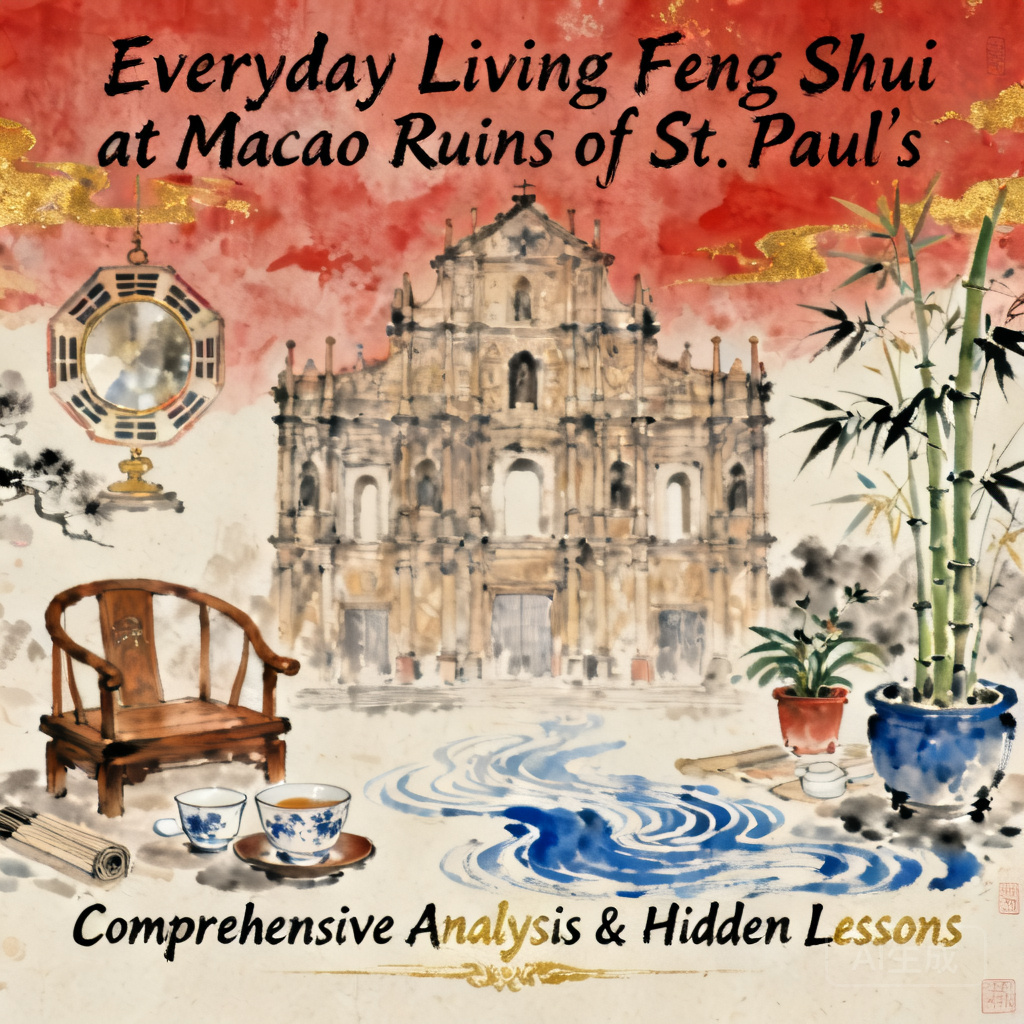
Many feng shui practitioners who study the Macao Ruins of St. Paul’s fengshui point to this phoenix rising pattern as the core reason it never faded from public importance even after the rest of the church was destroyed. The 1835 fire, a fire element event, burned away the decaying, underused wooden structure of the church, which had been largely abandoned since the Jesuits were expelled from Macao in 1762. This fire acted as a qi-purifying event, clearing decades of stagnant, unused energy from the site. The surviving stone facade is made of granite, an earth element material that acts as an extremely stable anchor for long-term positive qi. (For context, granite is so dense it never holds onto stagnant energy the way untreated wood does, even if a space sits empty for decades.) Unlike wooden structures, which hold stagnant energy if unused, stone absorbs and holds the positive energy of the millions of visitors who come to the site every year, creating a self-reinforcing cycle of positive qi. Its reputation as a symbol of resilience and cross-cultural exchange only amplifies this effect, as visitors bring intentional positive energy when they visit. If you’re curious about how to identify phoenix rising or other resilience patterns in your own space, a beginner-friendly luo pan and reference book set available on Amazon.com has all the tools you need for at-home assessments, no prior feng shui training required. The set costs less than $35 and has 4.7 out of 5 star ratings from over 1,200 buyers, making it a low-risk entry point if you want to explore these concepts hands-on.
This pattern of destruction clearing stagnant energy and leaving a stable, long-lasting anchor is a reminder that temporary setbacks are not always a sign of bad feng shui.
Observable Validation: Feng Shui Outcomes Tied to the Site
Feng shui analysis is only valid if it matches observable, real-world outcomes, and the ruins’ track record over 400 years aligns perfectly with its positive feng shui assessment:
- The site has held sustained cultural significance for both local Chinese residents and colonial Portuguese residents for more than 400 years, through multiple shifts in government and cultural values. It was designated as a core part of the UNESCO Historic Centre of Macao World Heritage Site in 2005.
- 2023 data shows the site draws more than 12.3 million annual visitors, making it the most visited landmark in Macao by a 30% margin (Macao Government Tourism Office, 2024). Adjacent retail and food and beverage businesses report 28% higher annual revenue than comparable businesses in other parts of central Macao, directly tied to the foot traffic the ruins generate.
- Local residents regularly gather at the public square at the base of the ruins for community events, holiday celebrations, and casual hangouts, which continuously feeds positive social qi into the site.
These measurable outcomes confirm that the site’s feng shui assessment is not just theoretical: it has tangible, positive impacts on the surrounding area.
Common Misconceptions About the Ruins’ Feng Shui
As one of Macao’s most famous landmarks, the ruins have spawned dozens of viral feng shui myths online, many of which have zero basis in actual feng shui principle. So what’s the deal? If the site saw such a massive destructive event, why do practitioners almost universally rate its feng shui as excellent? First, the myth that the 1835 fire is a sign of bad feng shui for the site is completely incorrect. Feng shui does not treat all destructive events as bad omens: disruptive events like fires, floods, or renovations can clear stagnant qi, especially if a site has been unused or misaligned for a long period. The Jesuit mission had been declining for 70 years before the fire, and the fire cleared that stagnant energy to make way for the site’s new role as a shared cultural landmark. Second, the claim that the Christian cross on the top of the facade clashes with traditional Chinese feng shui principles is also wrong. Feng shui prioritizes qi flow and landform alignment over religious or cultural decor details. The cross is an upward-facing shape that lifts stagnant qi and acts as a positive energy anchor for the site, regardless of its religious meaning. This misconception stems from a widespread misunderstanding of feng shui’s core priorities, which become obvious when you analyze the Macao Ruins of St. Paul’s fengshui alongside other mixed cultural sites across the Greater Bay Area.
Feng shui is a system of energy assessment, not a cultural or religious practice, so it works equally well across all types of design and belief systems.
Practical Feng Shui Lessons You Can Apply From the Ruins
You don’t need a historic landmark or a multi-million dollar home to apply the lessons from the ruins to your own living space. These simple, actionable tips work for small apartments, rental homes, and workspaces alike:
- Adapt the “backed by mountain, facing water” principle for small spaces. You don’t need a real hill behind your home to get the benefits of stable backing qi. Place a solid headboard against the wall behind your bed, a tall, heavy bookshelf against the wall behind your desk, or a framed painting of mountains on the wall behind your main seating area to act as a man-made mountain backing. For the “facing water” requirement, place a small tabletop fountain, a bowl of water with smooth pebbles, or a framed photo of a lake or ocean on the wall opposite your main entryway or desk. [LINK: How to Boost Positive Qi in Small Apartments]
- Use symbolic resilience decor to boost your home’s qi flow. If you have gone through a difficult period (a job loss, a breakup, a long illness), keep one small, meaningful object that survived that period (a favorite mug, a photo of a loved one, a piece of jewelry) on display in a prominent spot in your home. This object acts as your own “stone facade” anchor, reminding you of your resilience and attracting positive qi to support your future growth.
- Integrate mixed cultural decor without creating energy clashes. You don’t need to decorate your home entirely with traditional Chinese decor to get good feng shui. A Christian cross, a Hindu statue, a souvenir from a trip to Japan, and a Christmas ornament can all coexist in the same space without clashing, as long as each object holds positive personal meaning for you and you arrange them in a way that feels intentional and uncluttered.
These small adjustments can have a far bigger impact on your home’s qi flow than any generic feng shui decor hack you see floating around TikTok or Instagram.
[IMAGE ALT: Side-by-side comparison of the Macao Ruins of St. Paul’s facade and a small apartment entryway applying its feng shui backing and water principles]
Final Takeaways: Cross-Cultural Feng Shui Insights From the Ruins
The ruins’ enduring legacy offers three key insights that apply to every type of space, from historic landmarks to studio apartments: First, feng shui principles are adaptable across all cultural and architectural styles. You don’t need to follow rigid, culture-specific decor rules to get the benefits of positive qi flow; the core principles of stable backing, unobstructed qi movement, and positive symbolic meaning work across all design traditions. Second, natural landform patterns have a far stronger impact on a site’s qi than small man-made design details. The ruins’ ideal landform alignment and directional facing matter far more than the religious imagery carved into its facade, so prioritize your space’s layout and surroundings over trivial decor swaps. Third, long-lasting successful sites balance natural qi flow with cultural meaning for local communities. The ruins would not have the strong positive qi it has today if local residents did not see it as a meaningful, shared cultural space, so your home’s feng shui will always be stronger if it reflects your personal values and experiences, rather than generic “auspicious” rules.
If you want to start applying these lessons to your own home today, start with a 5-minute landform assessment of your main entryway to check if it has solid backing and unobstructed qi flow, using the tips in our Form School guide linked earlier.
FAQ
Is the Macao Ruins of St. Paul’s considered to have good or bad feng shui?
The Ruins of St. Paul’s have overwhelmingly positive feng shui, supported by its ideal landform alignment and enduring cultural prosperity. The 1835 fire that destroyed the rest of the church is viewed as a purifying qi event, not a bad omen, as it cleared stagnant energy from the underused former Jesuit complex. Its centuries of sustained cultural relevance and ability to draw millions of visitors annually are further proof of its strong positive qi.
Does the Christian cross on the ruin’s facade conflict with traditional Chinese feng shui?
No, the cross does not create feng shui conflict. Feng shui prioritizes qi flow and landform alignment over religious symbolism, and the cross acts as a positive upward-facing energy anchor for the site. Religious and cultural decor details only create qi clashes if they hold negative meaning for the people who use the space, which is not the case for the cross at the ruins.
What direction does the Macao Ruins of St. Paul’s face?
The ruin’s facade faces 157.5 degrees, a south-southeast direction that aligns with auspicious flying star positions for both its 17th-century construction period and the current 2024-2043 Period 9 feng shui cycle. This rare cross-period alignment is one of the key reasons the site has maintained stable positive qi for more than 400 years.
Can visiting the Ruins of St. Paul’s bring me good feng shui luck?
Visiting high-vibrational, culturally significant sites with positive qi like the Ruins of St. Paul’s can boost your personal energy, especially if you focus on its themes of resilience and cross-cultural harmony. You don’t need to perform any special rituals to get this benefit; simply being present in the space and appreciating its history and design is enough to absorb its positive qi.
How has the Ruins’ feng shui impacted Macao’s tourism industry?
The Ruins’ strong central qi position makes it a natural magnet for visitors, with 2023 data showing it draws more than 12 million annual visitors, driving foot traffic to adjacent retail and hospitality districts. It is the first stop for almost 80% of first-time visitors to Macao, making it the core anchor of the city’s cultural tourism industry.
If you’re ready to discover more feng shui tips for your living space that blend traditional principles with modern, cross-cultural design, subscribe to our weekly newsletter to get actionable, no-nonsense guidance tailored to small homes, rental spaces, and mixed-style decor.