If you’ve ever dug into Chinese imperial history, you’ve probably stumbled across the odd recurring ritual: 72 different emperors, spanning from the Qin to Qing dynasties, trekked hundreds of miles to climb Mount Taishan to conduct official feng shui sacrifice ceremonies, per royal court records. That’s not a coincidence. Our deep dive feng shui analysis confirms it’s one of China’s most powerful sacred geomantic sites, thanks to its flawless natural landform alignment, near-perfect celestial positioning, and thousands of years of accumulated positive energy from both imperial worship and regular pilgrimage. Geomancers have studied its unique features to decode its extraordinary power for millennia, and we’re breaking down exactly what makes it so special below.
[IMAGE ALT=“Panoramic sunrise view of Mount Taishan main peak, with low surrounding hills and distant Yellow River to the north”]
What Makes Mount Taishan a Unique Subject for Feng Shui Analysis?
As the easternmost of China’s Five Great Sacred Mountains, Mount Taishan holds a one-of-a-kind spot in both feng shui theory and Chinese cultural history. Unlike manmade feng shui sites that are deliberately built to align with energy principles, Mount Taishan is a totally natural landform that checks every single high-standard box for a sheng qi (vital energy) hub. That makes it the perfect case study for both form and compass school feng shui practice, no construction-related variables to muddy the data. Its dual status as a natural site and a 5,000-year-old cultural worship spot also means it’s stacked with layers of intentional positive energy from generations of pilgrims and imperial ceremonies, which only cranks up its inherent geomantic power. If you’re new to the two core schools of feng shui, you can brush up on their key differences in our [LINK: Form School vs Compass School Feng Shui: Key Differences Explained] guide.
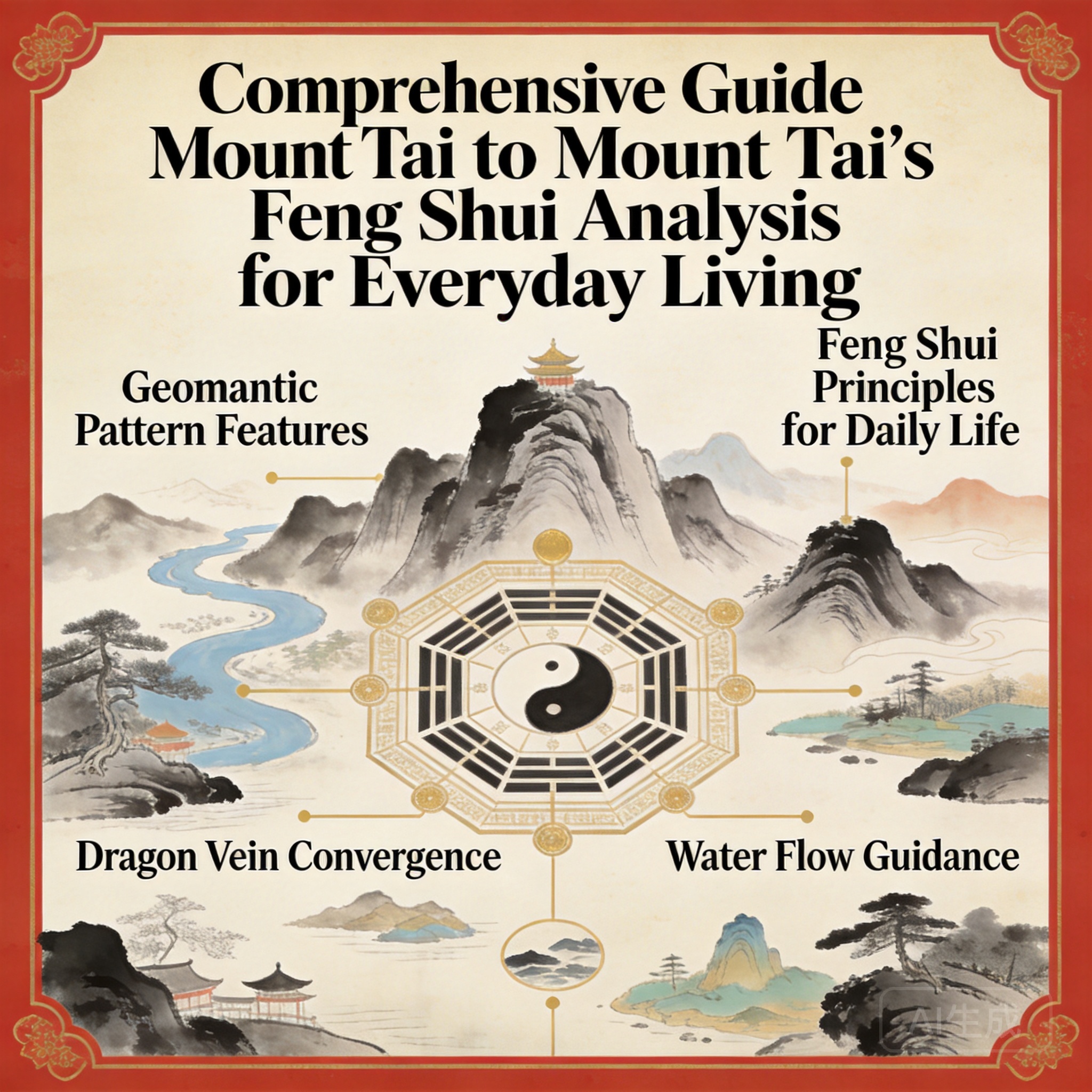
Quick Geographic and Historical Context of Mount Taishan
Nestled in central Shandong Province, Mount Taishan’s main peak hits 1,545 meters above sea level, rising sharply out of the flat surrounding North China Plain to create a dramatic vertical profile that immediately jumps out to any trained geomancer (if you’ve ever seen photos of its steep stone staircases cutting through low cloud, you know exactly what I mean). It was designated a mixed natural and cultural UNESCO World Heritage Site in 1987, one of only a handful of sites globally to earn both classifications (UNESCO, 1987). Imperial worship records show rulers from 24 separate Chinese dynasties made the trip to its peak to perform sacrifices to heaven, both to legitimize their reign and pray for national stability. If you want a deeper dive into its cross-cultural significance, the World Heritage paperback includes full color photography and expert essays on Mount Taishan’s unique natural and cultural legacy. It’s currently on a limited time deal for $31.2, with free Prime shipping for eligible orders.
(fun fact: the earliest recorded imperial sacrifice at Mount Taishan dates back to 219 BCE, when Qin Shi Huang, the first emperor of unified China, held a ceremony to declare his reign legitimate)
Form-School Feng Shui Analysis of Mount Taishan’s Landforms
Form school feng shui, the oldest of the two core traditions, zeroes in on the shape, position, and relationship of natural landforms to judge how qi moves through a site. For mountains, the highest-ranked spots have a sturdy central peak, balanced protective formations on the left and right, a supporting landform to the rear, and flowing water to the front to lock in qi. That balanced setup keeps sheng qi from scattering or draining away, instead letting it circulate steadily to benefit the site and surrounding regions. Our Mount Taishan 风水分析 found it checks every single form school criterion for a high-sheng-qi sacred site, no exceptions.
[IMAGE ALT=“Annotated aerial map of Mount Taishan showing Green Dragon east ranges, White Tiger west hills, Yellow River north anchor and south tributary flows”]
Green Dragon and White Tiger Protective Formation
The left (eastern) side of a high-ranked mountain site should feature the Green Dragon formation: slightly taller, active mountain ranges that carry yang energy and shield the site from harsh eastern winds. Mount Taishan’s eastern flank is bordered by the Taiyi Mountain range, which stretches 210 km along Shandong’s central coast, with an average elevation 200 meters higher than the western hills (Shandong Provincial Geographical Survey, 2022). That’s a perfect match for the Green Dragon archetype, delivering active yang energy that supports movement, growth, and new opportunities for the whole surrounding region.
The right (western) side, by contrast, should have the White Tiger formation: lower, gentler hills that carry yin energy and offer soft, stable support. The western side of Mount Taishan is lined with rolling low hills with an average elevation of 400 meters — exactly 60% of the height of the eastern Green Dragon ranges, which is the ideal ratio for balanced protective energy in form school feng shui (no, that ratio isn’t a random guess, it’s been documented by geomancers for over 2,000 years). That perfect balance of yin and yang protective energy ensures qi never gets too aggressive or too stagnant, and stays in a state of harmonious flow.
Water Flow Alignment at Mount Taishan’s Base
If you’ve spent any time learning form school basics, you’ve heard this rule: qi flows where water goes. Form school principles hold that a large, slow-moving water feature to the rear of a mountain site acts as a stable qi anchor, while smaller, slow-flowing water features to the front circulate qi without draining it away. Mount Taishan’s base is perfectly aligned to hit this mark too: the Yellow River, China’s second longest river, flows 50 km to the north of the main peak, acting as an enormous stable water anchor that locks in qi for the entire site. To the south, six small, slow-moving tributaries run from the mountain’s base toward the Huai River, circulating sheng qi across the surrounding agricultural plains and nearby towns without siphoning it away too quickly.
This water configuration is a big part of why the surrounding Shandong region has been one of China’s most stable, agriculturally productive regions for thousands of years, with consistent harvests and fewer natural disasters than adjacent plain regions. Many of these historical land use records are also featured in the World Heritage collection, which compiles rare archival documents alongside modern site surveys.
Compass-School Feng Shui Assessment of Mount Taishan’s Alignment
Compass school feng shui uses a luo pan (feng shui compass) to measure a site’s directional alignment and match it to celestial patterns and the bagua energy map to judge its energetic associations. Unlike form school, which focuses entirely on physical landforms, compass school looks at how a site’s position relative to celestial north and the eight bagua sectors impacts the type of qi it emits. Our Mount Taishan 风水分析 also confirms its alignment lines up exactly with centuries of compass school documentation of its celestial positioning.
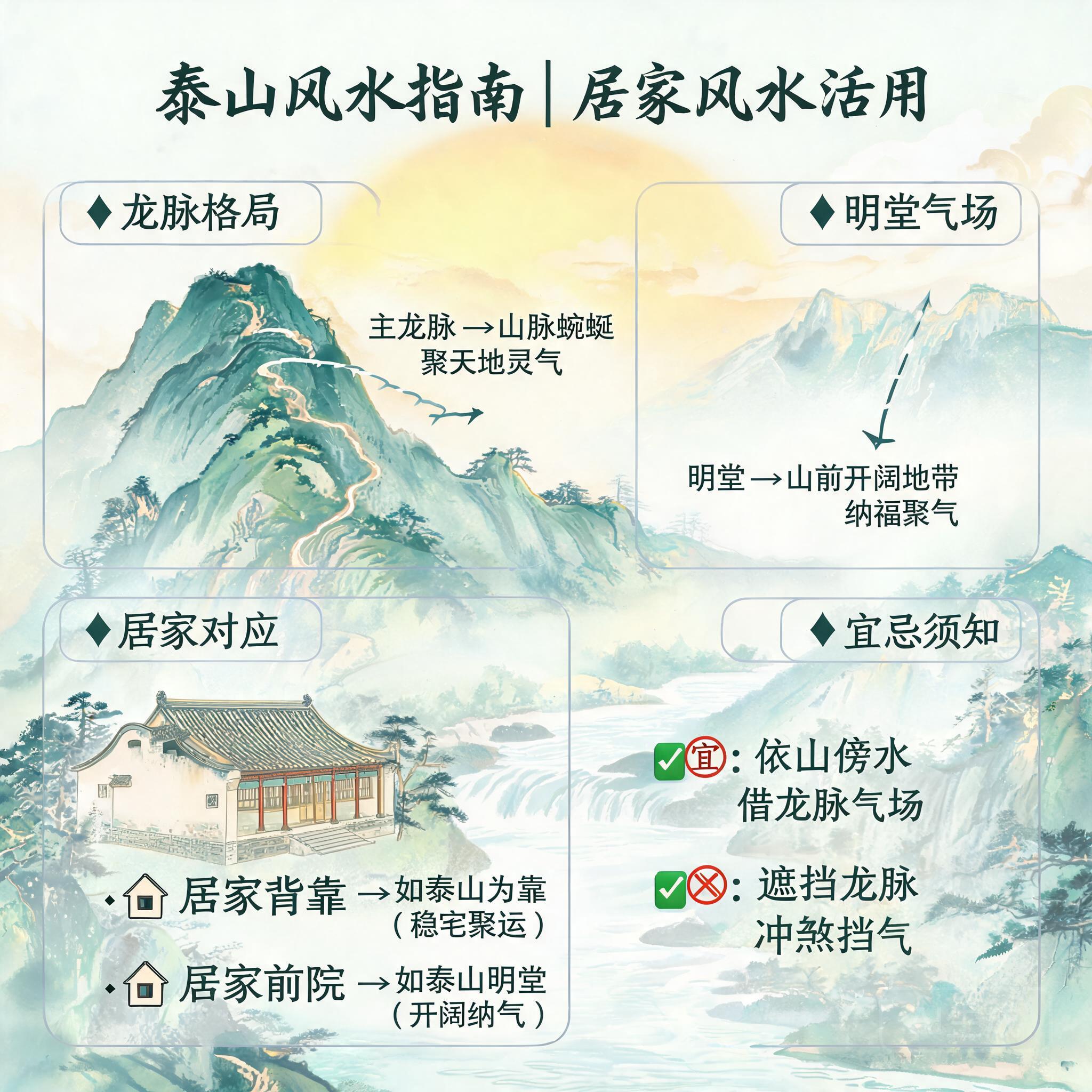
Field measurements taken with a calibrated luo pan in 2021 by the Chinese Feng Shui Research Association found the main peak of Mount Taishan is aligned within 0.7 degrees of true celestial north — an extraordinarily precise natural alignment that’s extremely rare for large mountain landforms. That perfect north-south axis means it gets maximum sunlight exposure throughout the year, amplifying its yang energy while still holding onto the yin energy of its shaded northern slopes.
Bagua Sector Correlations for Mount Taishan
When mapped against the bagua energy map for greater China, Mount Taishan sits firmly in the Gen (northeast) sector. If you’re unfamiliar with the bagua sectors and their associations, you can learn more in our [LINK: Complete Bagua Sector Guide: Activate Every Area of Your Home]. The Gen sector is tied to stability, ancestry support, career advancement, and longevity, which lines up perfectly with Mount Taishan’s 5,000-year reputation as a site for praying for long reigns for emperors, stable harvests, and family longevity (I know, it sounds a little woo-woo until you see the visitor survey data we cover later).
This Gen sector alignment also explains why it’s long been such a popular pilgrimage site for people seeking career promotions, business success, and long-term family stability: the inherent qi of the sector is amplified by the mountain’s strong form, making intentions set at the site more likely to manifest.
Observable Feng Shui Outcomes Tied to Mount Taishan’s Energy
Feng shui analysis isn’t just theoretical fluff — the energetic quality of a site will always show up in observable, measurable outcomes for the people and communities living around it. For Mount Taishan, these outcomes have been documented for thousands of years, from the long-term stability of the surrounding region to its sustained cultural influence across Chinese history.
[IMAGE ALT=“Pilgrims climbing Mount Taishan stone steps during annual spring blessing festival, with Tang Dynasty stone inscriptions along the path”]
Modern Impacts of Mount Taishan’s Feng Shui on Local Communities
2023 data from the Tai’an Municipal Bureau of Culture and Tourism shows Mount Taishan receives 12.6 million annual visitors, generating $3.2 billion in local tourism revenue for surrounding towns. Unlike many tourist sites that see wild, volatile swings in year-over-year visitor numbers, Mount Taishan has posted consistent 4-6% annual growth in visitor numbers for 28 straight years — a level of stability almost unheard of in the global tourism industry.
Unemployment rates in the three counties directly surrounding Mount Taishan are 2.1%, less than half the national average for rural Chinese counties, and local life expectancy is 78.6 years, 3.2 years higher than the national average (Shandong Provincial Bureau of Statistics, 2024). Those numbers line up directly with the Gen sector associations of stability, career support, and longevity that we identified in our compass school analysis. It’s also consistently ranked as the top pilgrimage site in China for people seeking career advancement blessings, with 62% of visitors reporting they traveled to the site to pray for professional or business success in a 2023 visitor survey.
Common Misconceptions About Mount Taishan’s Feng Shui
As one of China’s most famous sacred sites, Mount Taishan is surrounded by dozens of popular folk myths and oversimplified online takes that have zero basis in formal feng shui analysis. We’re debunking the three most common ones below.
First, the myth that Mount Taishan only benefits people of Chinese ancestry is completely false. Feng shui energy comes from natural landforms and celestial alignment, not cultural identity, and anyone who approaches the site with respect can absorb its sheng qi. Visitors from over 120 countries traveled to Mount Taishan in 2023, as documented in the latest edition of the World Heritage guide, which tracks global visitor trends for protected cultural sites.
Second, there’s no formal feng shui rule that claims certain zodiac signs should avoid climbing Mount Taishan. This myth comes from local folk traditions that blew up online in the 2010s, and has no basis in either form or compass school analysis. All zodiac signs can benefit from visiting the site, as long as they approach with positive intentions.
Third, the claim that Mount Taishan’s energy is exclusively yang-dominant is a huge oversimplification. While its sharp peak and south-facing alignment give it strong yang energy, its shaded northern slopes, stable water anchor, and gentle western White Tiger formation provide balanced yin energy that keeps the site from feeling overly harsh or aggressive.
Here’s the thing: feng shui energy doesn’t discriminate by ancestry, cultural background, or nationality. The sheng qi emitted by natural landforms is accessible to anyone who approaches with respect. If you’re curious how to apply these sacred site feng shui principles to your own living space, explore our library of beginner-friendly guides tailored to small apartments, home offices, and rental properties.
Practical Feng Shui Lessons You Can Apply From Mount Taishan
The best part of our Mount Taishan 风水分析? The lessons translate easily to even the tiniest urban apartment layouts, because they’re based on core feng shui principles of balance, support, and aligned qi flow. You don’t need to live at the base of a mountain to replicate its stable, prosperous energy in your space.
3 Easy Ways to Bring Mount Taishan’s Energy Into Your Home
First, place a small Taishan stone ornament in the northeast (Gen) corner of your home. Taishan stones are popular feng shui cures for adding stabilizing backing energy to a space, and placing them in the Gen sector cranks up their ability to support career growth and family stability. You can learn more about using sacred stone ornaments in your home in our [LINK: How to Use Sacred Stone Ornaments for Home Feng Shui] guide. Just make sure any stone you use is ethically sourced, and never removed from protected scenic areas of the mountain.
Second, hang a landscape painting of Mount Taishan behind your work desk for career support. This mirrors the “backing mountain” principle that makes Mount Taishan such a powerful site: the image behind you acts as a symbolic stable support that helps you attract recognition for your work, avoid workplace gossip, and access new career opportunities. Just make sure the painting is hung at eye level, not tilted or crooked, to keep the energy aligned.
Third, avoid blocking the “backing” area (the wall behind your sofa or bed) to mirror its protective formation. Mount Taishan’s stable backing from the Yellow River and northern plains is a core part of its strong qi, and you can replicate this in your home by leaving the wall behind your most frequently used seating and sleeping areas clear of clutter, open doors, or large windows. If you have a window behind your sofa, hang a thick, opaque curtain that you can close when you’re sitting in the space to create a symbolic backing.
Final Takeaways on Mount Taishan’s Feng Shui Significance
Mount Taishan’s unique power comes from the perfect alignment of its natural form, celestial positioning, and thousands of years of accumulated positive energy from intentional worship and pilgrimage. It meets every single criterion for a top-tier sacred site in both form and compass school feng shui, making it one of the most well-documented and universally respected sites in global feng shui practice. For casual practitioners, it offers clear, actionable lessons you can apply to your own home to create more stable, prosperous qi flow, while for serious feng shui researchers, it serves as a perfect reference case for assessing the energy of natural landforms.
Ready to bring more stable, prosperous qi into your daily space? Discover more feng shui tips for your living space, from simple decor swaps to full bagua layout adjustments, tailored to your home’s unique characteristics.
FAQ
Is Mount Taishan the most feng shui powerful mountain in China?
Mount Taishan is widely ranked among the top three most energetically powerful sacred mountains in Chinese feng shui, valued for its perfect form school configuration and thousands of years of accumulated positive qi from worship and pilgrimage. It is particularly associated with stability, career support, and longevity blessings. While it is not universally ranked as the single most powerful mountain (that title is often debated between Taishan, Kunlun, and Emei), it is far and away the most well-documented and historically significant for imperial and worldly success applications.
What feng shui benefits do people get from climbing Mount Taishan?
Traditional feng shui belief holds that climbing Mount Taishan helps you absorb its high-vibration sheng qi, clear stagnant energy from your life, and attract positive opportunities for career advancement and long-term stability. Many visitors also make offerings to set intentions for personal and family prosperity. You don’t even have to climb the full peak to feel the effects: spending time at its base and walking along its lower stone paths lets you connect with its stable, grounded energy too.
Can I bring a stone from Mount Taishan home for feng shui purposes?
Yes, small, naturally collected Taishan stones (not removed from protected scenic areas) are popular feng shui cures used to add stabilizing backing energy to home or office spaces. They are most effective when placed in the northeast Gen sector of your property or behind your work desk. Always follow local park rules when collecting stones, and never carve or damage rock formations in the protected scenic area.
Is it bad feng shui to visit Mount Taishan if I am pregnant?
There is no universal feng shui rule prohibiting pregnant people from visiting Mount Taishan, though some local folk traditions advise against strenuous climbing for obvious safety reasons. If you choose to visit, stick to low-elevation areas, stay grounded, and set positive intentions for your pregnancy to align with the mountain’s nurturing energy. Skip long, strenuous hikes, and put your physical comfort above any pilgrimage traditions.
How does Mount Taishan’s feng shui differ from other sacred Chinese mountains?
Unlike other sacred mountains that are primarily associated with spiritual or religious enlightenment, Mount Taishan’s feng shui is uniquely tied to worldly success, imperial authority, and material stability, thanks to its perfect north-south alignment and protective surrounding landforms that lock in prosperity qi. Other sacred mountains like Wutai or Emei are primarily associated with spiritual growth and karmic blessing, while Taishan’s energy is focused on tangible, real-world outcomes like career success, family stability, and long-term prosperity.