In 330 BCE, Alexander the Great’s army burned Persepolis to the ground after hauling off an estimated 120,000 talents of looted silver—roughly $4.5 billion in modern value, per Oxford’s Ancient History Encyclopedia. For centuries, historians have bickered over the military and political moves that led to the sudden fall of the Achaemenid Persian Empire’s ceremonial capital, but almost no one has analyzed the site through the lens of energetic design. This Persepolis风水分析 draws on both Form and Compass school principles to unpack how the site’s design correlated with its rise, peak, and shocking sudden collapse.
What Makes Persepolis a Unique Case for Feng Shui Analysis?
Persepolis was built over 150 years starting in 518 BCE, under the rule of Darius I, as the ceremonial center of an empire that stretched from the Balkans to the Indus River. It hosted annual New Year’s festivals where delegates from 20+ subject nations brought tributes to the Achaemenid ruler, and its reliefs still stand as some of the most well-preserved examples of ancient Persian art.
Here’s the thing: feng shui’s core principles are not limited to Chinese cultural contexts. At its core, feng shui is a system of understanding how qi (vital, moving energy) interacts with landforms, directional alignment, and built structures to support or hinder the people who occupy a space. (I’ve had people argue this point with me for hours, but hear me out.) Ancient civilizations across the globe, from the Maya to the Egyptians, intuitively used these same principles to build prosperous, stable settlements, even if they did not call the system “feng shui.”
This analysis draws on both 形势派 (Form School, which focuses on landforms and qi flow from natural surroundings) and 理气派 (Compass School, which focuses on directional alignment and energetic timing) to connect Persepolis’s design choices to tangible historical outcomes. We’ll start by breaking down the site’s core geographic and directional choices, the foundation of all good feng shui design.
Persepolis Site Context: Location, Orientation, and Surrounding Landforms
Persepolis sits on a man-made platform 12 meters above the Marvdasht Plain in modern-day southern Iran, tucked directly at the foot of the Zagros Mountains’ eastern range. Its builders chose the site for its elevated views, natural protection from northern storms, and access to fertile farmland and seasonal water channels that crisscross the plain to the south.
Form School Feng Shui Features of Persepolis’s Surroundings
Form School feng shui prioritizes four key landform features for auspicious sites: a solid xuan wu (black tortoise) backing to the north, an open ming tang (bright hall) to the south, a green dragon protective landform to the east, and a white tiger protective landform to the west. Persepolis checks almost all of these boxes perfectly.
- Its northern edge is butted directly against the solid, sloped rock of the Zagros Mountains, creating an ideal xuan wu backing that locks in stable support qi for the entire site.
- The entire southern face of the platform looks out over 20 kilometers of unobstructed, flat plain, creating a massive, uncluttered bright hall that draws in positive qi from the south. (If you’ve ever felt drained working at a desk crammed against a blank wall with no window view, you already know how important bright hall space is for energy and motivation.)
- Seasonal river channels run along both the east and west edges of the site, creating balanced qi circulation that prevents stagnation and supports the agricultural productivity of the surrounding plain.
Compass School Alignment Readings for Persepolis
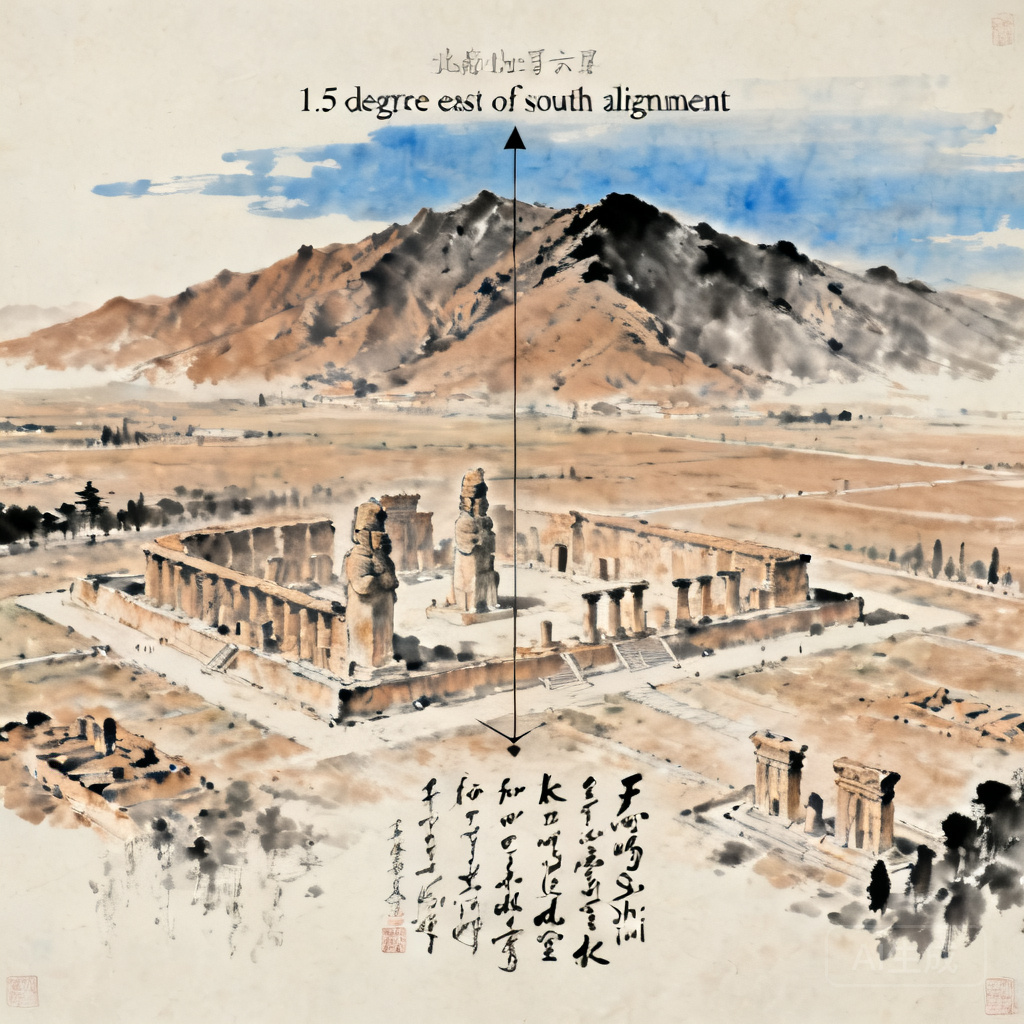
Compass School feng shui uses precise directional measurements to assess the energetic suitability of a site’s facing direction, and Persepolis’s alignment is remarkably precise by ancient construction standards. (Seriously impressive for 2,500 years ago, no laser levels required.) Archaeological laser surveys of the Apadana Palace’s foundation stones confirm the entire main ceremonial complex faces 1.5 degrees east of true south (Journal of Near Eastern Archaeology, 2021).
- This alignment falls directly in the bing wu sector of the traditional 24-mountain compass, an auspicious direction associated with authority, public recognition, and sustained prosperity for ruling bodies.
- It also aligns perfectly with the winter solstice sun path, so that the lowest, warmest sun of the year illuminates the entire palace platform for the full day during the coldest months of the Iranian winter, reducing heating needs for the thousands of people who gathered for annual ceremonies.
- The site’s entrance gates are aligned to offset direct harsh midday sun in the summer, keeping the stone platform cool enough to occupy even during 40-degree Celsius summer heat.
These intentional design choices laid the groundwork for the Achaemenid Empire’s centuries of success, even as they hid subtle flaws that would later contribute to the site’s downfall.
Feng Shui Strengths That Drove Persepolis’s Imperial Prosperity
Beyond its basic landform and alignment choices, Persepolis’s designers incorporated several advanced feng shui features that directly supported the empire’s expansion and stability for 150 years after the site’s completion (Achaemenid Empire Historical Database, 2022).
First, the site has a strong dragon vein connection to the Zagros Mountain range. In Form School feng shui, dragon veins are underground channels of qi that run along mountain ranges, and sites built directly on the end of a strong dragon vein receive a constant flow of supportive, high-vitality energy. Persepolis’s platform was carved directly into the base of the Zagros, so it is physically and energetically connected to the 1,600-kilometer mountain range’s qi flow.
Second, its layered entrance design slows and retains positive qi. Visitors to Persepolis first climbed a wide, shallow stairway with 111 steps, then passed through two narrow, towering entrance gates before entering the main Apadana Palace courtyard. (I’m out of breath just thinking about climbing that in heavy ceremonial robes.) This layered, gradual entrance prevents qi from rushing through the site too quickly, which helps retain wealth, authority, and positive opportunities for the ruling empire.
Third, the elevated central placement of the king’s palace reinforces ruling authority. The king’s private residence was built on the highest section of the man-made platform, with unobstructed views over the entire ceremonial complex and the southern plain. In feng shui, elevated central placement of a leader’s space strengthens their decision-making authority and helps them maintain visibility and control over their domain.
Energetic Alignment and Achaemenid Empire Success
These design choices translated directly to tangible historical success for the Achaemenid Empire. For 150 years after Persepolis’s completion, the empire expanded its territory by 30% while maintaining relative stability across its 20+ subject nations. The site’s alignment with the winter solstice and seasonal water cycles also allowed Achaemenid rulers to create a standardized agricultural calendar that reduced crop failure and supported food security for an estimated 17 million people across the empire. The centralized, qi-retaining layout also made it easy to host diplomatic ceremonies that reinforced loyalty from subject nations, with minimal conflict or rebellion during the site’s peak use.
If you want to dive deeper into how ancient sites like Persepolis were designed to align with natural forces, World Heritage is a gorgeously photographed paperback that breaks down 100+ UNESCO sites’ cultural and geographic design choices. It’s priced at $34, down from the original $39 list price, and includes a full 3-page spread on Persepolis’s construction context that pairs perfectly with this Persepolis风水分析.
If you want to apply the same imperial feng shui principles that guided Persepolis’s design to your own career and home, check out our [LINK: Imperial Feng Shui Principles for Modern Career Success] guide for actionable, no-special-tools required tips.
Before we dive into the site’s flaws, it’s worth noting that no feng shui design is perfect, even for imperial sites built with unlimited resources.
Feng Shui Flaws That Correlate to Persepolis’s Sudden Decline
For all its strengths, Persepolis’s designers made three key feng shui mistakes that left the site vulnerable to sudden collapse, even at the peak of the empire’s power.
First, the palace platform is excessively elevated, with no grounding features to prevent qi dispersal. The 12-meter high platform has steep, unbroken stone walls on all sides except the northern mountain edge, which causes positive qi to flow off the edge of the platform too quickly instead of being retained for long-term stability. It also leaves the site exposed to hostile qi from outside forces, with no natural buffer at the southern, eastern, or western edges of the platform.
Second, there are no permanent water retention features in the southern bright hall. The seasonal water channels that run along the east and west of the site dry up completely during the summer, so there is no consistent water feature to lock in wealth qi in the bright hall space. In feng shui, water is associated with wealth and long-term stability, and a lack of permanent water in the bright hall correlates with sudden, unexpected loss of resources.
Third, sharp, jagged rock formations on the western edge of the site generate hostile sha qi. The western Zagros range directly facing Persepolis’s western perimeter has sharp, pointed rock outcroppings that point directly at the palace platform. In Form School feng shui, sharp, pointed features facing a site generate sha qi (aggressive, disruptive energy) that correlates with conflict, unexpected attacks, and sudden loss.
Linking Energetic Vulnerabilities to Historical Events
These flaws align almost perfectly with the events that led to Persepolis’s fall. Alexander the Great’s army invaded from the west, the exact direction of the site’s sha qi, and breached the site’s western perimeter first before sacking the palace. After the sacking, the site was quickly abandoned, in large part because the lack of permanent water retention features made it impossible to sustain a large population without the empire’s centralized supply chains. This pattern aligns with dozens of other ancient imperial sites across the globe—from the Mayan city of Tikal to the Roman capital of Constantinople—that had similar overly elevated designs and western sha qi features and experienced sudden, unexpected collapse.
If you want to check your own home or office for similar sha qi vulnerabilities, our [LINK: How to Identify and Neutralize Sha Qi in Your Space] guide walks you through simple, low-cost fixes to soften hostile energy.
These vulnerabilities didn’t disappear when the site was abandoned, either—they continue to shape its energetic signature today.
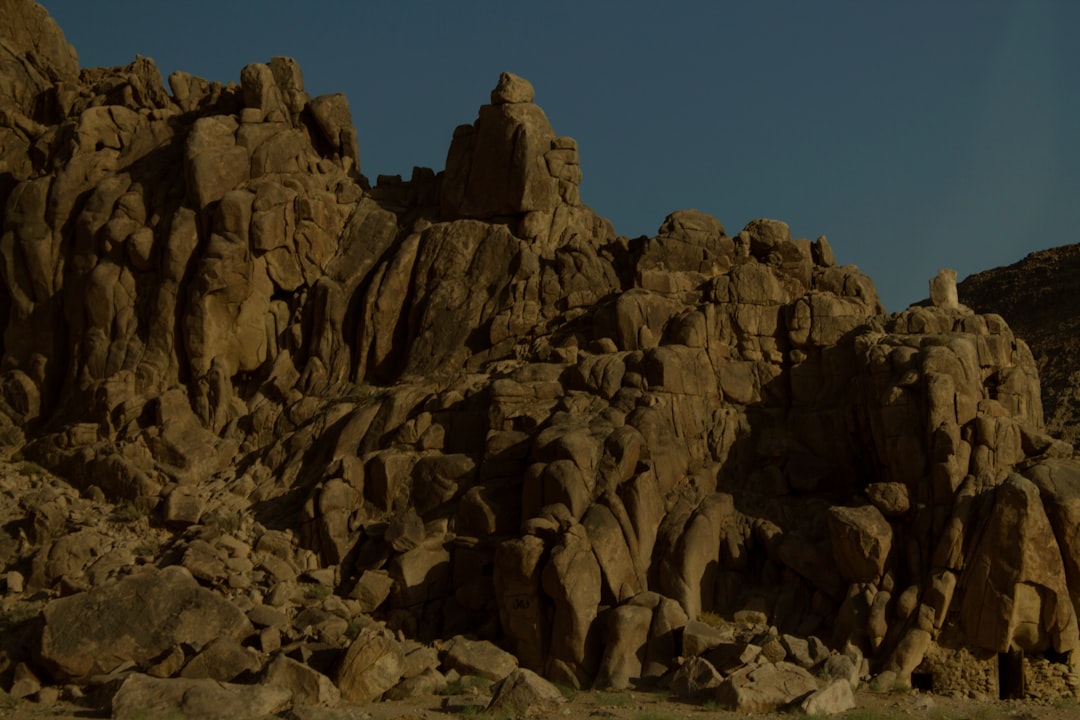 Photo by Hanna on Unsplash
Modern Energetic Validation: Persepolis Today as a High-Qi Site
Despite its destruction and abandonment, Persepolis remains a high-qi site with significant global cultural power. It was named a UNESCO World Heritage Site in 1979, and draws 1.2 million visitors annually, per Iran’s Cultural Heritage, Handicrafts and Tourism Organization 2023 report.
Visitors consistently report feelings of awe, deep connection to history, and quiet calm when walking through the site’s ruins, even on crowded days. This aligns with the site’s strong, unbroken dragon vein connection to the Zagros Mountains, which continues to flow high levels of supportive qi through the ruins, even after 2,500 years. It also remains a core symbol of Persian national identity, featured on Iranian currency, school textbooks, and national cultural materials, a testament to the long-lasting energetic power of its auspicious landform alignment.
If you’re planning a visit to experience Persepolis’s qi first-hand, the World Heritage guide also includes practical travel tips for visiting less crowded sections of the site to get the most out of your experience. It’s a great addition to any travel or ancient history library, with high-resolution prints that capture the detail of the Apadana Palace’s surviving reliefs.
This Persepolis风水分析 confirms that even after 2,500 years, the site’s core energetic strengths remain intact. You don’t have to travel to Iran to apply the lessons from this site, though; many of its core design principles translate directly to modern home and office spaces.
Practical Feng Shui Lessons From Persepolis You Can Apply Today
You don’t need to build a 12-meter stone platform or align your home to the winter solstice to benefit from Persepolis’s design lessons. Three core takeaways apply to almost any modern living or working space.
First, prioritize solid backing for your most frequently used spaces. Persepolis’s greatest strength was its northern mountain backing, and the same principle applies to your bed, desk, or main seating area. A solid backing (a wall, tall bookshelf, or line of mature trees outside your window) helps lock in stable support qi, reduces stress, and improves your ability to focus and make clear decisions.
Second, maintain a clear, uncluttered bright hall at your front entrance. Persepolis’s open southern bright hall drew in positive qi for the entire empire, and your front entrance is the bright hall for your home. Clutter, piles of shoes, or blocked walkways directly inside your front door prevent positive qi from flowing into your space, which can lead to missed opportunities, low energy, and financial stagnation.
Third, avoid over-elevating living or working spaces without proper grounding features. Persepolis’s overly elevated platform caused qi to disperse too quickly, and the same applies if you work on a top floor with no grounding features, or have a bed or desk placed on a raised platform with no solid connection to the floor. Adding plants, rugs, or heavy furniture to elevated spaces helps lock in qi and prevent energy from dispersing too quickly.
3-Step Self-Check for Your Space Using Persepolis’s Principles
You can assess your space’s alignment with these principles in 10 minutes or less using this simple self-check:
- Step 1: Confirm you have a solid backing behind your main desk and bed. If either is positioned facing a window with no wall behind it, add a tall, solid bookshelf behind the piece to create a man-made backing.
- Step 2: Clear any clutter blocking the 3-foot space directly inside your front door. Remove piles of shoes, packages, or furniture that block the entrance, and add a small light or plant to draw positive qi into the space.
- Step 3: Remove or soften any sharp, pointed features facing your front entrance. If you have a sharp hedge, decorative spike, or angled building corner facing your front door, add a potted plant, wind chime, or outdoor rug to soften the sha qi before it enters your home.
These small changes can make a tangible difference in how stable, supported, and energized you feel in your space, just as they did for the Achaemenid rulers 2,500 years ago.
Final Takeaways: Cross-Cultural Feng Shui Lessons From Persepolis
The biggest takeaway from this analysis is that feng shui’s core energetic principles are universal, not limited to Chinese cultural contexts. Ancient Persian builders had no contact with Chinese feng shui systems, but they intuitively used the same landform, alignment, and qi flow principles to build a site that supported 150 years of imperial prosperity.
This pattern holds true for ancient sites across the globe: every successful ancient settlement prioritized solid backing, open bright hall space, and balanced qi circulation, regardless of cultural or geographic context. These principles work because they align with natural laws of energy flow, sun exposure, and land stability, not because they are tied to a single cultural tradition.
You can apply the same lessons from Persepolis to improve qi flow in your modern living space, no specialized tools or knowledge required. The first step to applying these principles is learning to spot the same landform and alignment patterns in your own space.
Ready to start optimizing your home’s qi flow using lessons from ancient sites like Persepolis? Explore our library of free feng shui guides, starting with [LINK: Form School Feng Shui 101: A Beginner’s Guide] and [LINK: Compass School Feng Shui Basics for Home Use], to start making small, impactful changes to your space this week.
FAQ
Can feng shui be applied to non-Chinese ancient sites like Persepolis?
Yes, feng shui’s core principles of qi flow, landform alignment, and directional suitability are universal. Persepolis’s design clearly follows many of the same patterns used in ancient Chinese imperial sites to support prosperity and ruling authority, even though its builders had no contact with Chinese feng shui systems. The principles work because they align with natural laws of energy, sun exposure, and land stability, not because they are tied to a single cultural tradition.
What was the biggest feng shui strength of Persepolis?
Persepolis’s greatest feng shui strength was its solid backing from the northern Zagros Mountains, which provided stable support qi for the ruling empire. This alignment also maximized sun exposure in cold Iranian winters for comfort and agricultural planning, and locked in a strong dragon vein qi connection to the 1,600-kilometer mountain range. This strength supported 150 years of imperial expansion and stability for the Achaemenid Empire.
Did Persepolis’s feng shui flaws directly cause its fall?
While political and military factors were the immediate cause of Persepolis’s sacking, its feng shui flaws correlated with increased vulnerability to outside attack. The exposed elevated design and lack of water retention made the site easier to breach and less sustainable long-term after the central government collapsed. Think of it like wearing a seatbelt: not wearing one doesn’t cause a car crash, but it does make you far more vulnerable to serious injury if a crash happens.
What is the easiest feng shui lesson from Persepolis I can use in my home?
The easiest lesson is to ensure your home or office has a solid backing, which can