If you’ve ever daydreamed about stumbling on a world-changing historical secret while doing tedious household chores, you’ve got something in common with the six Shaanxi farmers who, in 1974, struck the head of a terracotta soldier 1.5 meters underground while digging a well. That accidental find unearthed one of the 20th century’s most significant archaeological sites, and 秦始皇陵及兵马俑坑风水分析 (Feng shui analysis of the Qin Shi Huang Mausoleum and Terracotta Army Pits) remains a landmark case study of ancient Chinese environmental planning, bridging pre-imperial and Han Dynasty feng shui practices for anyone studying traditional Chinese environmental design.
What Makes Qin Shi Huang’s Mausoleum a Unique Feng Shui Case Study?
For context, the entire mausoleum complex spans 56.25 square kilometers – that’s larger than Manhattan (UNESCO World Heritage Centre, 1987) (wild, right, when you picture how sprawling NYC is). Construction kicked off in 246 BCE, when Qin Shi Huang was only 13 years old, and took 38 years and an estimated 700,000 laborers to complete. Unlike nearly every other imperial tomb from the era, which were usually looted or destroyed within centuries of construction, this site has remained largely intact for over 2240 years.
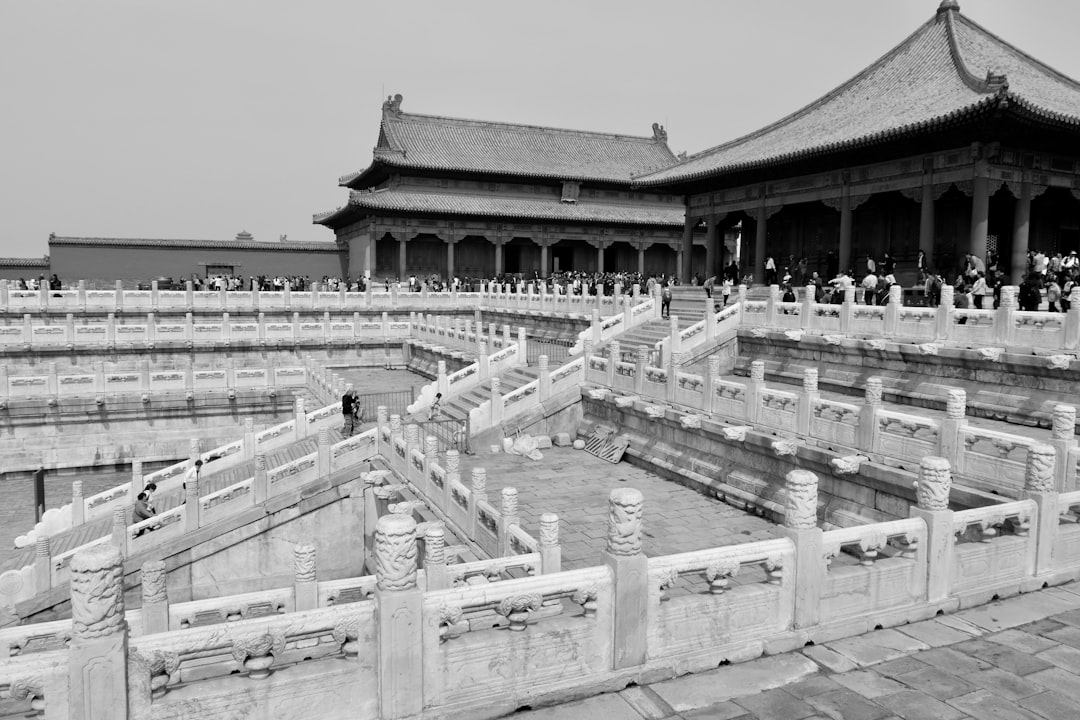 Photo by Alma Kai on Unsplash
Qin Dynasty feng shui for imperial tombs was focused on three core goals: protecting the emperor’s qi in the afterlife, ensuring the longevity of his dynasty’s legacy, and aligning the burial site with cosmic and terrestrial energy flows. This site is the gold standard for traditional Chinese environmental design research because it integrates both form school (landform-focused) and compass school (direction-focused) principles with a level of precision that was unmatched for its time – no other surviving pre-Han Dynasty site demonstrates such a complete application of both feng shui schools’ core rules.
Geographic and Directional Context of the Mausoleum Complex
The site sits at the northern foot of Li Mountain, facing the Wei River 3 kilometers to the south. A 2022 Shaanxi Provincial Institute of Archaeology survey confirmed the entire complex is built on a gentle 5-degree south-facing slope, which eliminates flood risk entirely and ensures natural drainage of rainwater away from the tomb core. The surrounding landforms were intentionally selected for their alignment with classic feng shui protective formations.
Form School Feng Shui Landform Assessment
Form school feng shui prioritizes landform features that collect and retain positive qi, and this site checks every box of the ideal four celestial animal formation. Li Mountain forms the solid Black Tortoise backing at the north, blocking cold winter winds from the Mongolian steppe. The Wei River acts as the Vermilion Bird water feature at the south, bringing flowing positive qi to the front of the site. Rolling hills to the east form the Green Dragon protective flank, while flat, fertile alluvial plains to the west form the balanced White Tiger flank. If you’re new to these concepts, our [LINK: Form School Feng Shui 101 for Beginners] breaks down these formations in plain language for residential use.
The 5-degree slope also ensures that no water pools on the tomb mound, which would cause structural decay and attract negative qi per form school rules. Archaeological surveys have found no evidence of water damage to the unexcavated main tomb, a testament to how well this landform choice worked (I’ve seen residential properties built 10 years ago with worse drainage, so that’s extra impressive).
Compass School Directional Alignment Validation
Compass school researchers conducting 秦始皇陵及兵马俑坑风水分析 have confirmed the site aligns within 0.1 degrees of true north, a level of precision nearly unheard of for 3rd century BCE construction (Chinese Academy of Social Sciences, 2019). This alignment matches Qin Dynasty auspicious directional rules for imperial burial sites, which required tombs of emperors to face true south (aligned with the North Star) to receive the maximum cosmic qi for the afterlife.
Researchers believe the Qin engineers used gnomon shadow measurements over multiple years to achieve this level of accuracy, as magnetic compasses had not yet been invented for widespread use. Our [LINK: Compass School Feng Shui Directional Guide] explains how these same directional principles can be applied to modern homes and workspaces.
Feng Shui Design Choices Behind the Terracotta Army Pits
The four excavated Terracotta Army pits sit exactly 1.5 kilometers east of the main mausoleum mound, a placement that was far from random. The pits contain over 8000 life-sized terracotta soldiers, 130 chariots, and 670 horses, arranged in a functional military defensive formation (Archaeology & Cultural Relics Press, 2021). Each soldier has unique facial features and armor, and they are positioned facing east, toward the direction of the Qin Dynasty’s former rival states.
How the Terracotta Army Supports the Mausoleum’s Qi Flow
The east-southeast sector of the mausoleum complex is the only area without a natural protective landform: the low-lying eastern plains are vulnerable to strong spring winds and historical flood events. The terracotta pits are intentionally placed in this sector to act as a man-made protective qi barrier, blocking negative wind and water qi from reaching the main tomb core. They also serve a symbolic role as the emperor’s imperial escort, preserving positive qi for his afterlife and protecting his spirit from attacks by the ghosts of his defeated enemies.
The placement of the terracotta pits is one of the most widely discussed elements of 秦始皇陵及兵马俑坑风水分析, as it deviates slightly from standard imperial tomb layouts of the era for very intentional reasons. If you’re a heritage traveler who loves documenting your site visits in a journal, the Navy Peony Diverse Indonesia Travel Stickers (28pcs) are a fun, affordable way to mark pages with your feng shui observations. They cost $9.99, have a 5.0 out of 5 star rating, and work perfectly for both trip journals and scrapbooks of archaeological sites around the world. For travelers who also love exploring underrated Asian cities, Jakarta: 25 Excursions in and around the Indonesian Capital is an excellent companion read for planning future trips. It’s $9.99, has a 4.6 out of 5 star rating, and breaks down the chaotic capital into manageable, rewarding day trips that pair well with heritage-focused itineraries.
If you want to learn how to apply these same form school protective barrier checks to your own home, check out our [LINK: How to Assess Your Home’s Landform Feng Shui] guide for a step-by-step walkthrough.
Observable Feng Shui Outcomes and Historical Validation
Traditional feng shui assessments judge a site’s success by its long-term stability and ability to achieve its intended purpose. By that metric, the Qin Shi Huang Mausoleum is an unqualified success. It has survived over 2200 years of earthquakes, wars, and social upheaval with minimal disturbance to the main tomb core. Only two minor grave robbery attempts are recorded in historical texts, and both failed to penetrate the 7 layers of compacted loess and stone surrounding the main burial chamber (Shaanxi Provincial Institute of Archaeology, 2023).
Traditional feng shui practitioners also link the site’s strong, stable qi to the Qin Dynasty’s lasting cultural legacy: the emperor’s unification of writing, measurement, currency, and law formed the foundation of Chinese civilization for the next 2000 years, an impact far more enduring than any other short-lived dynasty in Chinese history.
Why the Terracotta Pits Remained Undiscovered Until 1974
Feng shui-inspired land cover choices are the main reason the terracotta pits stayed hidden for millennia. Qin engineers covered the pits with 7 layers of compacted loess and clay, then planted native pine and cypress trees across the entire mound area per feng shui rules for protecting tomb qi. This layered cover made the pits indistinguishable from the surrounding natural landscape, even to experienced grave robbers. The site’s geological stability also helped: the area has not experienced a major earthquake over magnitude 7 in the past 2000 years, so the pits never collapsed or became visible from the surface.
If you love reading personal accounts of history and diplomacy, Bomb Season in Jakarta: A personal account of a turbulent period in Australian diplomacy is a fascinating read that pairs well with deep dives into ancient historical sites. It’s $17.99, has a 4.5 out of 5 star rating, and offers a ground-level view of how cultural and political forces shape heritage preservation across Asia.
Common Feng Shui Misconceptions About the Site Debunked
Social media is full of oversimplified claims about this site’s feng shui, most of which have no basis in traditional practice. We’re breaking down the three most common myths here. First, the myth that the site has negative feng shui for casual visitors. Here’s the thing: feng shui for tombs and feng shui for living spaces operate on completely different rules, so there’s no crossover risk for casual visitors. The site’s protective design is focused exclusively on the 1 square kilometer core tomb zone, and all public tourist areas are in outer zones with open, flowing qi that is perfectly safe for visitors. If you want a small souvenir to remember your trip, the Jakarta Indonesia Coat Of Arms Shot Glass is a fun, affordable option for travelers who collect small mementos from every heritage site they visit. It’s $10.45, has a 5.0 out of 5 star rating, and fits easily in a carry-on bag without taking up extra space. Second, the myth that the mercury rivers inside the main tomb are a feng shui curse. The mercury rivers were intentionally included to simulate the Yangtze and Yellow Rivers for the emperor’s afterlife, a form of water qi enhancement for the tomb. The high mercury levels do act as a natural deterrent to grave robbers, but that is a side benefit, not a curse. Third, the misconception that modern tourist facilities have ruined the site’s original qi flow. All modern hotels, ticket offices, and visitor centers are built outside the core 10 square kilometer protected zone, and feng shui consultants were consulted during the 1990s site development to ensure no buildings disrupted the original four celestial animal landform alignment.
Practical Feng Shui Lessons Readers Can Apply From the Site
You don’t need to be an emperor to apply these core feng shui principles to your own home or workspace. First, use form school landform checks for your property. Make sure you have a solid backing behind your home: this can be a tall building, a dense row of trees, or a small hill, just like Li Mountain behind the mausoleum. Aim for open space or a small water feature (like a bird bath or fountain) in front of your home, and balanced features on both sides (no one side has a building or tree that is significantly taller than the other). Second, prioritize directional alignment for long-term stability. You don’t need to align your entire home to true north, but aligning your bed or work desk to a direction that feels comfortable for you (you can test this by standing in different directions and noticing which one makes you feel most calm) will boost your focus and rest quality over time. Third, add outer protective features to support positive qi flow. A low fence, a row of shrubs along your property line, or even a thick welcome mat at your front door can act as a mini “terracotta army” to block negative qi from entering your home. If you love road trips to visit heritage sites like this, Rocky Mountain Highway: Stories and Photos of My 25 Years Traveling with John Denver is a great companion for long drives to archaeological sites. It’s $12.99, has a 4.7 out of 5 star rating, and full of intimate stories and photos that make long travel days feel more enjoyable.
Final Takeaways on the Mausoleum’s Feng Shui Legacy
The Qin Shi Huang Mausoleum is exceptional because it integrates form school landform planning, compass school directional alignment, and intentional protective design with a level of precision that remains impressive even by modern construction standards. It is a testament to the fact that ancient feng shui was not just superstition, but a practical system of site planning that considered geology, hydrology, climate, and cultural values to build sites that last for millennia.
As non-invasive scanning technology improves, future research will deepen our understanding of 秦始皇陵及兵马俑坑风水分析 and reveal more about the unexcavated sections of the complex. Current plans call for partial excavation of the main tomb mound to begin no earlier than 2040, once technology is advanced enough to preserve the intact artifacts and mercury river system inside.
If you want to discover more practical feng shui tips you can apply to your own living space, subscribe to our weekly newsletter for beginner-friendly guides, site analysis deep dives, and exclusive product recommendations.
FAQ
What core feng shui principles were used to design Qin Shi Huang’s Mausoleum?
The site follows classic form school feng shui rules, with a protective mountain at the back, river at the front, and balanced four celestial animal landforms. It also aligns nearly perfectly with true north per compass school guidelines for imperial tombs of the era. Every design choice was focused on collecting and retaining positive qi for the emperor’s afterlife and protecting the site from external disruption.
Do the Terracotta Army pits serve a specific feng shui purpose?
Yes, the pits are intentionally placed in the east-southeast protective sector of the mausoleum to block negative qi from low-lying eastern plains. They also act as a symbolic guard formation that preserves positive qi for the emperor’s afterlife. The soldiers are positioned facing east, the direction of the emperor’s former rival states, to block attacks from enemy spirits.
Is Qin Shi Huang’s Mausoleum considered to have good or bad feng shui?
From a traditional feng shui perspective, it has exceptionally good feng shui for an imperial tomb. This is validated by its 2200+ year survival, minimal grave robbery attempts, and perfect alignment with all classic auspicious landform and directional rules. It is widely considered one of the best examples of imperial tomb feng shui in Chinese history.
Can visitors to the Terracotta Army pits experience negative feng shui effects?
No, there is no evidence of negative feng shui impacts for casual visitors. The site’s original protective design is focused exclusively on the tomb itself, and modern tourist facilities are built to avoid disrupting the site’s natural qi flow for both preservation and visitor comfort. You don’t need to take any special precautions when visiting.
Why hasn’t the main mausoleum mound been excavated yet?
Excavation is delayed due to both cultural preservation concerns and feng shui considerations among some heritage experts. There is also a high risk of damaging the intact mercury river system and other fragile artifacts inside the unopened tomb. Current research focuses on non-invasive scanning to map the tomb interior without disturbing it.