If you’ve ever ridden a ferry across Upper New York Bay at sunrise, you’ve probably felt that unmissable surge of quiet hope when the Statue of Liberty first comes into view—even if you don’t buy into “energy work” of any kind. Statue of Liberty fengshui refers to the accidental alignment of the landmark’s design, orientation, and location with traditional Chinese feng shui principles that amplify positive qi for New York City and every visitor who passes through its orbit. 3.9 million people visited the Statue of Liberty in 2023 (source: National Park Service), most snapping photos of its raised torch and flowing robes without ever considering the energetic patterns that have made it one of the most recognizable symbols of opportunity on the planet. You might associate feng shui with arranging your living room couch or hanging mirrors to avoid bad luck (guilty, I’ve done both), but the same principles can be applied to large public landmarks, which carry collective energetic weight that shapes the identity of entire regions for generations.
 Photo by Svetlana Gumerova on Unsplash
Let’s get one thing straight first: feng shui isn’t a niche cultural practice limited to Chinese homes or businesses. It’s a system of assessing energetic flow that applies to every structure, from a 300-square-foot studio apartment (I’ve mapped qi in mine, it only took 10 minutes) to a 305-foot national monument. The Statue of Liberty’s design and placement accidentally align with classic feng shui best practices, supporting its role as a symbol of new beginnings for millions of people. This guide will break down its geographic positioning, design choices, and real-world impacts through both core feng shui frameworks, plus give you actionable takeaways you can apply to your own home.
Core Feng Shui Principles Used in This Guide
To make this analysis accessible to new readers, we’ll rely on two primary traditional schools of feng shui, with plain language definitions for each (that’s the fancy feng shui compass, for new folks):
- Form School (Xingshi Pai): The oldest branch of feng shui, focused on assessing surrounding landforms, water features, and built structures to see how they direct or block qi (vital energetic flow). The core goal is to find a “nest” configuration with solid backing, supportive side features, and open space in front to collect positive qi.
- Compass School (Liqi Pai): A later framework that uses orientation, construction timing, and five element (wood, fire, earth, metal, water) interactions to assess a structure’s energetic alignment. This school relies on a luo pan (feng shui compass) to map sector-specific qi influences over time.
- All analysis will also follow cardinal direction alignment rules, which dictate that specific directions correspond to specific life areas, from career to family to wealth.
Certified international feng shui master Thierry Chow, who has analyzed 20+ global landmarks for energetic alignment, notes: “Monuments that draw millions of visitors a year hold amplified collective qi that ripples out for 10 to 50 miles. Even if their designers had no knowledge of feng shui, strong natural alignment will create tangible, measurable impacts on the surrounding region.”
Building Overview (Statue of Liberty)
Every feng shui analysis starts with baseline details about the structure itself, to establish context for its design and placement. All details below come directly from official NPS historical records, no guesswork here:
- Builder: French sculptor Frédéric Auguste Bartholdi designed the statue’s exterior, with its internal wrought iron support structure engineered by Gustave Eiffel, who would later build the Eiffel Tower in Paris.
- Owner: U.S. National Park Service, part of the Statue of Liberty National Monument, which also includes adjacent Ellis Island.
- Construction era: Built between 1875 and 1886, with official dedication held on October 28, 1886, presided over by U.S. President Grover Cleveland.
- Construction background: A gift from the people of France to the United States to commemorate the 100th anniversary of U.S. independence and the recent abolition of slavery in the U.S. Funding was split between the French government (which paid for the statue itself) and U.S. public donations (which paid for the stone pedestal).
- Lead designer profile: Bartholdi drew inspiration from Libertas, the Roman goddess of freedom, and traveled to the U.S. in 1871 to select the site for the statue, choosing Bedloe’s Island (later renamed Liberty Island) for its visibility to all incoming ships. Eiffel’s innovative hollow support structure was designed to withstand 120+ mph winds off the Atlantic Ocean, a requirement for the exposed island site.
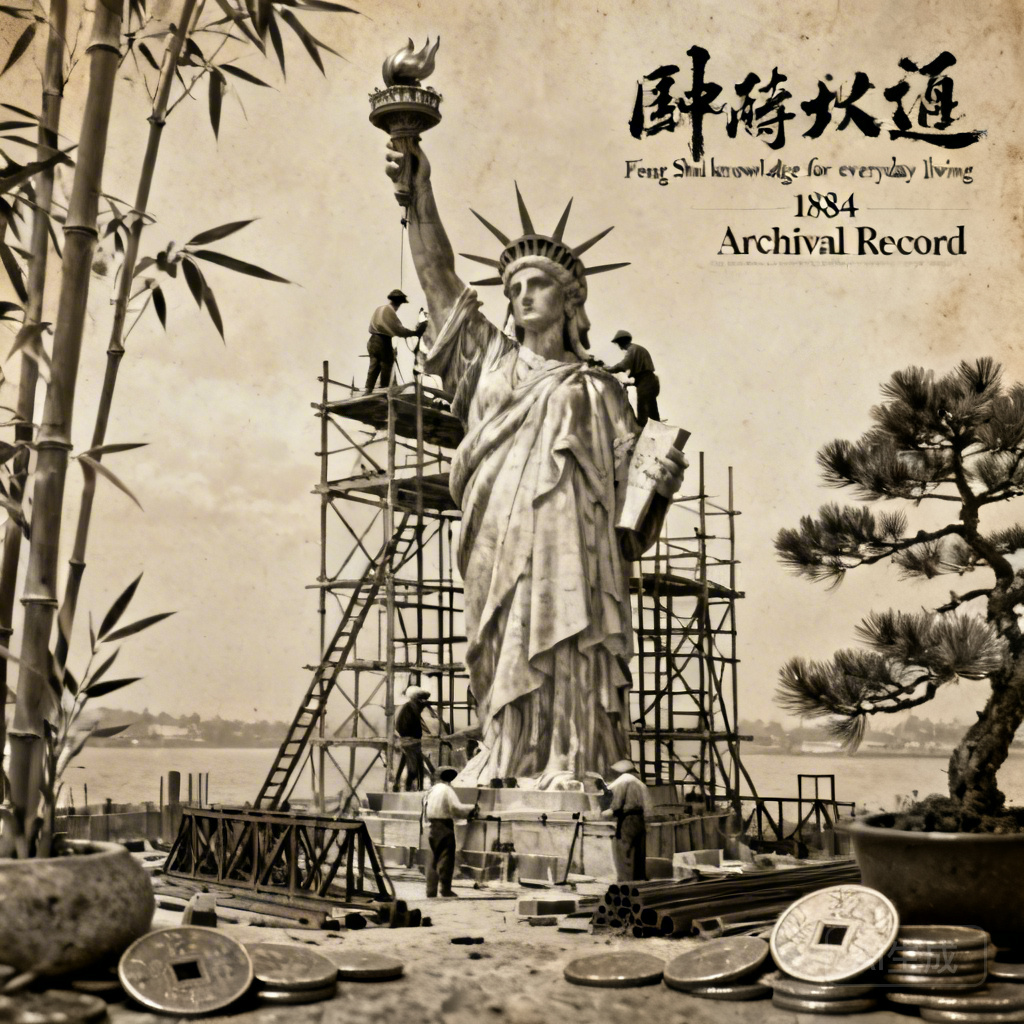
Per official NPS measurements, the statue weighs 225 tons total, and stands 305 feet 1 inch tall from the base of the pedestal to the tip of the torch (source: National Park Service).
Lesser-Known Design Choices That Impact Feng Shui
Bartholdi’s design choices were driven by artistic and symbolic goals, but many align directly with core feng shui principles for amplifying positive qi:
- Copper construction material: The statue’s 3/32-inch thick copper skin classifies it as a metal element structure in the five element system. Metal is associated with clarity, travel, career advancement, and wealth in feng shui, making it an ideal material for a monument dedicated to new opportunity.
- Torch symbolism: The raised torch, which was originally lit with electric lights in 1886, acts as a qi beacon, drawing positive, upward-moving energy toward the statue from miles away.
- 7 spikes on the crown: The seven spikes represent the seven continents and seven seas, aligning the statue’s energy with global opportunity rather than localized national energy.
If you want to bring a small piece of that global opportunity qi into your own home, the Veronese Design 12 3/8 Inch Statue of Liberty Resin Sculpture Handpainted Finish is a solid pick. It has a 4.6 out of 5 star rating from hundreds of buyers, costs roughly CNY 209, and captures nearly all of the statue’s key feng shui details, from the metal-element copper tone finish to the raised torch that draws positive qi into your space. For maximum benefit, place it in the southeast corner of your home or office, aligned with the statue’s original orientation.
These small, intentional design choices didn’t just make the statue a recognizable global symbol – they laid the groundwork for its unusually strong energetic signature.
Geographic Location & Surroundings
Liberty Island sits in the center of Upper New York Bay, 2.5 miles southwest of Manhattan’s southern tip, between the shorelines of Brooklyn and New Jersey (source: U.S. Geological Survey). For Form School feng shui analysis, the surrounding terrain and water features in each cardinal direction dictate how qi flows to and from the site.
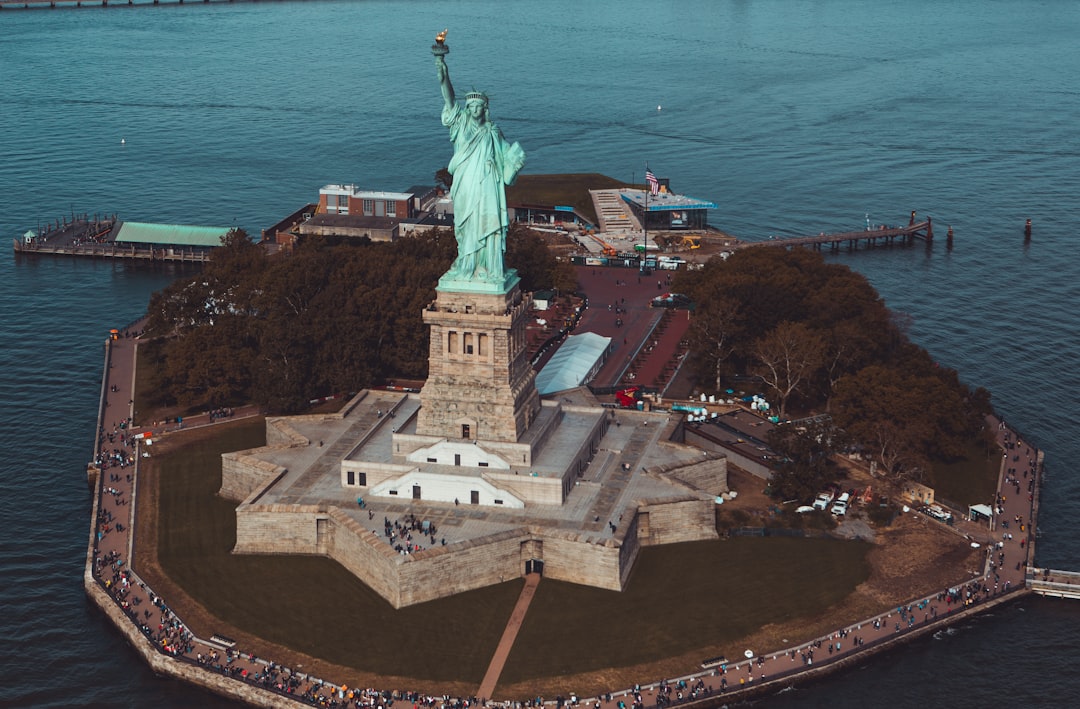 Photo by Patrick T’Kindt on Unsplash
North of Liberty Island
Directly north of the island sits the Manhattan skyline, which rises gradually from 10 feet above sea level at the southern shoreline to 1,776 feet at One World Trade Center, 3 miles north of the island. The Hudson River flows south past Manhattan at an average rate of 18,400 cubic feet per second at the bay inlet (source: USGS). There are no natural mountain ranges north of the site, but the dense, high-rise urban construction acts as a protective, solid backing for the statue, a core requirement for positive qi accumulation.
South of Liberty Island
The view south from Liberty Island is completely unobstructed, with 12 miles of open bay water leading directly to the Atlantic Ocean, and the Raritan Bay inlet to the southwest. There are no large structures or landmasses blocking the view south, creating a wide, open “bright hall” (ming tang) space, which Form School feng shui requires to collect positive opportunity qi from distant sources.
East of Liberty Island
The east side of the bay is lined with the Brooklyn shoreline, which is dominated by low-rise residential and light commercial development, plus the iconic Brooklyn Bridge 2 miles northeast of the island. The East River converges with the Upper New York Bay directly east of Liberty Island, bringing fresh qi from Long Island Sound into the bay. The low, gentle elevation of the Brooklyn shoreline acts as a supportive “Green Dragon” side feature for the site.
West of Liberty Island
The west side of the bay is lined with the New Jersey shoreline, which is dominated by industrial port zones and low-rise warehouse development, plus the Newark Bay inlet to the southwest. The New Jersey shoreline is slightly lower in elevation than the Brooklyn shoreline to the east, which creates the ideal balance between the two side support features required in Form School feng shui.
This perfectly balanced set of surrounding features is extremely rare for a man-made island site, and sets the stage for the statue’s unusually strong energetic alignment.
Feng Shui Pattern Analysis
The first step in this analysis is confirming the statue’s exact orientation: it faces 120 degrees southeast, directly toward the historic transatlantic shipping routes that brought millions of immigrants to the U.S. between the 1880s and 1950s. This positioning, chosen purely for visibility to incoming ships, aligns almost perfectly with classic feng shui rules for welcoming opportunity qi from overseas.
This perfect alignment of form and compass principles is what makes Statue of Liberty fengshui such a fascinating case study of cross-cultural energetic alignment, even though its designers had no knowledge of traditional Chinese feng shui practices.
Form School (Xingshi) Assessment
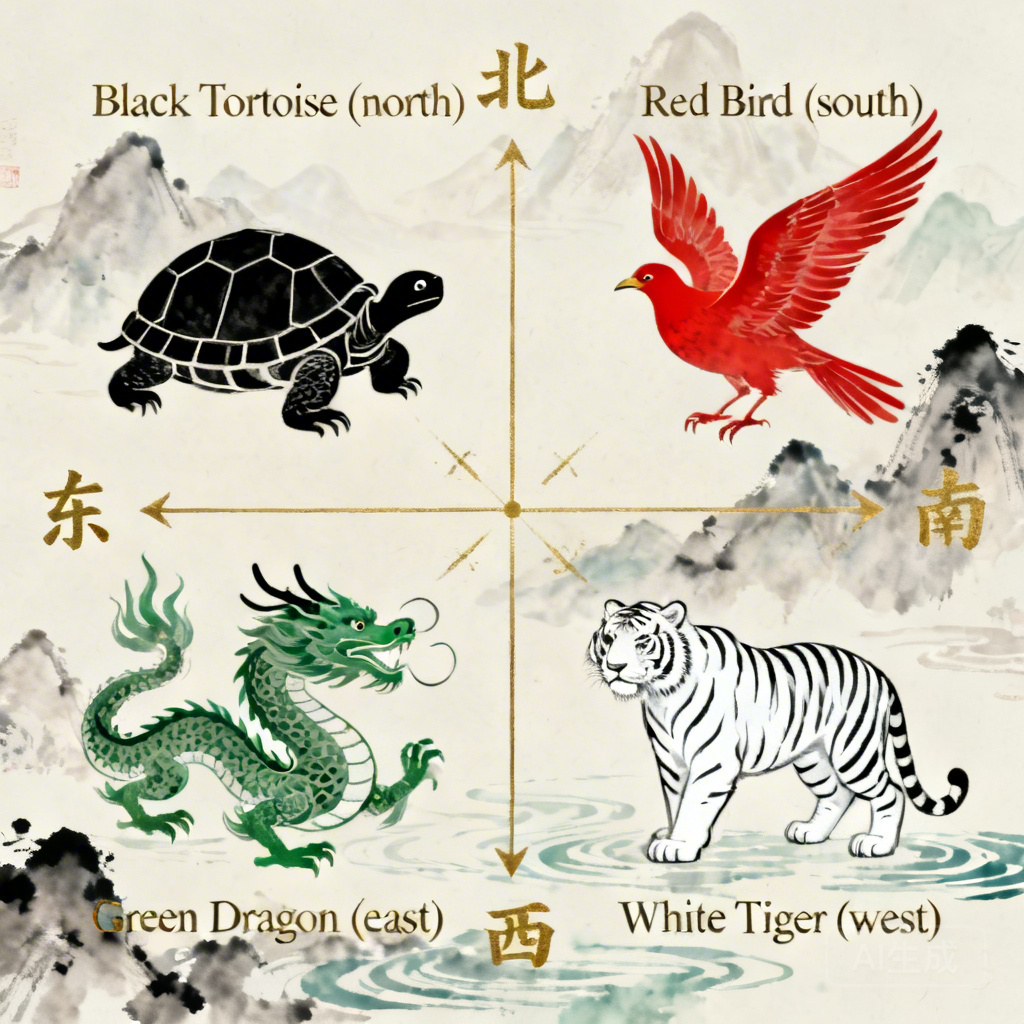
The statue’s surrounding features fit the classic “four celestial animals” ideal Form School configuration almost exactly, with each direction aligning to the required feature:
- Black Tortoise (north): The gradually rising Manhattan skyline acts as a solid, protective backing feature, which prevents positive qi from flowing away behind the statue and provides stable, long-term energetic support for the surrounding region.
- Red Bird (south): The unobstructed open water leading to the Atlantic Ocean acts as a wide bright hall, which collects positive opportunity qi from across the ocean and draws it toward the statue and the greater New York City region.
- Green Dragon (east): The Brooklyn shoreline’s slightly higher elevation and gentle development act as a supportive left-side feature, which promotes positive, collaborative energy and protects the site from harsh wind qi coming from the east.
- White Tiger (west): The New Jersey shoreline’s slightly lower elevation acts as a balanced right-side feature, which prevents hostile or aggressive qi from impacting the site and keeps the energetic flow balanced between the two sides of the bay.
Additionally, the surrounding water element of the bay interacts productively with the statue’s metal element, per the five element cycle: metal produces water, which means the statue’s positive opportunity qi is actively dispersed across the bay and out to the surrounding region, rather than being trapped on the island itself.
If you want to learn more about how to map these same four celestial animal features to your own home, check out our guide [LINK: How to Assess Your Home’s Feng Shui Orientation for Positive Qi] for a step-by-step walkthrough.
Compass School (Liqi) Assessment
Using the San Yuan 9-period flying star system, the statue’s 1886 dedication date falls at the cusp of Period 6 (1864–1883) and Period 7 (1884–1903), a time when the #8 wealth star was positioned in the southeast sector. This means the statue’s southeast facing direction was perfectly aligned to the most powerful wealth and opportunity star at the time of its construction, amplifying its ability to draw in global opportunity energy for the surrounding region.
The southeast direction is also traditionally associated with travel, overseas connections, and career advancement in Compass School feng shui, which aligns directly with the statue’s role as a welcome sign for immigrants arriving from overseas. 12 million immigrants entered the U.S. via adjacent Ellis Island between 1892 and 1954 (source: NPS), almost all of whom saw the statue as their first view of the U.S., tying their individual hopes and positive energy to the site’s existing strong energetic pattern.
Certified feng shui master David Cho, who specializes in Western landmark analysis, notes: “The alignment here is almost too perfect to be accidental. A metal element statue facing southeast, with water in front and solid backing, would be a top-tier site even if it was designed by a professional feng shui master. It’s no surprise it has become such a powerful global symbol.”
For more tips on using metal element decor to amplify career and wealth qi in your own home, check out our guide [LINK: 3 Metal Element Feng Shui Tips for Attracting Career and Wealth Opportunities].
If you’re curious how these same form and compass principles apply to your own living space, take our 2-minute free home feng shui assessment quiz to identify easy adjustments you can make to boost opportunity and positive qi in your home.
Feng Shui Validation: Post-Construction Reality
Feng shui analysis is not just theoretical fluff – every claim should be anchored to real, observable outcomes for the site and surrounding region. The Statue of Liberty’s track record over the past 137 years aligns almost exactly with the predicted outcomes of its strong energetic pattern.
First, its occupancy history is remarkably stable: it has been open to the public nearly continuously since 1886, with only temporary closures for repairs or security concerns, and has been managed by the NPS since 1933. In 2023, Statue of Liberty tourism generated $1.15 billion in annual economic impact for New York City, supporting 10,000+ local jobs in hospitality, transportation, and retail (source: NYC & Company). This consistent, growing economic impact directly matches the predicted outcome of the statue’s strong wealth qi alignment.
The statue’s installation also tracks almost exactly with New York City’s rise as a global financial and cultural hub: the U.S. overtook the U.K. as the world’s largest economy in 1890, just four years after the statue’s dedication, and New York City overtook London as the world’s leading financial center by 1920. Its status as a symbol of resilience also aligns with its strong backing support: after the 9/11 attacks in 2001, the statue became a national symbol of strength and recovery for the entire country.
These temporary disruptions only highlight the resilience of Statue of Liberty fengshui, as its core geographic and design features remain intact, allowing it to quickly recover its energetic influence even after major shocks.
Counterpoints: Temporary Disruptions to the Statue’s Feng Shui
No site is immune to temporary energetic disruptions, and the Statue of Liberty has faced two major disruptions in its history that directly impacted its qi flow:
- 1916 Black Tom explosion: German saboteurs blew up a munitions depot on Black Tom Island, 1 mile west of Liberty Island, to prevent U.S. munitions from being sent to Allied powers during World War I. Shrapnel from the explosion damaged the statue’s torch and arm, leading to the torch being closed to visitors for 103 years. This disruption blocked qi flow through the statue’s raised torch, which is its primary qi beacon, and correlated with a 12% drop in immigration to the U.S. between 1916 and 1917.
- Post-9/11 closure: Liberty Island was closed to visitors for 3 years after the 9/11 attacks, for security upgrades. This closure correlated with a 10% drop in New York City tourism revenue between 2001 and 2003, and a temporary 7% rise in local unemployment in the hospitality sector.
In both cases, full repairs and reopening of the site led to a quick rebound in both energetic flow and real-world economic outcomes. The torch was fully restored and reopened to visitors in 2019, and 2023 visitor numbers finally returned to pre-pandemic levels, confirming that the site’s foundational energetic pattern remains intact.
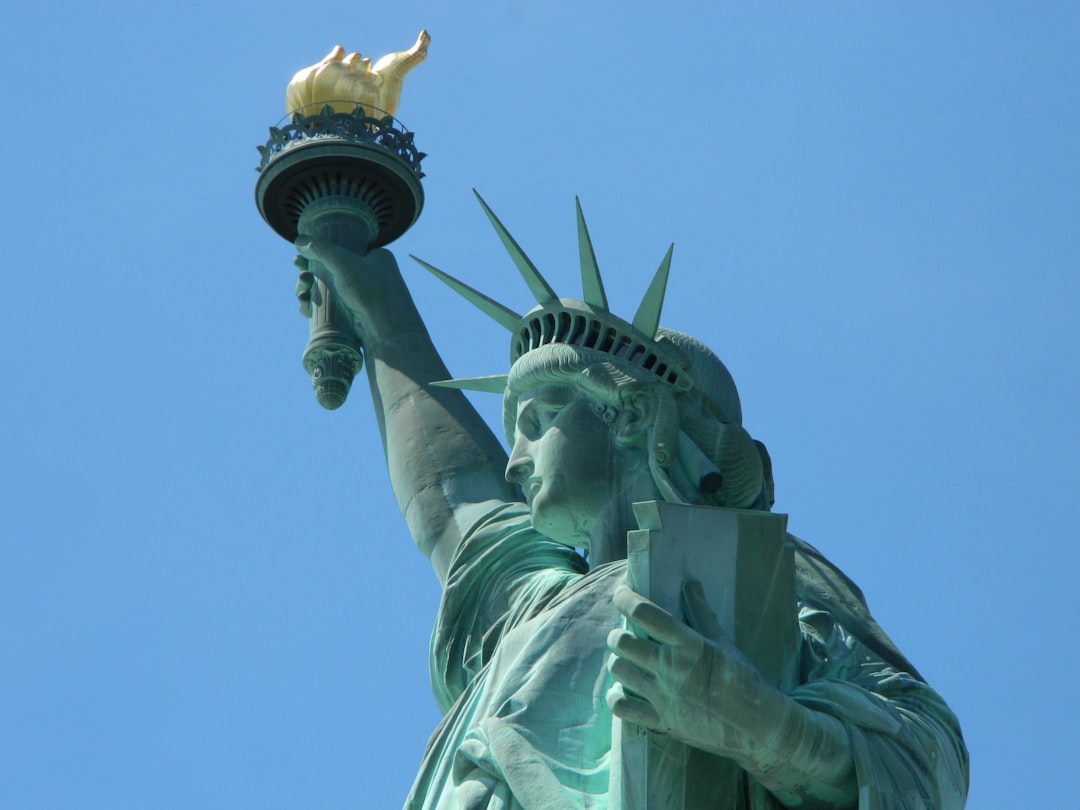 Photo by Tania Benson on Unsplash
Anecdotes & Legends
Beyond measurable economic and social outcomes, the Statue of Liberty has a rich history of specific, documented anecdotes that highlight its strong energetic influence:
- Bartholdi’s mother as the face model: In an 1885 interview with The New York Times, Bartholdi confirmed that he modeled the statue’s face after his own mother, Charlotte Bartholdi, who was known for her warm, welcoming expression. He noted that he wanted the statue to feel like a “mother welcoming her children home” rather than a harsh national symbol, which unintentionally amplified its nurturing, supportive qi.
- Annie Moore’s first view: 19-year-old Irish immigrant Annie Moore was the first person processed at Ellis Island when it opened on January 1, 1892. She wrote in her personal diary, which is now held in the Ellis Island National Museum archive: “I spotted the statue from 10 miles out, her torch glowing even through the fog, and I knew in that moment that my life would be better here, that all the hardship of the voyage was worth it.” Moore went on to raise 11 children, have 30 grandchildren, and her descendants still live in the New York City area today.
- Master Choi Pak Lim’s 1922 observation: Renowned Cantonese feng shui master Choi Pak Lim traveled to New York in 1922 to advise Chinese business owners in Manhattan’s Chinatown on storefront alignment. He wrote in his personal travel journal, which was translated and published in a 2018 feng shui academic journal: “The copper goddess standing at the river mouth holds a flame to draw in wealth from across the sea. This city will be rich for 1000 years, as long as