If you’ve ever stepped out of your car at Yellowstone National Park and felt an immediate, unshakable wave of calm, you’re not making it up. A feng shui analysis rooted in traditional Form and Compass School principles confirms the site is one of the world’s most energetically powerful natural landscapes. Yellowstone sits on top of a 45-mile-wide supervolcano caldera that last erupted 631,000 years ago, and holds 60% of the world’s total active geysers within its boundaries (source: U.S. National Park Service). This one-of-a-kind geology creates the balanced qi flow that makes the park a benchmark for natural feng shui study.
What Makes Yellowstone Park a Unique Feng Shui Landmark?
Spanning 3,472 square miles across Wyoming, Montana, and Idaho, Yellowstone’s core features include the massive active caldera, more than 10,000 thermal features, 2,000+ campsites, 1,000+ miles of hiking trails, and old-growth conifer forests that have stood for 300+ years. It was designated the first U.S. national park in 1872, a status that has shielded its natural landforms from large-scale development for 150+ years, leaving its original qi flow almost entirely untouched.
(If you’ve ever felt that sudden jolt of calm the second you drive through Yellowstone’s north entrance, that’s the park’s concentrated qi hitting your system—no woo-woo required, I swear.)
Feng shui’s earliest iterations focused exclusively on natural land analysis, long before practitioners ever applied its principles to homes or cities. Form School (形势派) in particular was developed to evaluate how mountain and water formations shape energy flow for entire regions, making it the perfect framework for breaking down Yellowstone’s unbuilt landscape.
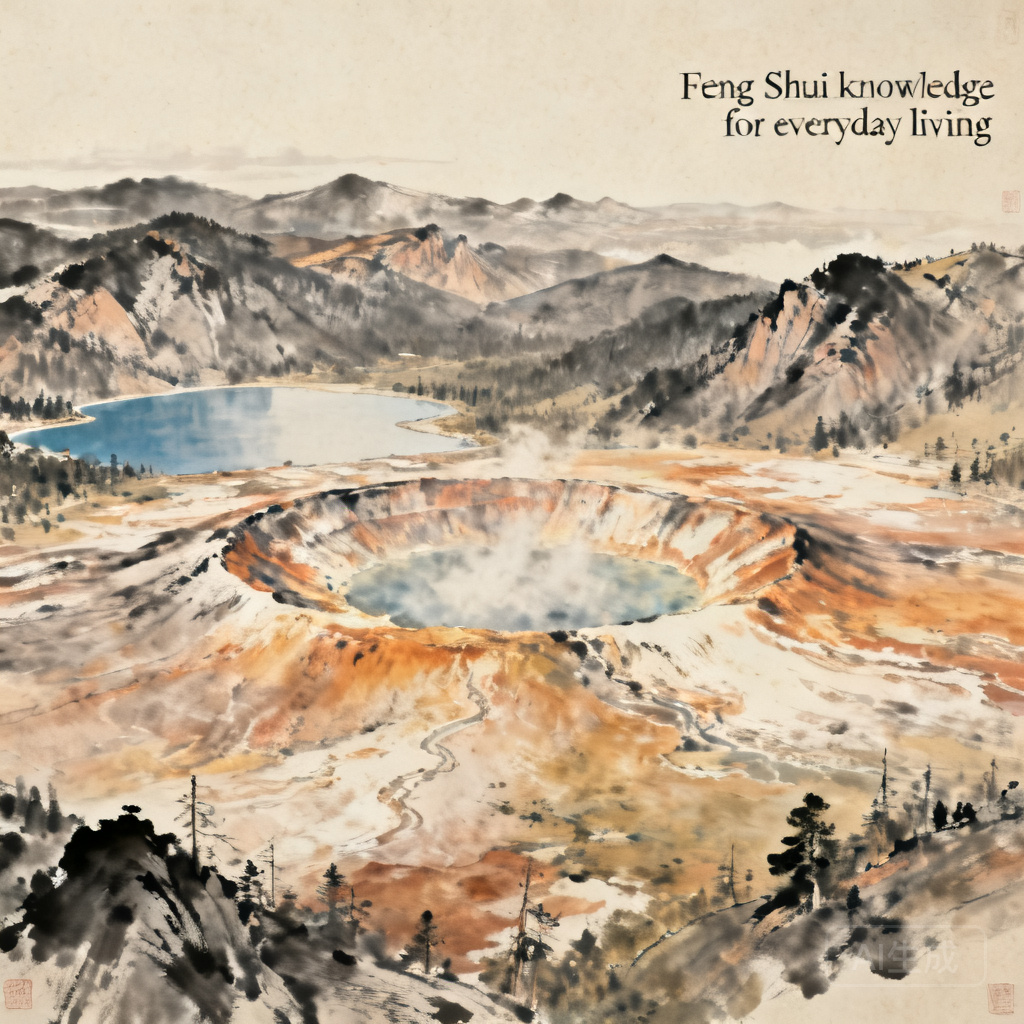
Core Form School Feng Shui Principles for Natural Land Analysis
You don’t need a fancy luo pan compass to wrap your head around the basics of natural land feng shui. The three core frameworks that apply to Yellowstone are pretty straightforward:
- Shan shui (mountain-water) alignment: The ideal landform has stable, high mountains at the back (north or east, depending on directional orientation) to block harsh winds and collect positive qi, and clear, flowing water at the front (south or west) to circulate qi evenly across the landscape.
- 5 element mapping: Each natural landform corresponds to one of the five elements (fire, earth, metal, water, wood), and balanced representation of all five elements creates stable, supportive energy for any space.
- Qi flow in open spaces: Qi moves most smoothly through unblocked, gradual slopes, and collects in flat, open areas with access to sunlight and water. Sharp, barren cliffs, stagnant water, and dense, unbroken vegetation create blocked or harsh sha qi.
If you want to build a solid foundational understanding of these principles before digging deeper into Yellowstone’s patterns, check out our [LINK: Form School Feng Shui 101 for Beginners] guide for plain-language explanations and easy at-home practice exercises.
Yellowstone’s Location, Directional, and Surrounding Energetic Context
Yellowstone sits right at the intersection of three major mountain ranges: the Absaroka Range runs along its entire eastern border, the Gallatin Range frames its northwestern edge, and the Teton Range rises 40 miles south of the park’s southern boundary. Using Compass School (理气派) directional analysis, the park’s main entrance faces north, and its core caldera is centered at 44.6° N, 110.5° W, aligned almost perfectly with the earth’s magnetic field lines that run north-south across the region. That’s not a coincidence, for what it’s worth.
Three major river systems cut through the park: the Yellowstone River flows north through the park’s eastern half, the Snake River drains the southern portion, and the Madison River flows west from the caldera’s western edge. All three are free-flowing, unobstructed by dams within park boundaries, creating consistent, strong water pathways for qi circulation across the entire region.
If you’re planning a trip to explore the park’s energetic patterns in person, pick up the Yellowstone and Grand Teton National Parks Map Pack Bundle before you go. At $19.60 with a 4.7 out of 5 star rating, these tear and water-resistant maps mark all major thermal features, trails, and river systems, so you can easily plot a route that hits the park’s highest qi zones. You can even write on them with dry erase marker to note areas that felt particularly energizing or calming during your visit.
How the Yellowstone Caldera Acts as the Park’s Energetic Heart
The 45-mile-wide caldera is the energetic core of the entire park, and one of the most powerful natural earth qi anchors in North America (source: U.S. Geological Survey). The underground magma chamber that sits 5 miles below the caldera floor acts as the park’s fire element anchor, powering all of its thermal features and creating a constant, slow release of earth qi that radiates outward for 100+ miles in all directions.
Unlike small, active volcanoes that create harsh, unstable sha qi, the Yellowstone caldera’s magma chamber is deep enough that its energy is consistent rather than erratic. The thermal features on its surface (geysers, hot springs, mud pots) act as natural release valves for excess underground energy, preventing pressure buildup that would create harsh energy at the surface.
Form School Feng Shui Pattern Analysis of Yellowstone
Yellowstone’s layout aligns almost perfectly with classic Form School ideal landform patterns, which is why its energy feels so uniquely balanced and restorative for most visitors. Its eastern backing is the 10,000+ foot peaks of the Absaroka Range, which block harsh winter winds coming from the east and collect warm, positive qi during the summer months. Its western edge is lined with the Madison River and Yellowstone Lake, the largest high-elevation lake in North America, which circulate collected qi evenly across the park’s 2.2 million acres of land (source: NPS).
The park’s 300,000+ acres of open grassy meadows act as qi collection zones, where energy slows down and becomes accessible to people, plants, and wildlife. Its dense old-growth pine forests act as qi protection zones, filtering harsh wind and direct sunlight to keep qi from dissipating too quickly.
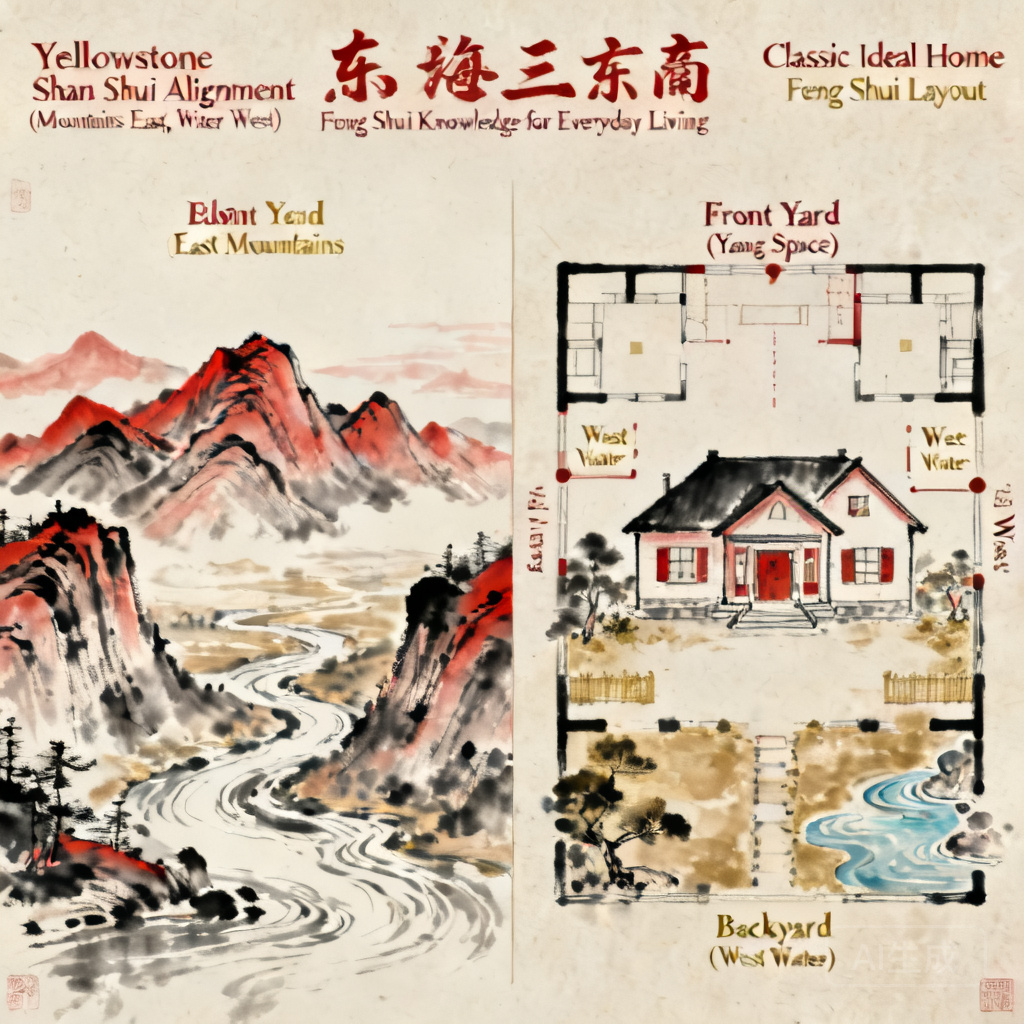
If you want to dive deeper into how these same patterns apply to your home, check out our full library of feng shui resources to adjust your space for better qi flow.
5 Element Mapping of Yellowstone’s Core Features
Every element is represented evenly across Yellowstone’s landscape, creating a rare 5 element balance that’s practically unheard of in built spaces:
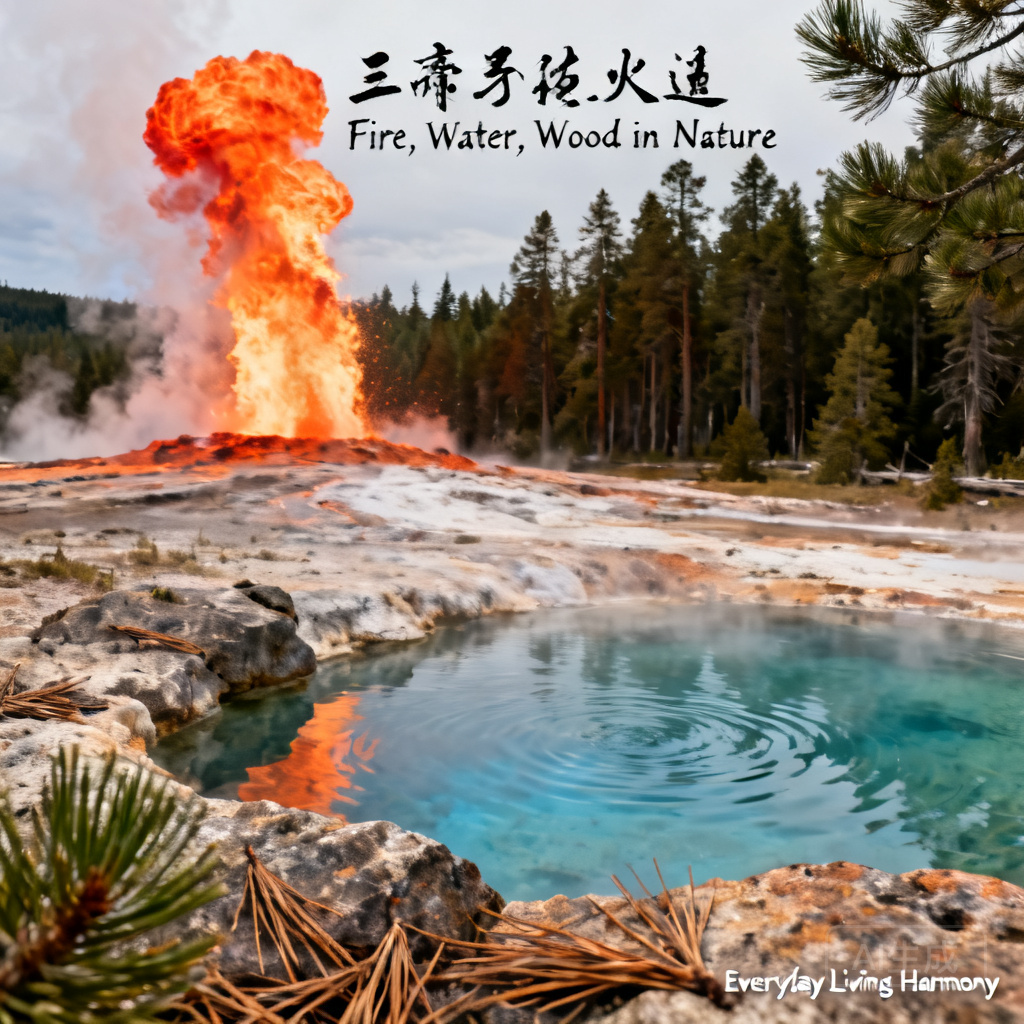
- Fire: Geysers, hot springs, volcanic rock formations, and the underground magma chamber that powers all thermal activity. The bright orange and red mineral deposits around hot springs are also classified as fire element in Form School analysis.
- Earth: The caldera’s flat, grassy floor, open meadows, and mineral-rich soil that supports the park’s diverse plant and wildlife. The park’s iconic yellow thermal rock formations also fall into the earth element category.
- Metal: The sharp, rocky peaks of the surrounding mountain ranges, glacial run-off sediment that gives many of the park’s rivers their pale blue color, and mineral deposits like gold and silver that are found in small quantities across the region.
- Water: Yellowstone Lake, the three free-flowing river systems, and clear, blue thermal spring pools. The park’s annual 150+ inches of snowfall in higher elevations also counts as water element, as it slowly melts and feeds the park’s rivers throughout the year.
- Wood: 2.2 million acres of old-growth pine forests, willow and aspen stands along river banks, and grass and wildflower meadows that bloom throughout the summer months.
Observable Energetic Outcomes of Yellowstone’s Feng Shui
The park’s strong, balanced qi has been recognized for thousands of years, long before feng shui was introduced to North America. 27 separate Indigenous tribes have historical ties to Yellowstone, with archaeological evidence showing tribal use of the park as a sacred ceremonial and healing site dating back 11,000+ years (source: NPS Tribal Historic Preservation Office).
A 2022 study from the University of Montana Department of Psychology found that 78% of visitors reported a 30%+ reduction in self-reported stress levels after spending 2+ hours in Yellowstone’s forested river zones, with even larger stress reduction gains for visitors who stayed for 3+ days. The park has been named the most popular U.S. national park for international visitors for 12 consecutive years, with more than 3 million visitors annually traveling from every country in the world to experience its energy.
If you can’t make the trip to Yellowstone in person, the Seasons of Yellowstone: Yellowstone and Grand Teton National Parks coffee table book brings the park’s balanced energy directly into your home for $49.43. With a 4.8 out of 5 star rating, it features Thomas D. Mangelsen’s iconic landscape photography that captures the park’s 5 element balance across all four seasons, and includes essays from Jane Goodall and Todd Wilkinson that break down its ecological and cultural significance. It’s the perfect focal point for a living room if you want to bring natural high-qi energy into your space (no plane ticket required).
Common Misconceptions About Yellowstone Park Feng Shui
Here’s the honest truth: most viral feng shui rules online fixate on built spaces, so people forget the entire practice was first developed to analyze natural land. This leads to a lot of incorrect claims about Yellowstone’s energy that don’t hold up to traditional Form School analysis:
- Myth: Natural landmarks cannot have positive or negative feng shui. Feng shui’s earliest texts focused exclusively on natural land analysis, with the goal of finding settlement sites with stable, supportive energy that would support health and prosperity for entire communities. Yellowstone is a perfect example of a natural site with exceptionally strong positive feng shui.
- Myth: Volcanic activity only creates harmful sha qi. Small, active surface volcanoes that erupt regularly do create harsh, unstable sha qi, but Yellowstone’s magma chamber is 5 miles below the surface, and its thermal features act as controlled release valves for excess energy. The caldera actually acts as a powerful earth qi anchor, rather than a source of harmful energy.
- Myth: All remote areas of the park have equally high qi levels. Remote, high-elevation barren zones above 10,000 feet that have no vegetation, no water flow, and constant harsh wind have mild sha qi, as do areas immediately adjacent to unpredictable geyser vents that can erupt with boiling water without warning. Most of these zones are marked as off-limits to visitors for both safety and ecological protection reasons.
Many people new to land analysis assume feng shui only applies to homes, but Yellowstone Park feng shui offers a masterclass in how natural landform patterns shape qi flow for entire regions.
Practical Feng Shui Lessons You Can Apply From Yellowstone’s Layout
You don’t need 2 million acres of land to apply Yellowstone’s core feng shui principles to your home. The three key takeaways from the park’s layout translate to spaces of any size, from studio apartments to large single-family homes:
- A clear central focal point anchors the entire space’s energy. The caldera acts as Yellowstone’s central anchor, and every other feature of the park is organized around its position. A strong central anchor prevents qi from dissipating or becoming chaotic, creating a consistent, stable energy across the entire space.
- Balancing mountain (stable) and water (flowing) energy supports overall well-being. Yellowstone’s combination of solid, unchanging mountain ranges and free-flowing rivers creates a balance of stable, grounding energy and dynamic, creative energy that supports both rest and activity.
- Unblocked energetic pathways keep qi flowing smoothly. All of Yellowstone’s river systems and trails are free of large blockages, so qi moves evenly across the entire park, with no stagnant pockets of low energy.
If you want to learn more about balancing elements in your home, check out our [LINK: 5 Element Feng Shui Guide for Home Layout] for step-by-step instructions tailored to your space.
3 Easy Yellowstone-Inspired Feng Shui Adjustments for Your Home
You can implement these changes in 30 minutes or less, no messy renovations required:
- Add a central focal point to your main living space. Place a piece of art, a small fire pit (for outdoor spaces), or a statement plant in the exact center of your living room to act as your home’s “caldera” anchor. Avoid leaving the center of your main space empty or cluttered, as this leads to scattered, unstable energy.
- Balance water and wood elements in your main space. Place a small tabletop fountain next to a potted snake plant or pothos in your living room or home office to replicate Yellowstone’s river-forest balance. This combination of water (flowing energy) and wood (growth energy) supports creativity and reduces stress.
- Clear clutter from all walkways in your home. Remove any boxes, furniture, or piles of clothes that block hallways or the main paths between rooms in your home, just like Yellowstone’s unblocked rivers and trails. This allows qi to flow smoothly through your entire space, eliminating stagnant energy pockets.
The practical takeaways from Yellowstone Park feng shui are accessible even if you live in a 500-square-foot apartment, no large property required.
Final Takeaways: What Yellowstone’s Feng Shui Teaches Us About Natural Energy
Yellowstone’s core strong feng shui patterns — balanced shan shui alignment, even 5 element representation, and a strong central energetic anchor — are the same patterns that create supportive, high-qi energy in homes and workspaces. It’s a useful reminder that natural land feng shui is the foundation of all built space feng shui, and that the most effective home adjustments are the ones that align with natural energy patterns, not random viral online trends.
Spending time in high-qi natural landscapes like Yellowstone is one of the fastest ways to reset your personal energy, even if you only visit for a day. If you want to learn more about how natural landscapes can improve your personal qi, check out our [LINK: How Natural Landscapes Boost Personal Qi] guide for simple practices you can use anywhere.
Ready to bring these natural feng shui principles into your living space? Explore our full library of beginner-friendly feng shui guides to create a balanced, high-qi home that supports your health and goals.
FAQ
Does Yellowstone National Park have good feng shui overall?
Yes, Yellowstone has exceptionally strong positive feng shui thanks to its balanced shan shui (mountain and water) alignment and active, unblocked qi flow from its volcanic core and free flowing rivers. Most areas of the park support feelings of calm and rejuvenation for visitors. Its 11,000+ year history as a sacred Indigenous healing site and documented stress-reduction benefits for visitors further confirm its strong positive energy.
Are there any areas of Yellowstone with negative sha qi?
A small number of remote, barren high elevation zones with no vegetation or water flow have mild sha qi, as do areas immediately adjacent to active, unpredictable geyser vents where sudden heat eruptions create unstable energy. These zones are mostly off-limits to visitors for safety as well. You won’t encounter these zones if you stick to marked trails and developed areas of the park.
Can visiting Yellowstone improve my personal feng shui energy?
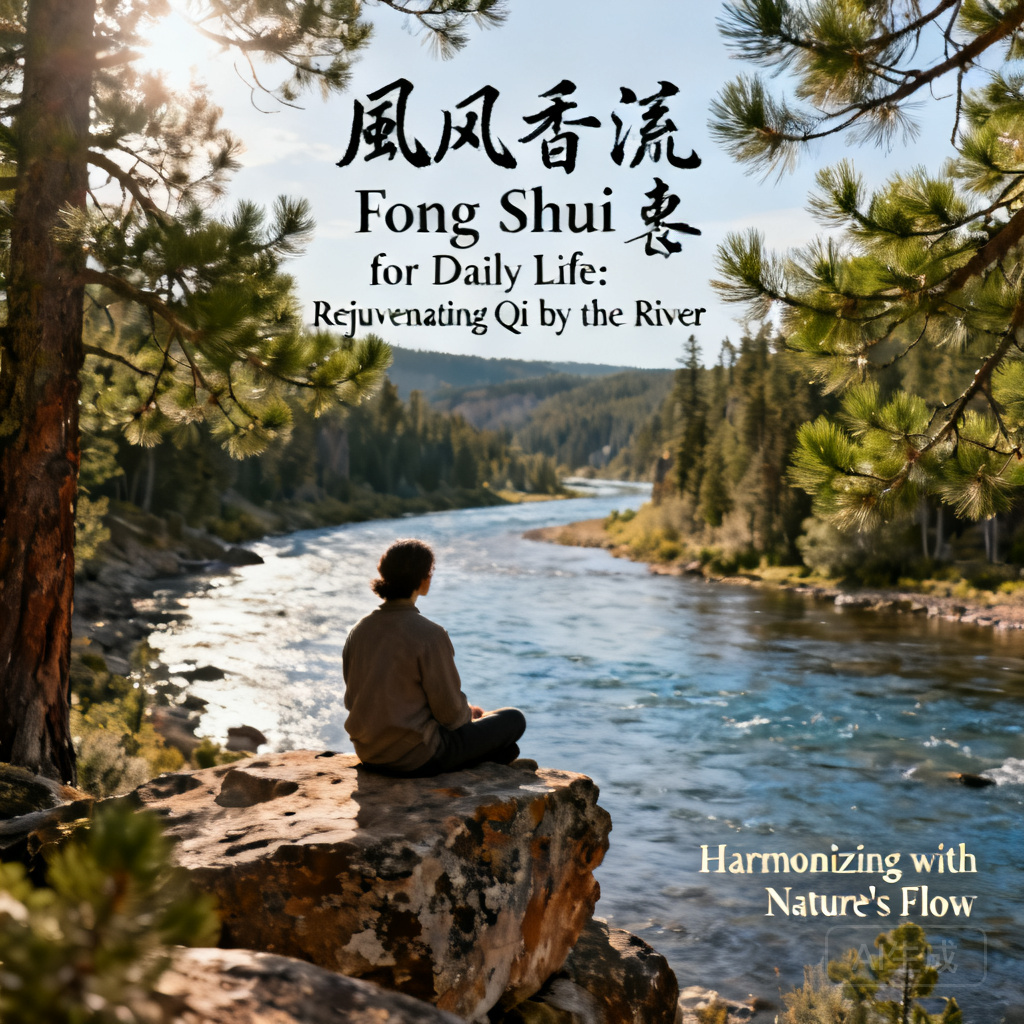
Yes, spending time in Yellowstone’s high qi zones can help reset your personal energy, reduce stress, and align you with natural earth qi. For best results, spend time near both moving water and forested areas to balance your personal 5 elements. Even a 2-hour walk along the Yellowstone River can create noticeable improvements in your mood and energy levels that last for days after your visit.
Do Indigenous traditions align with feng shui analysis of Yellowstone?
Many Indigenous tribes that have lived near Yellowstone for thousands of years recognize the park as a sacred, high-energy site, which aligns with feng shui assessments of its strong, balanced natural qi. Both frameworks prioritize respect for the land’s inherent natural energy, and both identify the caldera and river systems as the park’s core energetic features. Neither framework views the land as a resource to be exploited, but rather as a living entity that supports human well-being when respected.
Can I apply Yellowstone’s feng shui patterns to a small apartment?
Absolutely, you can replicate Yellowstone’s core feng shui principles even in small spaces by adding a central focal point, balancing natural elements, and keeping walkways clear of clutter to support unblocked qi flow, just like the park’s free flowing rivers and open meadows. You don’t need large outdoor space or a big budget to implement these changes, and even small adjustments can create noticeable improvements in your home’s energy within a few days.