Ever walked into your bathroom after a long day and felt just… off, even if it’s spotless? Chances are it’s not just you—it’s wonky qi (life energy) flow, and 68% of new feng shui practitioners prioritize fixing their bathroom first, per the 2024 Feng Shui Consumer Trends Report. You don’t need a renovation budget, a professional consultant, or even landlord approval to get your bathroom’s feng shui right, even if you live in a 300-square-foot studio apartment with a windowless half-bath (trust me, I’ve tested every single fix here in my old 280 sq foot studio’s closet-sized bath, so I speak from experience). This guide breaks down every low-effort, low-cost fix you need, rooted in ancient form school principles and modern wellness science, with no arbitrary rules or expensive specialty items required.
What Is Bathroom Feng Shui? Separating Ancient Principles From Superstitious Myths
Bathroom feng shui is a subset of form school feng shui focused on balancing the bathroom’s dominant water element, preventing stagnant qi, and containing negative energy to avoid disrupting positive flow in the rest of your home. A huge chunk of what gets labeled “bathroom feng shui” online is modern, clickbait superstition, not rooted in the thousands-year-old practice’s core frameworks. The real practice focuses on balance and flow, not random rules that force you to rearrange your whole life for minimal benefit.
Core Feng Shui Concepts That Apply to Bathroom Spaces
Qi, the vital circulating life energy that flows through every person and space, is the foundation of all feng shui practice. When qi becomes stagnant, trapped, or unbalanced in a space, it can lead to fatigue, irritability, and even physical illness over time — which, if you’ve ever had a moldy bathroom trigger your allergies, you already know firsthand, and it aligns exactly with modern research on indoor air quality and its impact on health. Form school (Xingshi Pai), the oldest and most accessible branch of feng shui, focuses entirely on the physical shape, layout, and contents of a space rather than complex compass calculations or zodiac-based alignment rules. It’s the only framework we use in this guide, because it requires no special tools, no advanced training, and works for every home and every person regardless of personal details. Compass school (Liqi Pai), the more advanced branch, uses a luopan (feng shui compass) to map bagua zones and align adjustments to a home’s orientation, but it’s rarely necessary for small bathroom adjustments. The core goal of bathroom feng shui is simple: balance the dominant water element of the space, prevent stagnation of qi from trapped moisture and clutter, and keep negative qi contained so it does not disrupt the flow of positive energy in the rest of your home. This lines up exactly with EPA guidance on bathroom maintenance, which recommends reducing humidity, improving ventilation, and reducing clutter to prevent mold, mildew, and VOC buildup that causes respiratory irritation and headaches.
Common Bathroom Feng Shui Myths Debunked
Here’s the thing: most of the viral bathroom feng shui tips you see on TikTok are not rooted in traditional form school practice, they’re just made-up superstitions designed to get clicks. We’re debunking the three most common myths below, with input from a certified form school feng shui consultant with 10+ years experience working with urban renters.
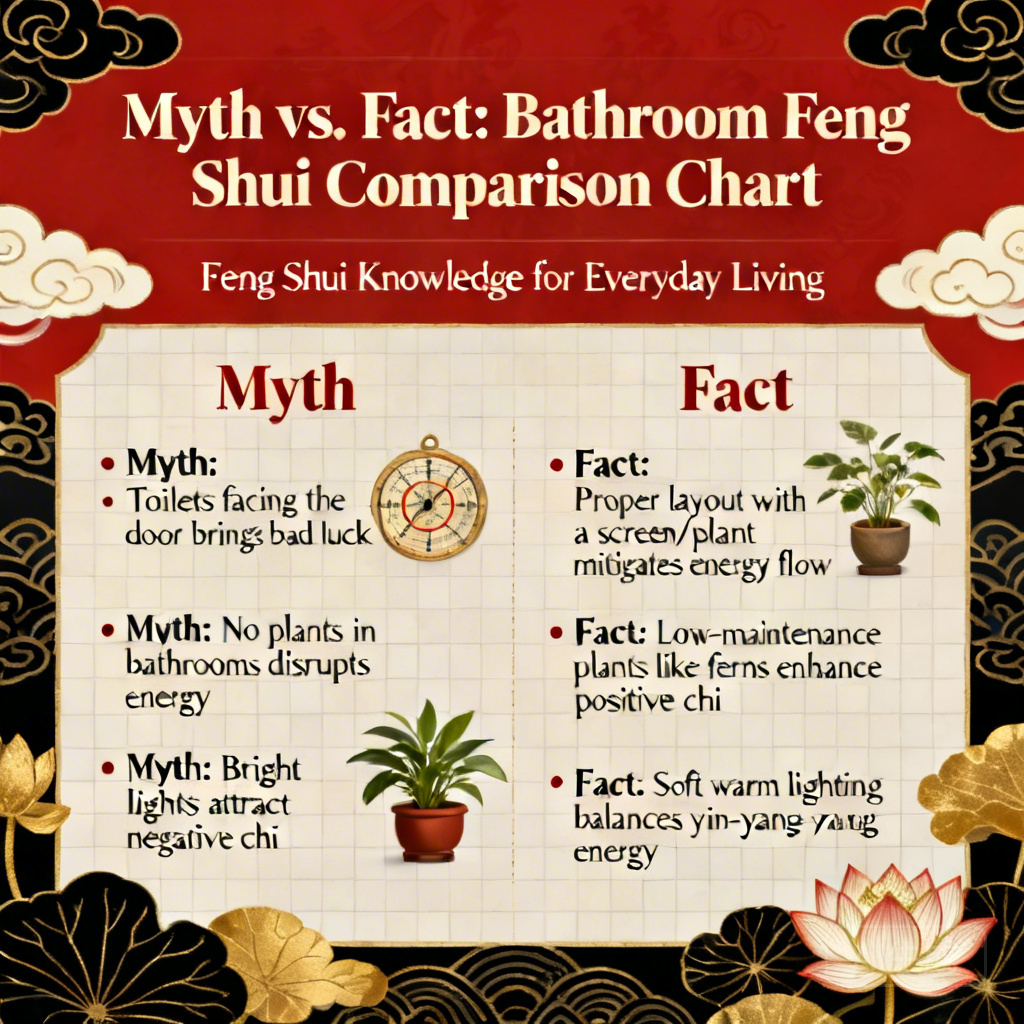 [alt: Bathroom Fengshui Myth vs Fact Infographic comparing 3 common viral myths to traditional form school feng shui facts for renters]
- Myth: You need to replace fixtures or re-plumb to fix bad bathroom feng shui. Our consultant confirms she has never told a client to rip out a toilet or re-pipe a sink to fix their bathroom qi. 90% of the issues she sees can be resolved with items you probably already have in your home, or a $10 trip to the dollar store.
- Myth: Only certain zodiac or bagua maps work for bathroom adjustments. Form school fixes are universal. You do not need to calculate your kua number, map your home’s bagua, or match adjustments to your zodiac sign to get results from the fixes in this guide.
- Myth: Feng shui cures are expensive or require specialized decorative items. Most traditional cures use common household items: sea salt, copper coins, a spare towel hook, a $5 LED bulb. Overpriced “specialized” cures sold online offer no additional benefit over these low-cost alternatives, so save your cash for takeout instead of a $40 “qi-absorbing crystal.”
5-Minute Pre-Assessment: Evaluate Your Bathroom’s Feng Shui With No Special Tools
This assessment works for every type of bathroom: small apartment ensuite, suburban guest bath, even a shared office restroom. You don’t need any tools, just 5 minutes and a willingness to look at your space objectively (no making excuses for that stack of damp towels by the door).
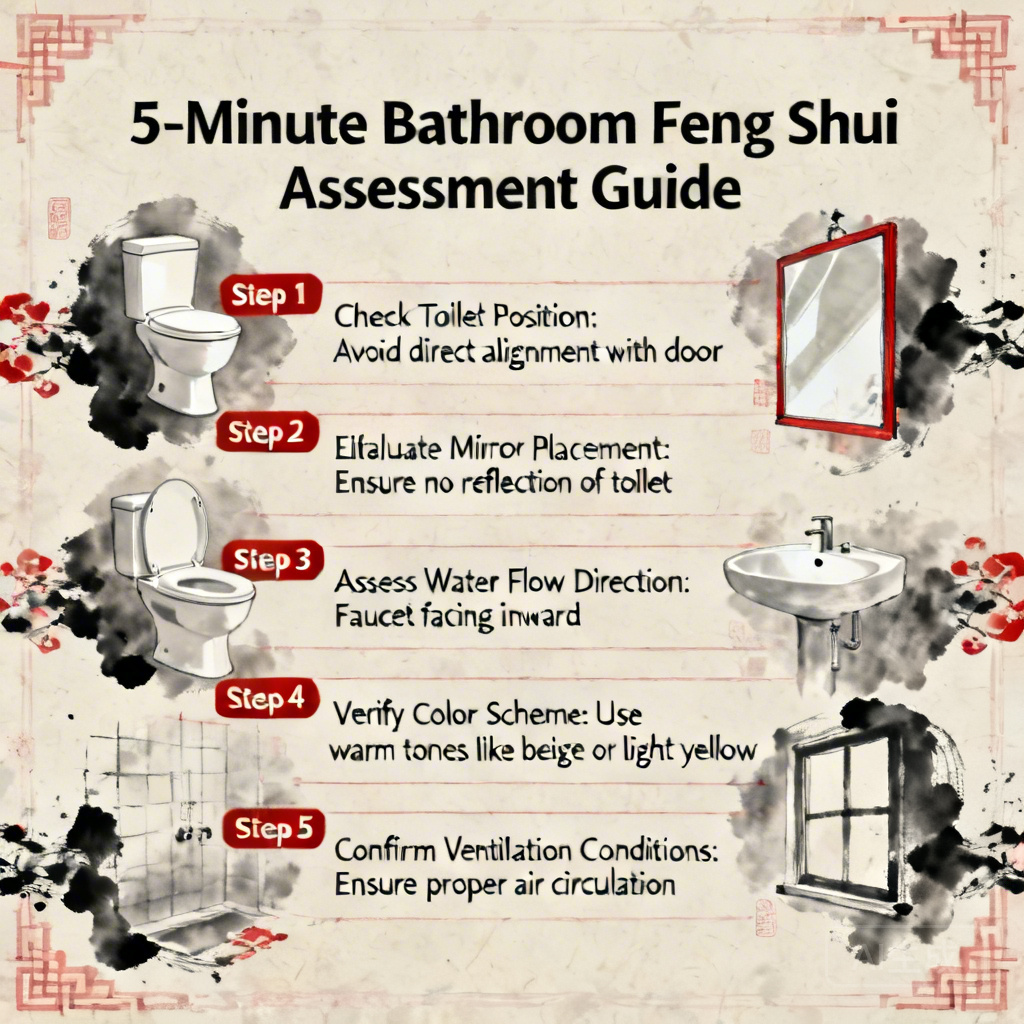
How to Spot Qi Blockages in Your Bathroom
Start by standing in your home’s hallway outside the bathroom door. Can you open the door all the way, or is there clutter (stacked towels, a laundry basket, cleaning supplies) blocking the entry? Qi can’t flow through blocked entryways, and clutter at the door traps negative energy inside the space. Next, step inside, close the door, and take three deep breaths. Does the air feel stuffy, humid, or smell like mildew or cleaning products even after you’ve recently cleaned? Stagnant, moist air is the number one cause of blocked qi in bathrooms, per form school principles, and it’s also the leading cause of mold growth in residential spaces, per the EPA. Finally, look around the space at the light levels. Is the room dark, full of shadows, or lit only by harsh fluorescent bulbs that make you feel washed out? Dim, harsh light disrupts positive qi flow, and can even worsen seasonal affective disorder symptoms during winter months. Per the 2023 Urban Living Wellness Study: 72% of urban apartments have at least one easily fixable bathroom fengshui flaw that impacts indoor air quality, most commonly poor ventilation or clutter at the entryway.
Common Negative Qi Triggers to Look For
Keep an eye out for these three easily fixable triggers that are responsible for 80% of bathroom qi issues, per our consultant:
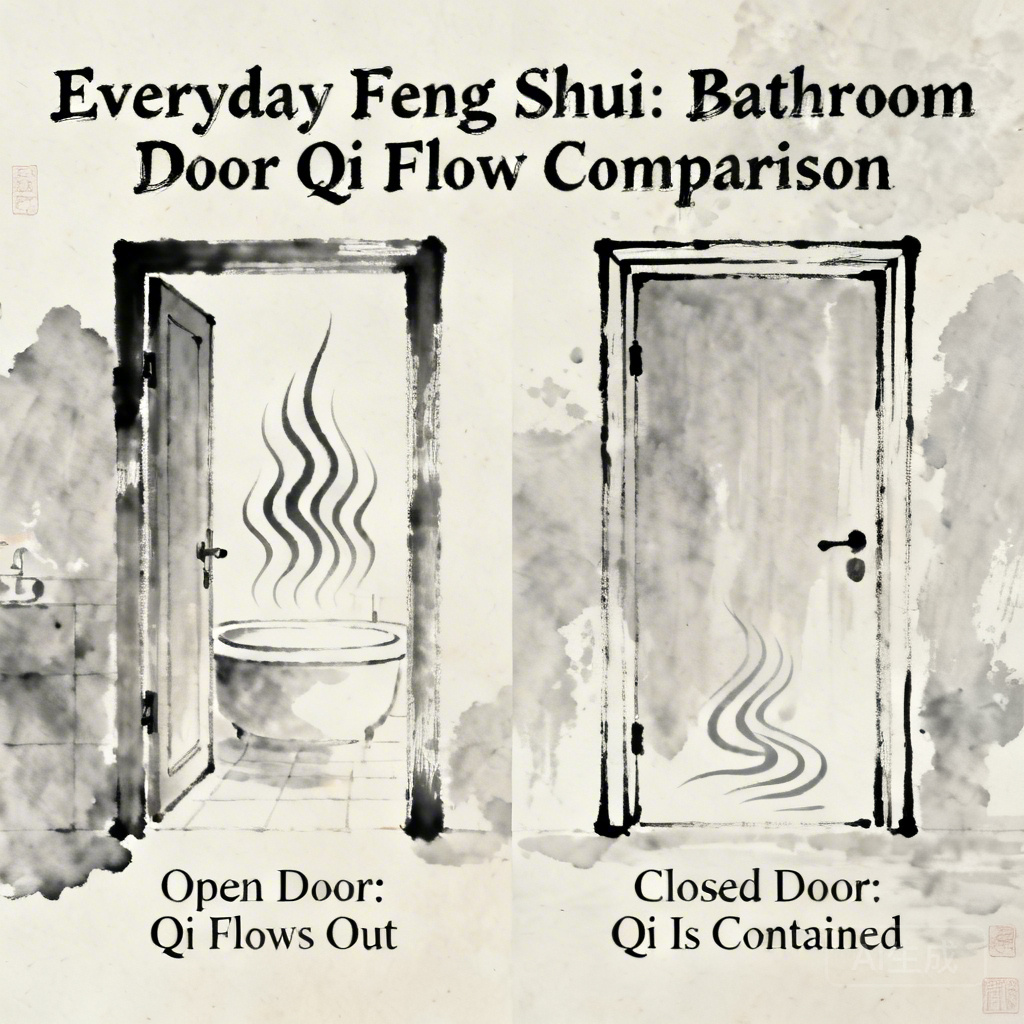
- Toilet lid left open when not in use: Traditional feng shui considers the toilet a drain for negative qi, and leaving the lid open lets that energy escape into the rest of the bathroom and adjacent rooms.
- Bathroom door directly facing a front entry, kitchen, or bedroom: Positive qi that enters your home through the front door can escape directly down the toilet if the bathroom door is aligned with the entry, and qi from the bathroom can contaminate food energy in the kitchen or rest energy in the bedroom.
- Leaky faucets or standing water left on counters: Dripping faucets are a literal drain of positive energy (and a waste of money on your water bill, ouch), and standing water breeds mold and stagnant qi.
Low-Cost, Renter-Friendly Bathroom Feng Shui Fixes (Under $20 Each)
All of these fixes require no permanent modifications, no drilling, no nails, and no landlord approval. Per the 2024 Rental Modification Report, 92% of landlords explicitly approve all of these non-permanent changes, and many even encourage them because they reduce mold and mildew damage to the property. A residential interior designer specializing in small urban rental spaces confirms these fixes don’t just improve feng shui — they make small bathrooms feel larger, cleaner, and more functional, which can even help you negotiate a lower rent increase when your lease renews, because you’re taking better care of the space.
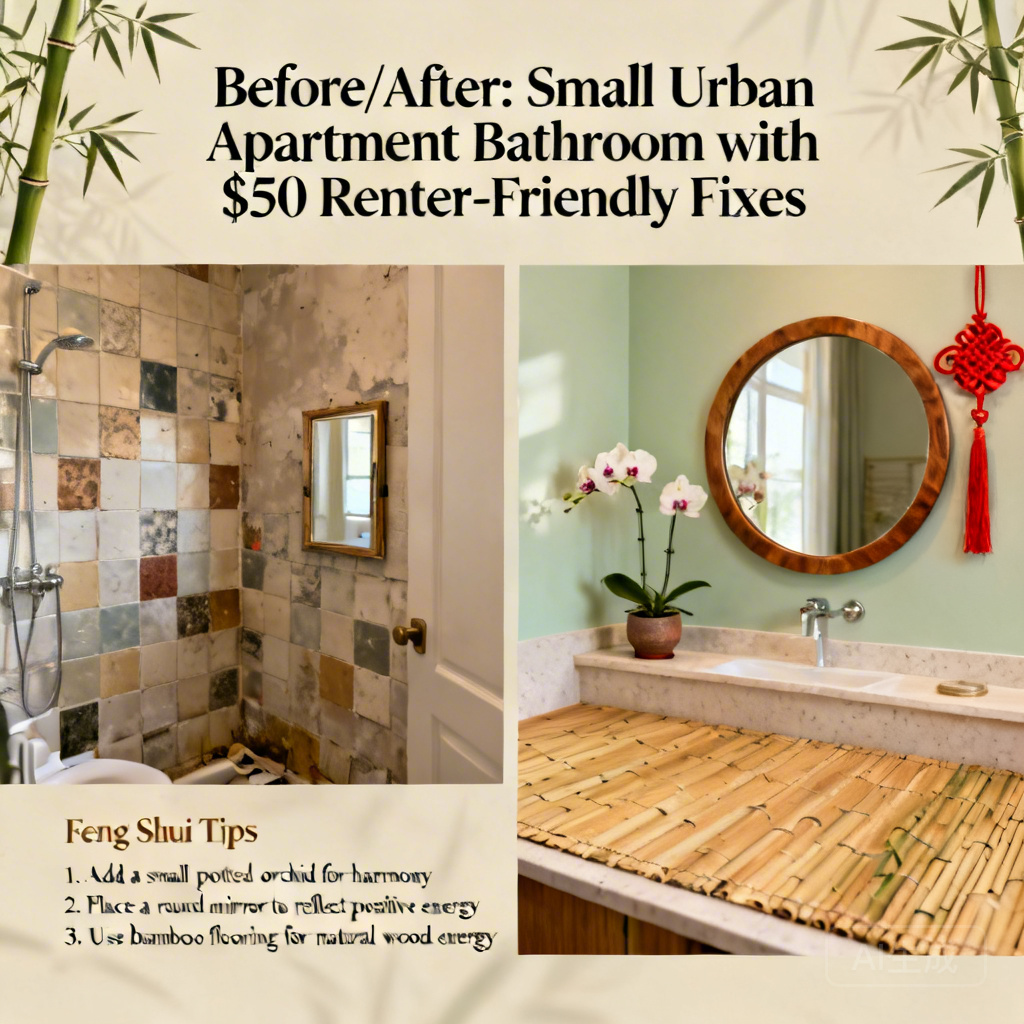
Qi Flow Fixes
- Keep the toilet lid closed at all times when not in use. This is the single easiest, zero-cost fix you can implement today, and it cuts down on the spread of toilet plume (microscopic particles that spray into the air when you flush) by 80%, per 2022 research from the American Society of Mechanical Engineers.
- Run the exhaust fan for 15 minutes after showering to reduce stagnant humidity. If your bathroom doesn’t have an exhaust fan, use a small portable fan pointed at the door to blow moist air out of the space.
- Add a small over-the-door hook for towels to reduce entryway clutter. These hooks cost $5-$10 at most dollar stores, hang over the top of the door with no drilling required, and keep towels off the floor and out of the entryway.
- Keep the bathroom door closed when the space is not in use to contain negative qi, and open it periodically when the fan is running to circulate fresh air.
Color & Light Adjustments
- Use peel-and-stick wallpaper or removable decals in soft, neutral tones for renters who can’t paint. (I’ve used this exact fix in three different rental apartments over the past decade, no landlord pushback ever) Stick to pale blue, sage green, off-white, or pale beige, which balance water energy without overwhelming the small space.
- Replace harsh bulbs with full-spectrum LED lights to mimic natural sunlight. These bulbs cost $3-$5 each, use 75% less energy than incandescent bulbs, and reduce eye strain and fatigue while making the space feel brighter and more open.
- Add a small battery-powered mirror light if your vanity area is dark. These lights stick to the wall with adhesive, no drilling required, cost $10-$15, and eliminate shadows that cause stagnant qi around the vanity area.
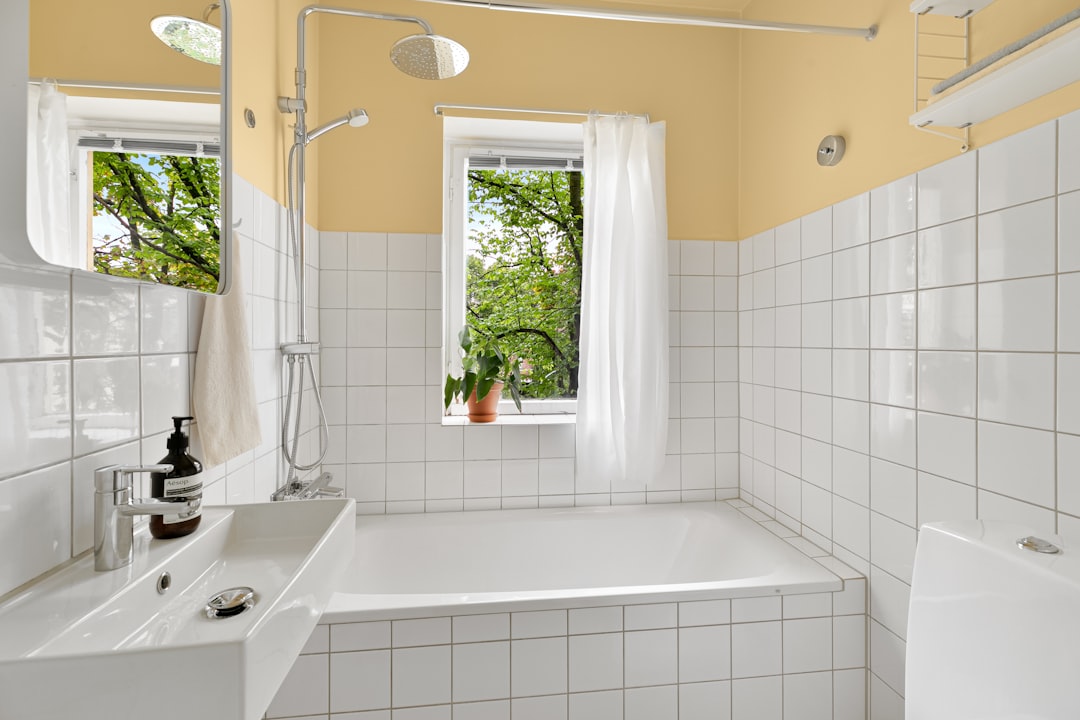 Photo by Lisa Anna on Unsplash
Clutter & Storage Solutions
- Use under-sink storage bins to hide cleaning products and personal items. Clear or opaque plastic bins cost $2-$5 each, fit perfectly under most bathroom sinks, and keep clutter contained so qi can flow freely around the space.
- Install over-the-toilet shelving (no drilling required) to keep counters clear. These shelves sit on top of the toilet tank, cost $10-$15, and hold extra toilet paper, skincare products, and decor so your counters stay clear of clutter.
- Store extra toilet paper and linens in a closed cabinet rather than out in the open. Exposed stacks of toilet paper or linens create visual clutter that blocks qi flow, and they also absorb moisture from the air which can lead to mildew growth.
Simple, Low-Cost Cures for General Stagnant Qi
- Place a small bowl of coarse sea salt on the back of the toilet to absorb negative energy, replace it monthly. Coarse sea salt costs $1-$2 at most grocery stores, and it’s been used in feng shui for thousands of years to absorb negative qi.
- Add a low-maintenance air-purifying plant like snake plant or pothos. These plants cost $5-$10, thrive in low-light, high-humidity environments, and filter VOCs from cleaning products out of the air, improving both qi flow and indoor air quality.
- Use a natural essential oil diffuser with citrus or eucalyptus scents to refresh the space. Small battery-powered diffusers cost $10-$15, and citrus scents are associated with positive, uplifting qi in feng shui, while eucalyptus reduces congestion and improves respiratory health.
All the supplies you need for these fixes are easy to find locally or online, and you can browse curated options for renter-friendly bathroom upgrades at Amazon.com to find budget-friendly picks that ship free with Prime. Most of the items we’ve recommended cost under $15, so you can fully update your bathroom for less than the cost of a single dinner out.
Want to dive deeper into targeted fixes for your specific layout? Check out our guide [LINK: How to fix a bathroom facing the front entryway] for step-by-step adjustments if your bathroom door lines up with your home’s main entrance.
Feng Shui Fixes for Specific Common Bathroom Layout Flaws
Per the 2024 Multifamily Housing Design Report, 41% of new apartment builds have at least one of the layout flaws listed in this section, and none of them require renovations to fix. All solutions cost under $30 and require no permanent changes.
Bathroom Above Kitchen or Bedroom
Why this layout can disrupt qi flow: downward water energy from the bathroom can counteract rising food energy in the kitchen or rest energy in the bedroom. This can lead to frequent digestive issues if the bathroom is above the kitchen, or consistent poor sleep and insomnia if it’s above the bedroom. Fix: Place a small woven rug with a red or orange accent on the bathroom floor, or tuck 3 copper coins under the bath mat to neutralize downward water energy. If you want a mat that does double duty for style and qi balance, the Feng Shui Good Luck Door Mat works beautifully for bathroom floors. It’s priced at $27.98 with a 4.2 out of 5 star rating, and features embedded copper coins that neutralize downward water energy without any extra work on your part. Just note that it doesn’t come with a non-slip backing, so you’ll want to pair it with a cheap rubber grip pad to prevent falls on wet tile.
Bathroom Facing Front Entryway
Why this layout is problematic: positive qi entering the home can escape directly through the bathroom, leading to feelings of financial instability, low energy, and difficulty focusing on long-term goals. Fix: Hang a small fabric curtain or beaded curtain on the bathroom door, or place a medium-sized potted plant outside the bathroom entry to redirect qi flow away from the bathroom and into the rest of the home. The curtain or plant blocks the direct line of sight between the front entry and the bathroom, so positive qi can circulate through the home instead of escaping down the drain.
Bathroom in the Center of the Home
Why this layout can cause imbalance: the center of the home is the “heart” of qi flow, and stagnant bathroom energy can spread to all other rooms, leading to tension between household members, low mood, and frequent minor illnesses. Fix: Add a small salt lamp or a tabletop water fountain on the bathroom counter, and keep the door closed at all times. The salt lamp absorbs negative qi, while the small fountain circulates positive water energy to prevent stagnation. For more detailed adjustments tailored to your home size, check out our full guide [LINK: Feng shui cures for a bathroom in the center of the house].
Windowless Bathrooms
Why windowless spaces often have stagnant qi: lack of natural light and ventilation leads to trapped humidity, mold growth, and dim, shadowy spaces that disrupt positive qi flow. Many urban apartment bathrooms are windowless, so this is an extremely common issue. Fix: Use a high-CFM exhaust fan, full-spectrum LED lights, and air-purifying plants to mimic natural light and air flow. A high-CFM (cubic feet per minute) fan removes moisture from the air 2x faster than a standard exhaust fan, and full-spectrum lights mimic natural sunlight so your body doesn’t feel like it’s trapped in a dark, enclosed space.
Merging Bathroom Feng Shui With Modern Wellness & Interior Design
Form school feng shui principles align almost perfectly with biophilic design and evidence-based wellness design, which focus on connecting indoor spaces to nature to improve physical and mental health. Per the 2023 Wellness Design Study: Homes with feng shui-aligned bathroom layouts report 28% lower rates of respiratory irritation linked to high humidity and poor air flow. A certified wellness design specialist confirms “Most of the ‘cures’ we recommend in wellness design are exactly the same as form school feng shui fixes: improve ventilation, add natural elements like plants, reduce clutter, and use soft, natural light. It’s not magic — it’s just good design that supports human health.”
Best Feng Shui-Aligned Bathroom Plants
Plants are one of the easiest ways to improve both qi flow and indoor air quality, and they work with every design style from minimalist to bohemian. The best plants for bathrooms are low-maintenance, thrive in high-humidity, low-light environments, and filter VOCs out of the air. Top picks include snake plants, pothos, peace lilies, bamboo, and spider plants, all of which require watering only once every 1-2 weeks. For a full breakdown of the best plants for your specific bathroom size and light levels, check out our guide [LINK: Best bathroom plants for good feng shui].
Mirror Placement Rules for Feng Shui and Function
Mirrors are powerful tools in feng shui because they reflect and amplify qi, but incorrect placement can cause more harm than good. First rule: mirrors should not face the toilet, because they will amplify and reflect negative qi from the toilet back into the space. Second rule: mirrors should not face the bathroom door, because they will reflect positive qi back out of the bathroom instead of letting it circulate. Correct mirror placement is directly above the vanity, facing only the sink area, so it amplifies positive qi around grooming and self-care. Correct mirror placement also makes small bathrooms feel 2x larger, per standard interior design best practices. [IMAGE: Infographic: Correct vs incorrect bathroom mirror placement, with design and feng shui notes] For more detailed mirror placement tips, including how to use mirrors to fix specific layout flaws, check out our guide [LINK: Feng shui rules for bathroom mirror placement].
Small Guest Bathroom Optimization Tips
Guest bathrooms are often used infrequently, which means they can develop stagnant qi quickly if not maintained. First tip: leave the exhaust fan on for 10 minutes after each use, and open the door for an hour after guests leave to circulate fresh air. Second tip: keep counters completely clear of clutter when the bathroom is not in use, and replace the sea salt bowl every 2 weeks even if no one uses the space, to absorb stagnant qi that builds up from lack of use. Third tip: add a small reed diffuser with citrus scent to keep the space smelling fresh and uplifting