Feng Shui for Small Spaces: Why Cleanliness Matters More Than You Think
The Question I Hear Most Often
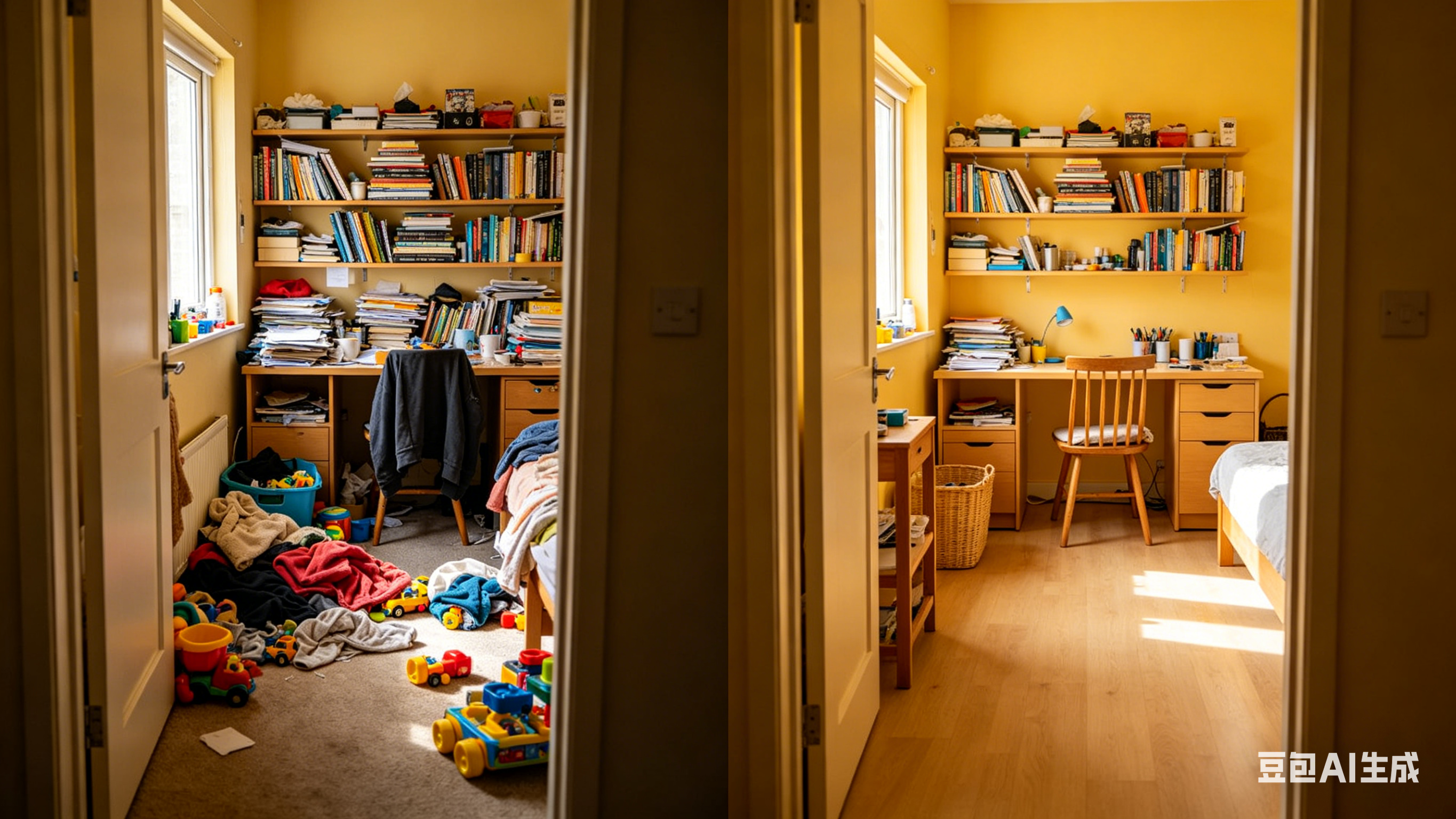
Every week, I receive questions from readers who live in apartments or small homes. They send me photos of their spaces—often chaotic, filled with boxes in corners, clothes piled on chairs, and items scattered everywhere. They ask: “Can feng shui even work in a space this small? Where do I even start?”
My answer is always the same: start with cleanliness. Not fancy furniture arrangements, not expensive decor, not crystal placements. Clean the space first.
This might seem underwhelming compared to the dramatic feng shui transformations you see online. But here’s the truth—without a clean foundation, nothing else matters.
Why Cleanliness Is the Foundation of Feng Shui
In classical feng shui texts, the concept of “clear paths” (清路) appears again and again. The ancient masters understood something modern science is now confirming: energy flows like water. When water encounters obstacles, it stagnates. When energy encounters clutter, it becomes blocked.
In feng shui terms, clutter represents “stagnant qi” (氣滯). Every pile of unsorted mail, every corner filled with forgotten items, every surface covered with miscellaneous objects—these are all energy blockages. They trap positive energy and allow negative energy to accumulate.
For small spaces, this effect is amplified. In a 400-square-foot apartment, that pile of magazines isn’t just taking up physical space—it’s creating a dead zone in your home’s energy field. The energy literally cannot flow past it.
Here’s what feng shui teaches about dirty or cluttered spaces:
- Blocked opportunities - When energy can’t flow freely, opportunities literally cannot enter your life
- Financial stagnation - Clutter in areas related to wealth (usually the entrance and southeast corners) can block financial flow
- Relationship friction - Chaos in shared spaces creates tension between household members
- Health decline - Accumulated “stale qi” from unwashed areas can affect respiratory health
These aren’t superstitions. They’re observations about how physical disorder creates psychological and energetic disorder.
The Psychology of Clutter: What Modern Research Tells Us
Feng shui masters knew this intuitively. Now we have research to prove it.
A landmark study published in the Journal of Neuroscience found that visual clutter competes for your brain’s attention resources. When your environment is chaotic, your brain cannot fully relax—even when you’re physically at rest.
Another study from Princeton University showed that physical clutter actively impairs your ability to focus. The researchers found that “multiple stimuli in the visual field” from clutter competes for your attention, leading to decreased productivity and increased stress.
Here’s what this means for your home:
Your home is a mirror of your mind. When your space is chaotic, your thinking becomes chaotic. When your space is clean and organized, your mind follows suit. This isn’t magic—it’s neuroscience.
The emotional impact is even more significant. Researchers at the University of California found that women in cluttered homes had higher cortisol levels (the stress hormone) than women in clean homes—even when the clutter was in rooms they weren’t actively using. The mere presence of visual disorder creates chronic stress.
For small spaces, this is crucial. In a small apartment, you cannot escape the clutter. Every room bleeds into every other room. The chaos in your living room affects your sleep in the bedroom. The disorder in your kitchen impacts your ability to relax in your living area.
The Feng Shui Solution: Start With the Basics
Here’s the practical part—what should you actually do?
Step 1: The 15-Minute Daily Practice
You don’t need a weekend of intense decluttering. Start with 15 minutes each morning. Focus on one surface, one corner, one small area. Make your bed first—it’s the simplest way to create immediate order.
This daily practice accomplishes two things:
- It prevents clutter from accumulating
- It trains your brain to expect and maintain order
Step 2: The Three-Box Method
When you do tackle a decluttering session, use the three-box method:
- Box 1: Keep - Items you actually use or love
- Box 2: Donate/Sell - Items in good condition you don’t need
- Box 3: Discard - Broken, worn-out, or trash items
Be ruthless. In small spaces, every item you keep must earn its place.
Step 3: The “One In, One Out” Rule
For every new item that enters your home, one item must leave. This prevents the gradual accumulation that turns organized spaces into chaotic ones.
Step 4: Focus on High-Impact Areas
In small spaces, prioritize these areas:
- Entrance/Door area - This is where energy enters your home
- Kitchen counter - Food preparation space must be clear
- Bedroom surface - Your bedside area affects sleep quality
- Bathroom - Clean, dry surfaces prevent mold and stagnant energy
Small Space, Big Impact
Let me be honest with you. Before I understood the importance of cleanliness in feng shui, I used to give complicated advice about furniture placement, color choices, and symbolic objects.
I was wrong to focus on those things first.
The reader who wrote to me last month lived in a 350-square-foot studio. She had tried everything—moving her bed, adding a feng shui fountain, placing crystals in specific corners. Nothing worked. Her life still felt stuck.
Then she committed to cleaning. Not reorganizing—actually cleaning and removing things. She filled twelve bags with stuff she didn’t need.
Two months later, she wrote again. She got a promotion at work. Her relationship improved. She said she finally felt like her home “breathed.”
That’s not coincidence. That’s energy finally allowed to flow.
Conclusion: Start Today
You don’t need a large home for good feng shui. You need a clean home.
The transformation doesn’t require expensive furniture or mystical objects. It requires your willingness to pick up that pile, wipe down that surface, and let energy move through your space.
Start with your entrance. Make it clean. Then move to the next area. Don’t try to do everything at once. Just keep the energy flowing.
Your home is waiting to support you. Clear the path, and watch what enters.
Image Descriptions
- Cluttered Small Space Photo - A typical cramped apartment with clothes on furniture, boxes in corners, and surfaces covered with items—demonstrating stagnant energy
- Tidy Small Space Photo - The same apartment after decluttering, with clean surfaces, organized storage, and visible floor space—showing free-flowing energy
(English version - approximately 1,500 words)